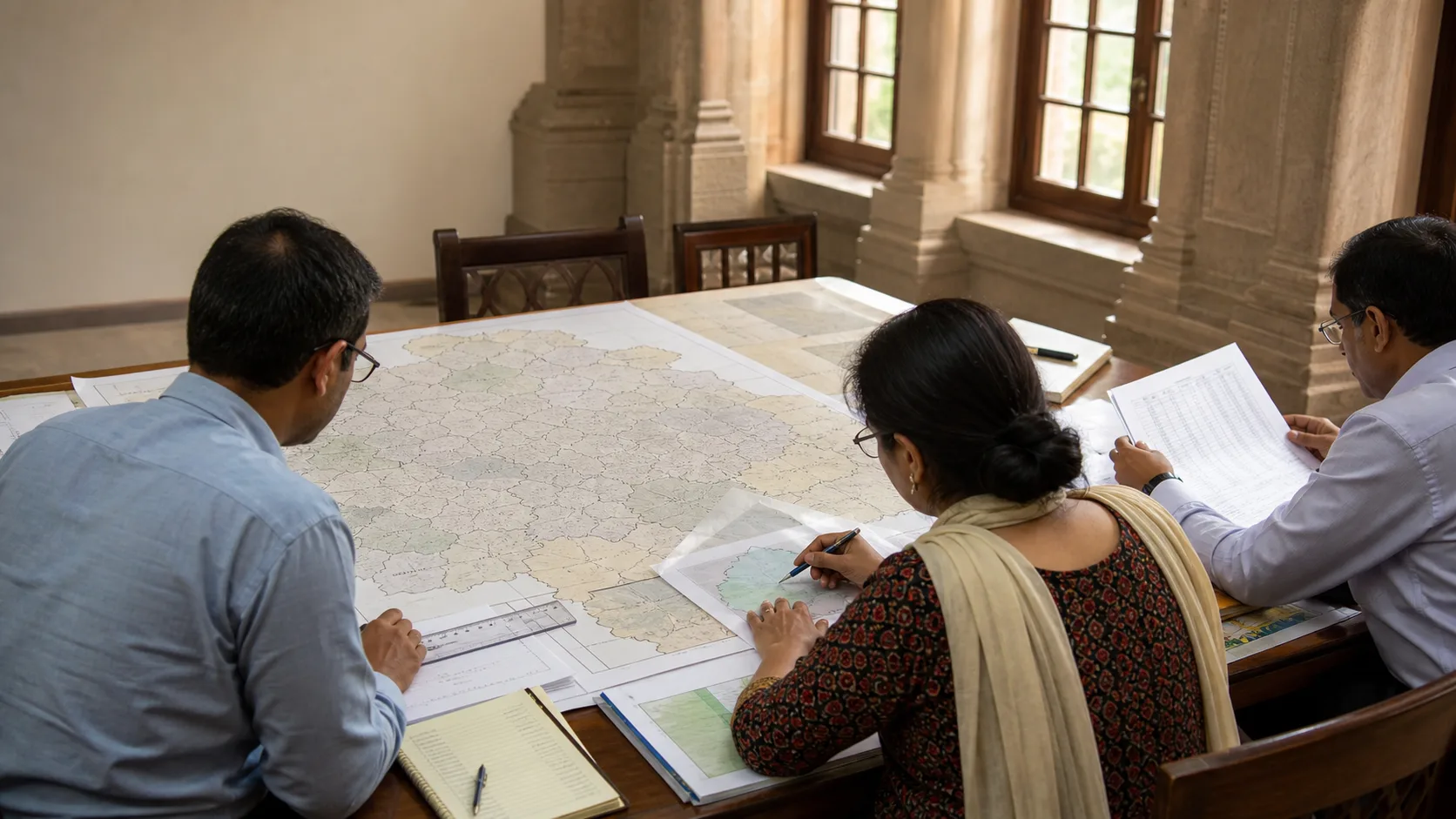
A Delimitation Commission turns constitutional and statutory rules into constituency boundaries. Parliament determines the legal framework; the Commission works through population data, geography, draft proposals, objections and public sittings. India’s last nationwide commission was constituted in July 2002 and its work fed into the 2008 delimitation order. A 2026 bill proposed a similar body with a much wider seat-reallocation role, but the enabling constitutional amendment was defeated and the linked delimitation proposal was withdrawn. No national 2026 commission was formed.
The story in 60 seconds
- India has constituted national Delimitation Commissions four times: 1952, 1963, 1973 and 2002.
- The 2002 Commission was chaired by retired Supreme Court judge Justice Kuldip Singh and included an Election Commissioner and the relevant State Election Commissioner.
- Five Lok Sabha MPs and five state MLAs normally served as associate members for each state. They could advise and publish dissent, but could not vote or sign the Commission’s decisions.
- The completed exercise used 2001 Census figures to redraw constituencies and refix Scheduled Caste and Scheduled Tribe reservations, while the interstate allocation of Lok Sabha seats remained frozen.
- The 2026 bill proposed a similar commission that could also determine state and Union Territory seat totals, but the legislative package did not become law.
- Final delimitation orders have the force of law. Parliament and state assemblies receive them but cannot modify them.
AI SummaryAI-generated summary, reviewed by editors
India’s 2002 Delimitation Commission redrew constituency boundaries without changing states’ Lok Sabha totals. The withdrawn 2026 proposal would have added seat reallocation. Here is who decides, how public objections work and what remains law.
Switch to Shorts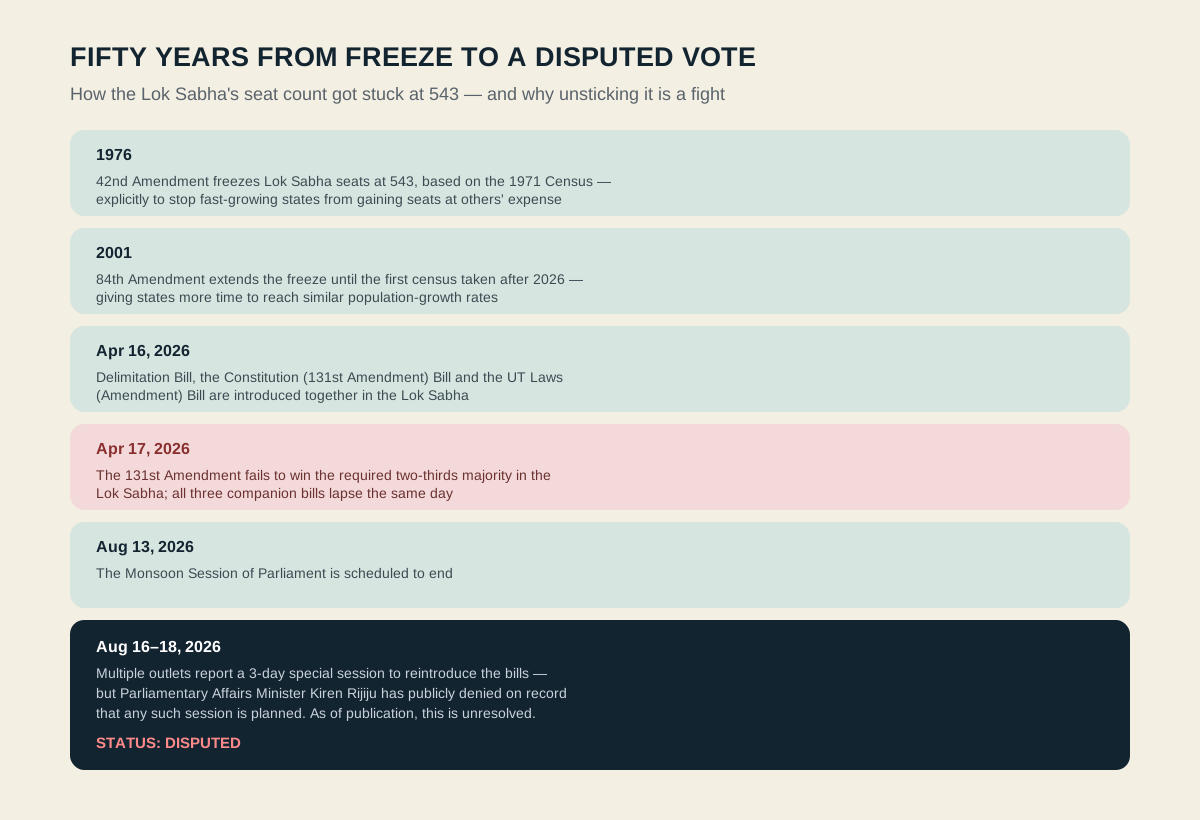
What a Delimitation Commission actually decides
The Commission’s work is not simply drawing equally populated shapes. Under the 2002 Act, it had to divide states into parliamentary and assembly constituencies, adjust seats reserved for Scheduled Castes and Scheduled Tribes and try to make constituencies geographically compact. Physical features, administrative boundaries, communication links and public convenience also matter.
The legislature sets the governing law and census base. The Commission then develops the detailed map. That distinction matters because neither a ministerial speech nor a viral seat table is a final delimitation order.
Who sat on the 2002 Commission?
The central government constituted the Commission on July 12, 2002. Retired Supreme Court judge Justice Kuldip Singh chaired it. Election Commissioner B. B. Tandon served as a member, alongside the State Election Commissioner of the state under consideration.
For each state, the law associated five Lok Sabha members and five members of the Legislative Assembly, nominated by the respective Speakers. Their local and political knowledge could shape objections and dissenting proposals, but the Act withheld voting and signing rights from them. They advised the Commission; they did not control its final decision.
How a boundary moves from draft to law
- Data and criteria: the Commission applies the census base and statutory principles.
- Draft proposal: proposed constituencies and any associate-member dissents are published.
- Objections: citizens, parties and organisations may submit suggestions and objections.
- Public sittings: the Commission holds hearings where proposals are contested and explained.
- Final order: the decision is published in the Gazette of India and relevant state gazettes.
- Commencement: the order takes effect on the notified basis, subject to transitional rules for an existing House or Assembly.
The Election Commission describes the body as “high power” because its published orders carry the force of law and cannot be modified by the Lok Sabha or state legislature after being laid before them.
What the 2002–08 exercise changed—and what it did not
The 2002 Act initially referred to 1991 Census figures. Parliament’s 87th Constitutional Amendment shifted the basis to the 2001 Census. The exercise redrew parliamentary and assembly constituency boundaries and updated SC/ST reservation patterns, but it did not redistribute Lok Sabha seats among states. That interstate freeze remained tied to 1971 population figures.
The process was not uniform everywhere. Delimitation was deferred in Assam, Arunachal Pradesh, Manipur and Nagaland through section 10A, and the Jharkhand order was separately prevented from taking legal effect through section 10B. Claims that the Commission completed ordinary hearings and final orders in every state therefore need qualification.
What the withdrawn 2026 bill would have changed
The Delimitation Bill, 2026 proposed a commission with a familiar core: a sitting or former Supreme Court judge as chair, the Chief Election Commissioner or a nominated Election Commissioner and the relevant State Election Commissioner. It retained the associate-member model.
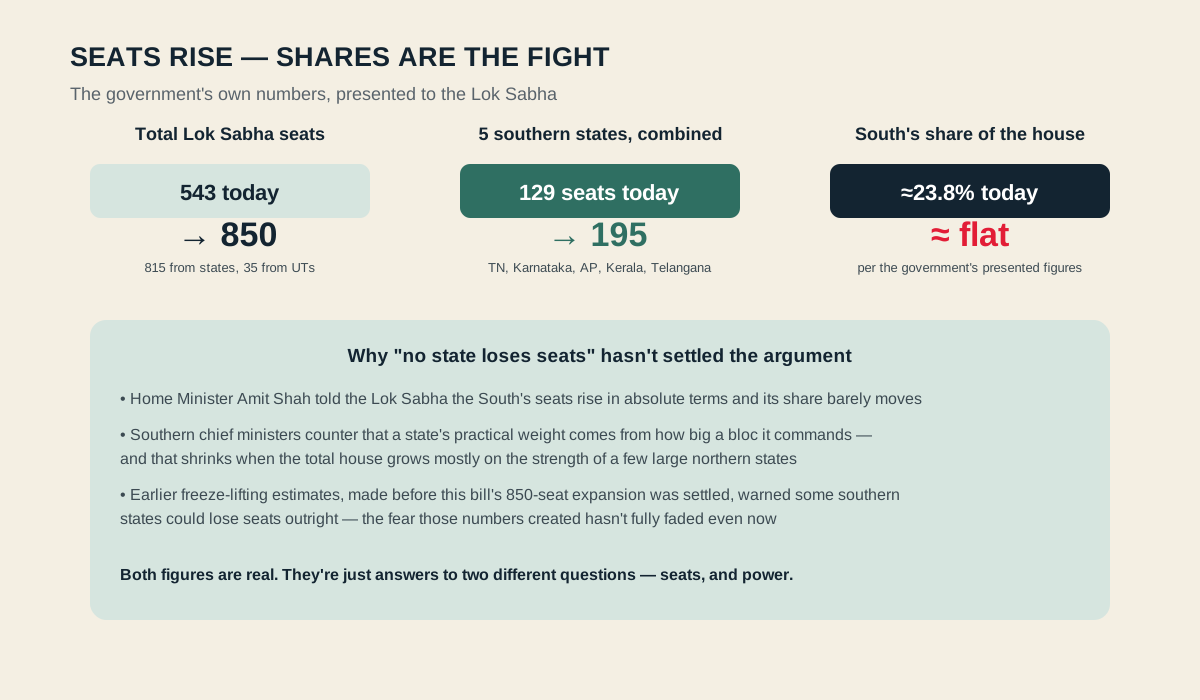
Its mandate was broader. The proposed commission could determine the number of Lok Sabha seats allocated to each state and Union Territory, state assembly strength, constituency boundaries and seats reserved for SCs, STs and women. It would use the latest published census available when constituted; PRS concluded that an immediate exercise would have used the 2011 Census.
But this remains a description of a withdrawn proposal. The Constitution (131st Amendment) Bill was negatived in the Lok Sabha on April 17, 2026, and the government withdrew the linked delimitation proposal. Statements such as “the 2026 Commission will decide” are therefore premature. There is no commission under that bill and no new nationwide allocation from it.
Why the Commission is powerful but not all-powerful
Once validly constituted, the Commission has strong authority over the detailed order. Its final published decisions carry legal force, and legislatures cannot edit them. But the body does not choose its own census, invent the Lok Sabha ceiling or decide when Parliament should enact a new framework. Those choices come from the Constitution, legislation and government notifications.
Public participation also happens before the final order, not through a later parliamentary amendment. That makes draft publication, accessible population data and meaningful hearings especially important.
For the political assurance behind the proposed allocation, see our fact-check of the 129-to-195 southern-seat claim.
Young electors can use our verified delimitation timeline and voter-registration checklist to track what affects their ballot.
What to watch in any future proposal
- Which census is expressly named or triggered?
- Does the law guarantee that no state loses seats, or only describe an illustration?
- What total House size is a ceiling, and what total is the working allocation?
- How are SC, ST and women’s reservations calculated?
- What timetable, draft-publication rules and hearing safeguards apply?
- How are deferred or security-sensitive states treated?
Related coverage
Read our Delimitation Bill 2026 explainer, the Kerala seat-number fact-check and the ongoing delimitation coverage hub.
The Commission also determines reserved constituencies. Our SC/ST representation explainer separates the official 84/47 baseline from unsupported future projections.
Frequently asked questions
Has a new national Delimitation Commission been formed in 2026?
No. The enabling constitutional amendment was defeated and the linked delimitation proposal was withdrawn.
Did the 2002 Commission change each state’s Lok Sabha seat total?
No. It redrew constituencies using 2001 Census data while interstate Lok Sabha allocations remained frozen.
Can MPs and MLAs vote on Commission decisions?
Associate MPs and MLAs can assist, object and publish dissent, but they do not vote or sign the Commission’s decisions.
Can Parliament modify a final delimitation order?
No. The orders are laid before the relevant legislature, but the Election Commission states that no modification is permissible there.
The population figures any future Commission would work from come from the census — see HeadlineDecoded's explainer on Census 2027's newly notified household schedule, which brings back a full caste count for the first time since 1931.
Sources
- Delimitation 2002 overview and legal effect of orders — Election Commission of India
- Delimitation Act, 2002 — Legislative Department
- Delimitation Act sections and 2008 order — India Code
- Delimitation Bill 2026 summary — PRS Legislative Research
- Constitution (131st Amendment) Bill status — PRS Legislative Research
HeadlineDecoded is committed to accuracy and transparency. Read our standards or submit a correction.