Posts and political speeches have put several different numbers beside Kerala's name in the delimitation debate. The clearest verified answer is this: Kerala has 20 Lok Sabha seats today. The Union government publicly illustrated 30 seats under its 2026 proposal, but that package did not become law. Independent models can produce lower figures because they use different house sizes and allocation rules. Presenting any projection as Kerala's settled future seat count is misleading.
The story in 60 seconds
- 20 is Kerala's current legal allocation in the 543 elected-seat Lok Sabha.
- 30 was the Union government's stated illustration for Kerala in an 816-seat house, announced in the Lok Sabha on April 16, 2026.
- 14 is an independent population-based projection in a Carnegie Endowment analysis using 2026 population estimates and an 824-seat house. It is not a government allocation.
- The frequently repeated 12-seat claim is not supported by a published official allocation for the 2026 package.
- The Constitution (131st Amendment) Bill was negatived on April 17; the linked delimitation proposal was withdrawn. None of those proposed seat changes became law.
AI SummaryAI-generated summary, reviewed by editors
Kerala still has 20 Lok Sabha seats. The government illustrated 30 under its defeated 2026 package, while independent population-based models produce 14 or other totals. No future allocation is law. Here is what each number actually means.
Switch to Shorts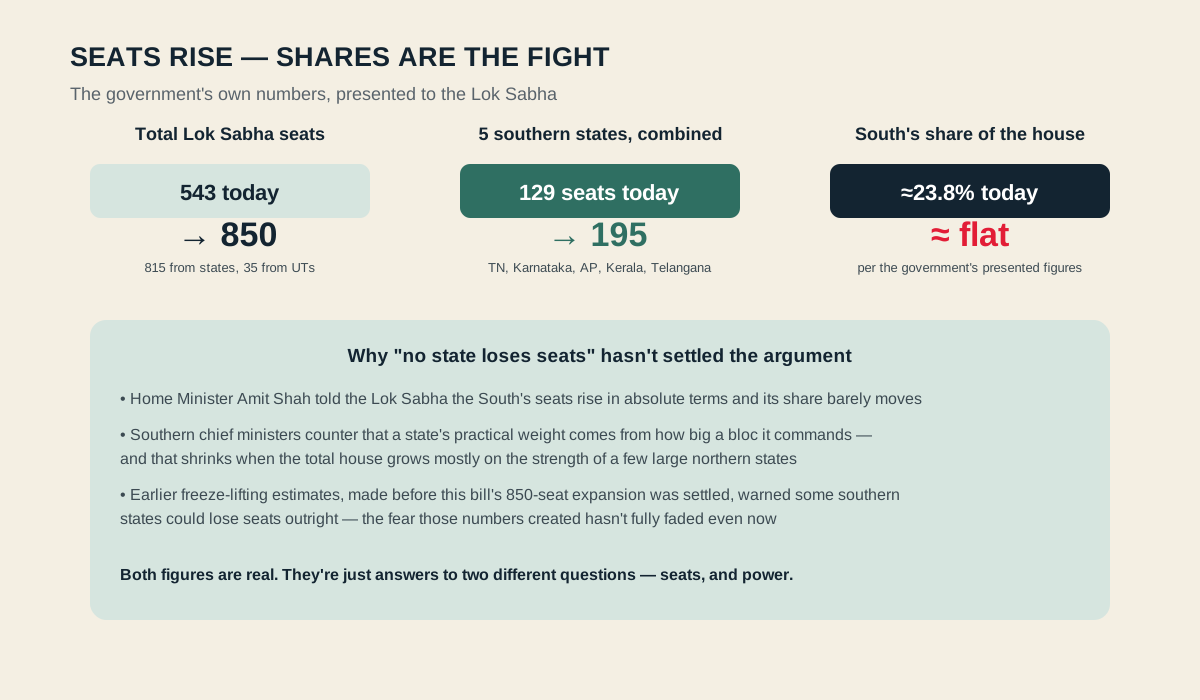
Verdict: the claim that Kerala's future tally is settled is misleading
Misleading. Kerala has 20 seats now. Thirty was a specific government projection attached to a package that failed in Parliament; fourteen is the output of a different independent model; and twelve has not been established as an official 2026 allocation. These figures describe different scenarios, not competing confirmations of one settled result.
What the government actually said: 20 would become 30
During the Lok Sabha debate on April 16, Union Home Minister Amit Shah said the proposed maximum of 850 was a ceiling and used an 816-seat working total. The official Press Information Bureau record gave state-specific figures for the five southern states: Karnataka 42, Andhra Pradesh 38, Telangana 26, Tamil Nadu 59 and Kerala 30. Together, those states would move from 129 to 195 seats.
That corrects a key error in the earlier version of this fact-check, which said the government had published only a southern aggregate and inferred roughly 23 seats for Kerala. The official record names 30 directly; no inference is needed.
Why 30 is still not Kerala's future legal seat count
The government's statement described its proposed 50% expansion model. It did not create seats by itself. The linked Constitution (131st Amendment) Bill sought to raise the Lok Sabha ceiling and change the constitutional route for the next exercise. PRS Legislative Research records that amendment as negatived in the Lok Sabha on April 17, 2026. The government then withdrew the linked delimitation proposal.
The result is important: the 30-seat figure is an authenticated government proposal, but it is not an enacted allocation. Kerala remains at 20 unless and until Parliament passes a valid framework and a legally constituted process produces a new allocation.
Where lower projections come from
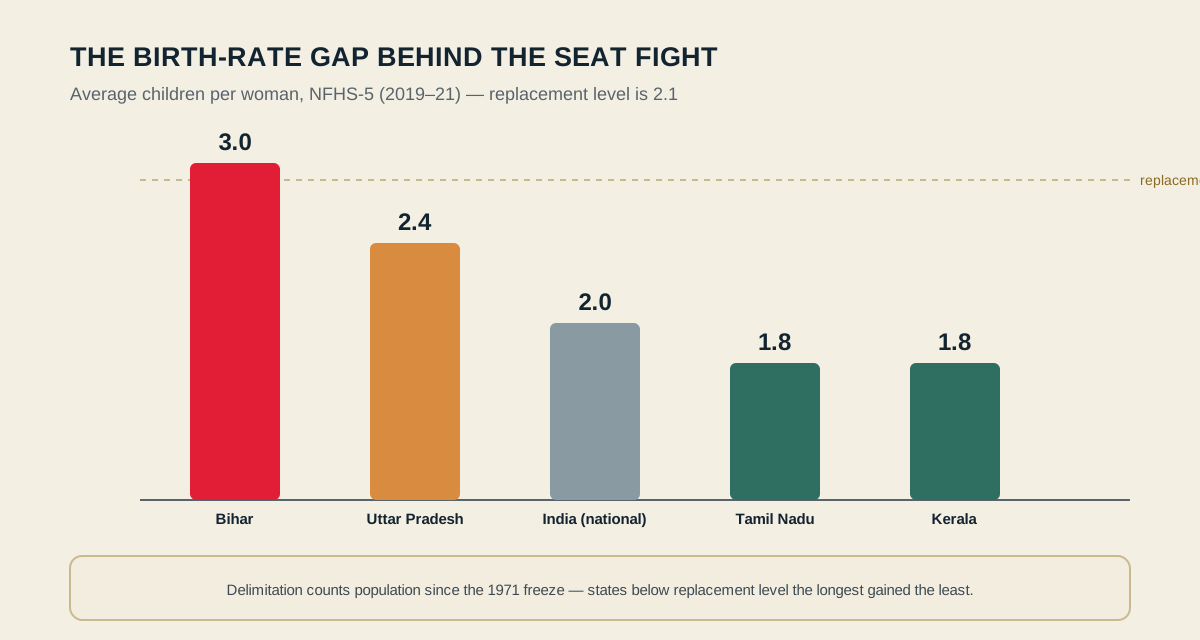
Seat projections change when analysts change any of three inputs: the total size of the Lok Sabha, the population year and the apportionment method. A population-only redistribution inside a fixed or differently expanded house can reduce Kerala's absolute tally or its share. A uniform increase designed to preserve each state's existing share produces a different result.
A May 2026 Carnegie Endowment paper demonstrates the distinction. In one table holding the present total broadly fixed, its 2026 population projection gives Kerala 14 seats. In a separate enlarged-house exercise it models a different set of outcomes. Those are transparent research scenarios, not a Delimitation Commission order.
The reported 12-seat figure may arise from another population formula or political presentation, but a number without a named house size, population dataset and apportionment method cannot be independently reproduced. It should not be labelled the official outcome.
What the failed 2026 package proposed
The constitutional amendment proposed raising the Lok Sabha's maximum strength from 550 to 850: up to 815 members from states and 35 from Union Territories. The accompanying Delimitation Bill would have allowed a commission to use the latest published census available when constituted; PRS assessed that this would mean the 2011 Census for that immediate exercise.
The government's political assurance was that every state would gain seats in absolute terms and that the five southern states would retain roughly their combined share. Critics argued that the draft did not clearly guarantee a uniform 50% increase and that future population-based redistribution could still change relative influence.
How to test any Kerala seat claim
- Ask whether it describes current law or a model. The current answer is 20.
- Check the proposed House size. A 543-, 775-, 816-, 824- or 850-seat calculation will not produce the same result.
- Check the population base. The 2011 Census and projected 2026 population are different inputs.
- Check the allocation rule. Uniform growth, population-proportional apportionment and a no-state-loses floor answer different policy questions.
- Check legislative status. A ministerial illustration, bill and enacted law are not interchangeable.
For the machinery behind any future allocation, read our guide to the 2002 Commission, public hearings and the withdrawn 2026 proposal.
The government’s Kerala figure came from its wider southern-state model. Our fact-check of Amit Shah’s delimitation speech tests the full 129-to-195 claim against the bill and final parliamentary status.
What happens next
Article 82 still protects the interstate allocation freeze until figures from the first census taken after 2026 are published. Any fresh proposal must be assessed from its actual text, parliamentary status and stated census basis. A new Delimitation Commission would then have to carry out the statutory process before final boundaries and allocations could take effect.
For the wider constitutional history, seat ceiling and North–South dispute, read our Delimitation Bill 2026 explainer and follow the ongoing delimitation coverage hub.
Frequently asked questions
How many Lok Sabha seats does Kerala have now?
Kerala currently has 20 seats in the Lok Sabha.
Did the government say Kerala would get 30 seats?
Yes. Amit Shah's April 16 intervention, published by PIB, explicitly illustrated Kerala rising from 20 to 30 in an 816-seat house. The proposal did not become law.
Is Kerala going down to 12 or 14 seats?
No such reduction is enacted. Fourteen appears in a documented independent population-based model; twelve is another reported projection whose assumptions must be supplied before it can be evaluated.
Was the Delimitation Bill 2026 passed?
No. The enabling constitutional amendment was negatived in the Lok Sabha on April 17, 2026, and the linked delimitation proposal was withdrawn.
Sources
- Amit Shah's April 16 Lok Sabha intervention, including Kerala's 20-to-30 illustration — Press Information Bureau
- Constitution (131st Amendment) Bill, status and key provisions — PRS Legislative Research
- Delimitation Bill 2026 summary — PRS Legislative Research
- Delimitation After Defeat: India's Unfinished Debate Over Representation — Carnegie Endowment for International Peace
- Delimitation Act provisions — India Code
HeadlineDecoded is committed to accuracy and transparency. Read our standards or submit a correction.