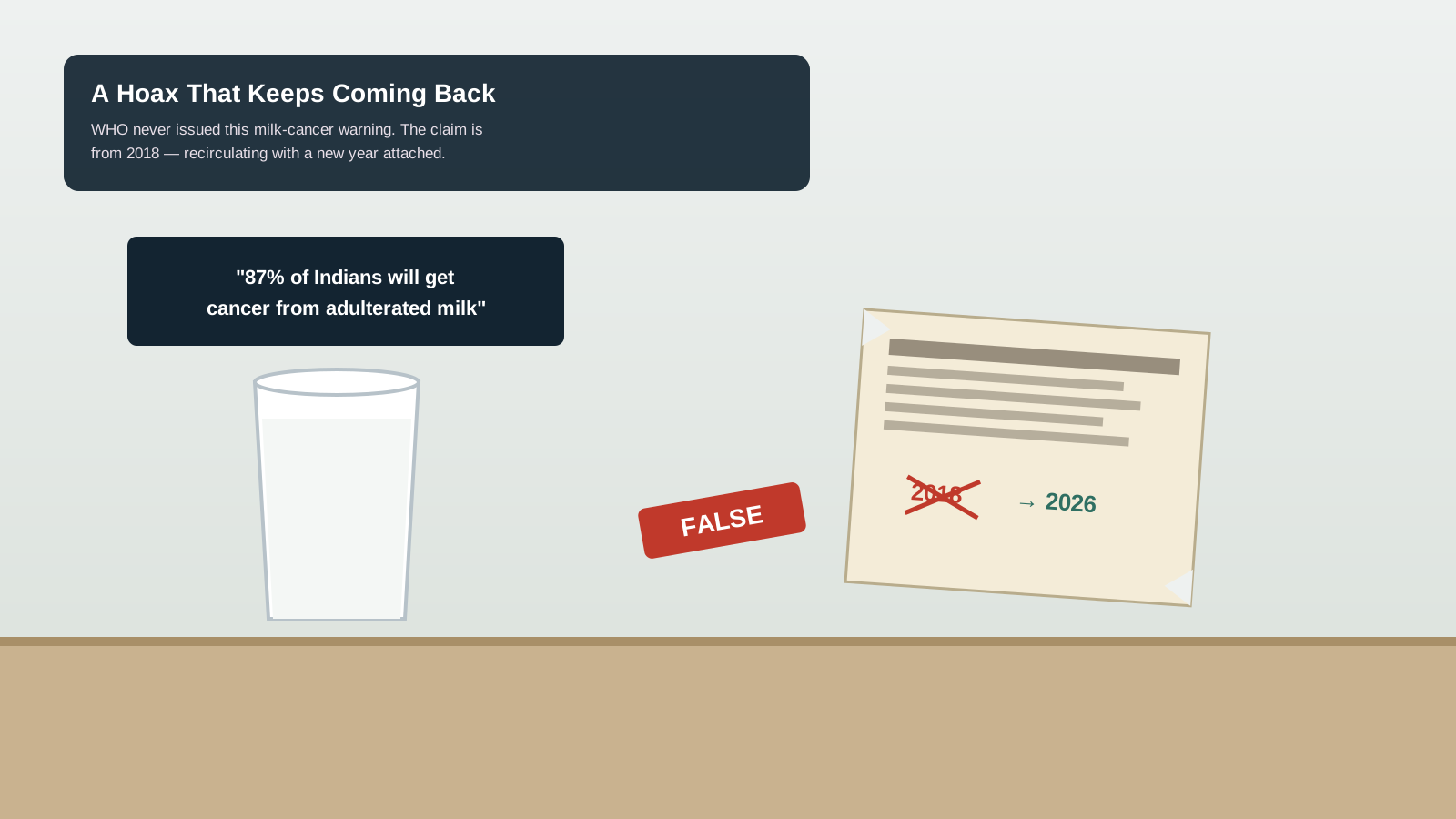
The claim: A widely shared post — often styled as a newspaper clipping or news screenshot — claims the World Health Organization has warned that 87% of Indians will suffer from serious illnesses, including cancer, because of adulterated milk, unless the problem is urgently addressed.
The verdict: False. WHO has explicitly denied issuing any such advisory, and the claim itself is a recycled hoax dating back to 2018.
The story in 60 seconds
- A viral claim attributes an "87% of Indians will get cancer from adulterated milk" warning to WHO.
- WHO's own statement: "It has not issued any advisory to Government of India on the issue of adulteration of milk/milk products."
- The Indian government publicly rejected the claim in January 2023, calling it false information causing unnecessary panic.
- The claim traces back to a 2018 Dainik Bhaskar article — this isn't new, it's a recurring hoax with the target year changed each time it resurfaces.
- Multiple independent fact-checking organizations have debunked versions of this claim repeatedly since 2018.
AI SummaryAI-generated summary, reviewed by editors
A viral claim says the World Health Organization warned that 87% of Indians will develop cancer because of adulterated milk. WHO has directly denied issuing any such advisory — and this isn't even a new claim. It traces back to a 2018 newspaper article, was already debunked by the Indian government in 2023, and is now
Switch to Shorts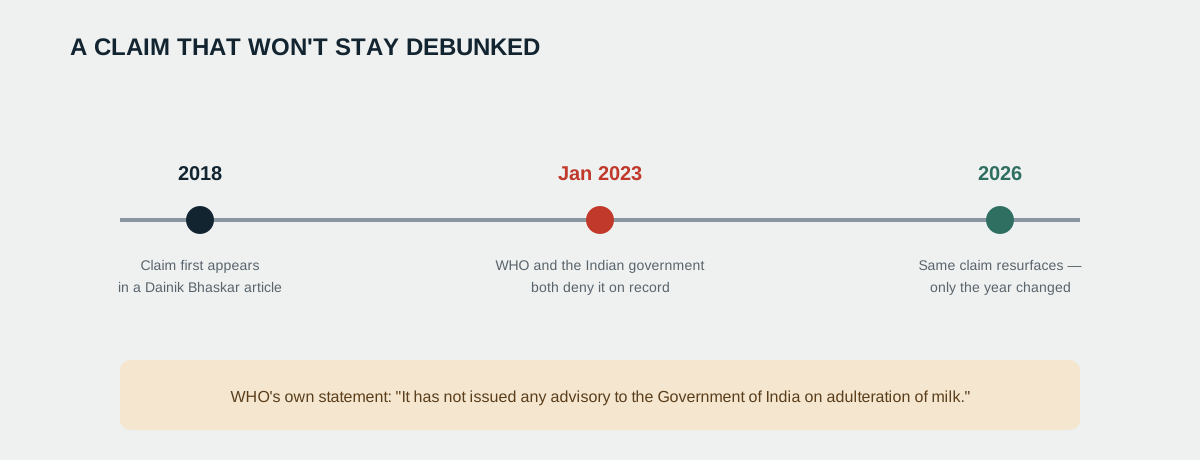
Where the claim actually comes from
Trace this one back far enough and it doesn't lead to WHO at all — it leads to a 2018 article published by Dainik Bhaskar. That original piece is the root of everything that followed: screenshots and clippings derived from it have been recirculated for years, periodically updated with a new target year to keep the sense of urgency fresh. An earlier version warned of an 87% cancer rate "by 2025." The current version making the rounds simply swaps that for a more current-sounding date. The 87% figure, the framing, the alarm — all of it traces to the same unsourced 2018 origin, not to any actual WHO document.
What WHO and the government actually said
Both denials on record are unambiguous. WHO's statement reads: "Contrary to reports in a section of media, WHO would like to state that it has not issued any advisory to Government of India on the issue of adulteration of milk/milk products." The Indian government went further on 19 January 2023, publicly rejecting the report and stating plainly that no such WHO advisory existed and that the false information was creating unnecessary panic among consumers. That's two separate, on-record institutional denials — not silence, not an unclear response, an explicit "this did not happen" from both sides of the claim.
Why a debunked claim keeps coming back
This is worth understanding on its own, because it's a pattern, not a one-off. A claim like this has everything that makes misinformation durable: a scary, round-sounding number (87%), an authoritative-sounding source (WHO), and a subject — food safety — that touches literally everyone's daily life. Health-scare claims built this way don't need to be true to spread; they only need to feel plausible enough to share before checking. Swapping out the year each time is a small edit that resets the claim's apparent freshness without requiring anyone to invent a new hoax from scratch. It's the same reason "Instagram is getting banned" and "your phone recording is illegal" claims resurface on a cycle — old, debunked material recirculated as if new.
Claim versus evidence
- False: WHO warned that 87% of Indians would get cancer due to adulterated milk. WHO directly denies issuing any such advisory.
- Confirmed fact: The Indian government publicly rejected this specific claim on 19 January 2023.
- Confirmed fact: The claim's traceable origin is a 2018 Dainik Bhaskar article, not a WHO document.
- Our analysis: The pattern of the same claim resurfacing with only the target year changed is consistent with how recycled health-misinformation typically spreads — this is our characterization of the pattern, not a claim any single source stated in those terms.
Frequently asked questions
Is milk adulteration in India a real concern at all?
Food safety regulators including FSSAI do monitor and act on milk adulteration as a genuine ongoing issue. What's false here specifically is the claim that WHO issued an 87%-cancer-rate warning — the underlying concern about food safety is separate from this particular fabricated statistic.
Has this exact claim been fact-checked before?
Yes, repeatedly, by multiple independent fact-checking organizations going back to at least 2022, each time it resurfaces with an updated year.
Why does WHO get named in hoaxes like this so often?
An international health authority lends a claim instant, unearned credibility — readers are less likely to question a statistic if it's attributed to a body like WHO, which is precisely why fabricated health claims are so often falsely attributed to it.
The bottom line
Two direct institutional denials, a traceable 2018 origin, and a documented history of the same claim resurfacing on a loop — this one doesn't have much ambiguity left in it. If a health claim citing WHO shows up without a link to an actual WHO document or press release, that absence is itself the tell. Check before you forward it — this particular one has been wrong for eight years running.
Sources
- Fact-Check: News Clipping Shared to Falsely Claim That WHO Warned of 87 Percent Indians Getting Cancer — The Quint (WebQoof)
- Govt says reports of WHO advisory false — Editorji
- Did WHO Warn 87% of Indians Would Suffer From Cancer Due To Milk Adulteration? — Fact Crescendo
- Fact Check: Did WHO Warn That 87% of Indians Will Get Cancer By 2025? — News Mobile
Full forms
- WHO — World Health Organization
- FSSAI — Food Safety and Standards Authority of India
HeadlineDecoded is committed to accuracy and transparency. Read our standards or submit a correction.