Every so often, a message shows up in your family WhatsApp group with a specific date, an urgent tone, and an instruction to forward it to everyone you know before it's too late. This time, the platform supposedly on the chopping block is Instagram, the date is August 25, and the claim is that the Government of India is about to switch it off nationwide. None of that is true. But the more useful question isn't whether the claim is false — it's why a lie shaped exactly like this one keeps landing, over and over, no matter which platform's name gets slotted in.
The story in 60 seconds
- A viral post claims the Government of India will ban Instagram across the country from the night of August 25, 2026, and urges readers to spread the message widely.
- PIB Fact Check has categorically dismissed the claim: no such announcement, notification, order or policy decision has been made by the government.
- The panic hit content creators, small businesses and digital marketers who depend on Instagram for income particularly hard — a predictable target for this kind of hoax.
- The claim isn't happening in a vacuum: India genuinely has had real, documented friction with platforms like X over government account-blocking orders, which is likely part of why a ban claim felt believable to people who shared it.
- This is not a new format. A near-identical structure — a specific date, an urgent tone, a call to forward — has powered Indian tech hoaxes going back at least to 2016, when a fake claim about GPS-tracking chips in new currency notes briefly made it onto television news before being debunked.
- Fact-checking groups say more than 90% of what they debunk in India spreads through WhatsApp specifically, largely because its encryption and forwarding structure make a rumor's original source almost impossible to trace.
AI SummaryAI-generated summary, reviewed by editors
A message claiming the government will switch off Instagram nationwide on August 25 has been doing the rounds, urging readers to share it widely. PIB has already called it fake, flat out. The more interesting question is why this exact kind of lie keeps working, year after year, platform after platform.
Switch to ShortsThe claim, and what PIB actually found
The message circulating claims, in effect, that the Government of India will impose a nationwide ban on Instagram starting the night of August 25, 2026, and instructs recipients to pass it along. PIB's Fact Check Unit checked directly with the relevant government channels and found nothing to back it up: no official announcement, no notification, no order, no policy decision of any kind regarding shutting down Instagram in India. The unit's public response was about as unambiguous as a government fact-check gets, urging citizens not to be misled by fabricated posts designed specifically to trigger panic and confusion.
The people who felt this claim most acutely were exactly the people who had the most to lose from believing it: creators, small business owners and marketers who run some or all of their livelihood through Instagram. That's not an accident. A hoax that threatens someone's income creates urgency in a way a purely political rumor doesn't — which is precisely why claims like this one tend to be engineered around exactly this kind of stake.
Why this specific lie was believable
A false claim doesn't spread on outrage alone; it spreads because it's built from real, recognisable material stitched together into something untrue. Three ingredients did the heavy lifting here. First, genuine platform-government friction: India has, in fact, ordered X to block thousands of accounts under Section 69A of the IT Act, a real and ongoing legal dispute that made global headlines and is still being reviewed by the Delhi High Court. That context primes people to believe a ban claim about a different platform is plausible, even though nothing about the X dispute has anything to do with Instagram. Second, WhatsApp's own structure: end-to-end encryption and effectively anonymous forwarding mean nobody receiving the message can trace where it actually originated, and fact-checking organisations in India report that the overwhelming majority of what they debunk moves through exactly this channel. Third, urgency language — a specific date, an instruction to share immediately — engineered to get a message forwarded before anyone stops to check it.
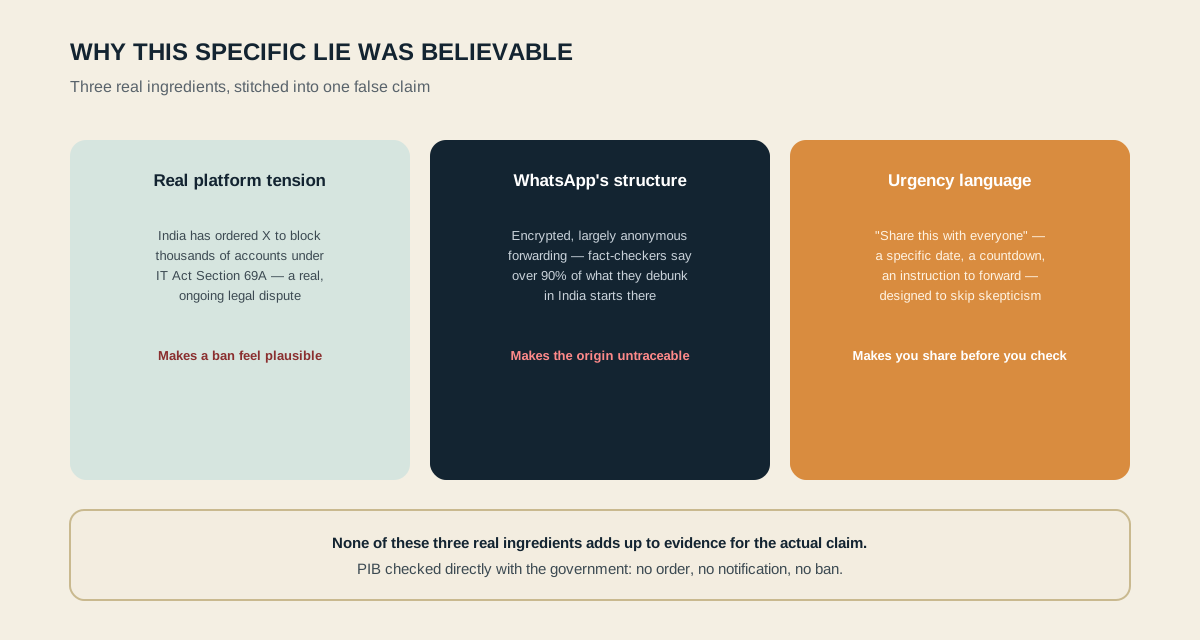
None of those three ingredients is, on its own, evidence for anything. Real platform tension elsewhere doesn't make an unrelated ban claim true. An untraceable message isn't more credible for being untraceable. And urgency is a persuasion technique, not a citation. Put together, though, they're an extremely effective recipe for getting something shared before anyone thinks to ask who actually said it first.
This is not a new shape
If the structure of this hoax feels familiar, that's because it is. In 2016, in the chaos following India's demonetisation of high-value currency notes, a viral claim spread that the new banknotes contained embedded GPS chips that could track people hoarding cash — a claim so widely believed that at least one television news report covered it before the Reserve Bank of India debunked it outright. A separate, recurring hoax has resurfaced periodically for years claiming that different coloured WhatsApp message ticks signal different levels of government surveillance, up to and including an implied court summons for red ticks — also false, also debunked every time it resurfaces, also still circulating.
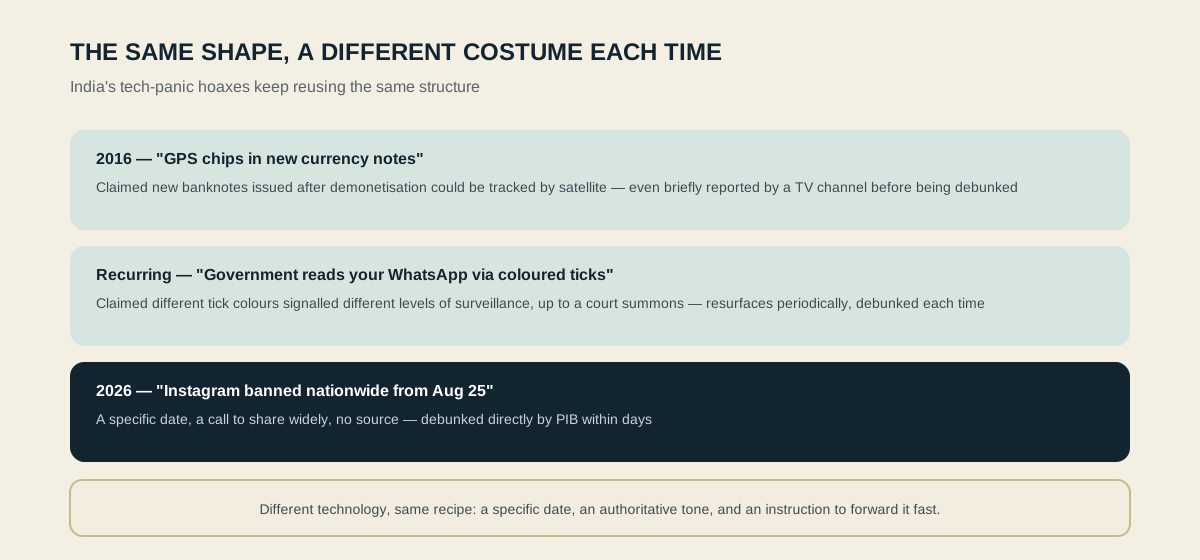
The Instagram ban claim fits that same mould exactly: a specific date, a plausible-sounding authority behind it, an instruction to spread the word. Different decade, different technology, same recipe.
Claim versus evidence
- Claim: The Government of India will ban Instagram nationwide from August 25, 2026.
Evidence: PIB Fact Check found no announcement, notification, order or policy decision of any kind supporting this — the government directly denies it. - Claim (implied): Recent platform-blocking disputes make this plausible.
Evidence: India has genuinely disputed account-blocking orders with X under IT Act Section 69A — a real, separate, ongoing matter that has nothing to do with Instagram or this specific claim. - Confirmed: This is a recurring hoax format in India, with comparable false claims dating back to at least 2016 and resurfacing periodically since.
- Confirmed: WhatsApp forwarding, rather than open social media, carries the large majority of viral misinformation debunked by Indian fact-checking organisations.
How to spot the next one
- Check whether an actual government source said it. PIB Fact Check, official ministry accounts, or the platform's own verified channels — not a forwarded message claiming to know first.
- Be suspicious of an oddly specific date paired with vague sourcing. "The night of August 25" sounds authoritative. It isn't evidence.
- Notice the instruction to share immediately. Genuine official announcements don't typically ask recipients to forward them as fast as possible — that's a persuasion technique borrowed from chain letters, not a feature of real policy communication.
- Ask who benefits from you believing it right now. Panic drives clicks, forwards and sometimes scams riding on the same wave — a healthy pause before hitting forward costs nothing.
Another date-driven viral claim used a real astronomical event as cover. See our fact-check of the August 12 “seven seconds without gravity” hoax.
The verdict
False. No Government of India announcement, order or policy decision to ban Instagram exists. PIB Fact Check has directly and publicly denied the claim.
False urgency is also used to promote fabricated benefits. See our National Student Laptop Scheme 2026 fact-check and verification guide.
Frequently asked questions
Is Instagram being banned in India?
No. PIB Fact Check has confirmed there is no government announcement, notification or order to that effect.
Why did this rumor feel believable to so many people?
It borrowed credibility from a real, separate dispute between the Indian government and the platform X over account-blocking orders, combined with WhatsApp's untraceable forwarding structure and urgent share-now language.
Has India banned a social media platform before?
Yes, in other specific, officially announced cases — which is part of why a claim like this can feel plausible. But plausibility is not the same as an actual government order, and no such order exists for Instagram.
How can I verify a claim like this myself?
Check PIB Fact Check's official channels or the relevant ministry's verified accounts directly, rather than relying on a forwarded message's own claimed authority.
Sources
- Fact Check: PIB slams Instagram ban rumors in India — Organiser
- PIB Fact Check dismisses social media claim of Instagram ban in India — All India Radio News
- X claims it received order to block 2,355 accounts in India; govt denies issuing ban order — The Tribune
- In India, the fake news problem isn't Facebook, it's WhatsApp — Columbia Journalism Review
Full forms
- PIB — Press Information Bureau
- IT Act — Information Technology Act
HeadlineDecoded is committed to accuracy and transparency. Read our standards or submit a correction.