A message offering free laptops under a “Students Laptop Scheme 2026” is not a genuine Government of India announcement. PIB Fact Check called the claim fake, and Akashvani's January 12 report said no such scheme had been announced. The warning also says the circulating message asks recipients to share personal details. That supports a clear verdict on the offer—but it does not justify inventing technical details about what every version of the link does.
Verdict
False. The central government has not announced the “Students Laptop Scheme 2026” promoted in the circulating message. Do not treat its registration link as an official application route.
The story in 60 seconds
- The viral message claims the Government of India is distributing free laptops and asks students to register through a shared link.
- PIB Fact Check rejected the claim. Akashvani reported the government's warning on January 12, 2026 and said no such scheme had been announced.
- The official warning says the message asks recipients to share personal details. Students should not submit information through the forwarded link.
- The material reviewed does not prove every downstream claim previously made about a cloned portal, Aadhaar harvesting, OTP extraction or bank-account theft. Those details have been removed.
- Real education benefits can be central, state-level or institution-specific. Their names, dates and eligibility must be checked against a current official notification—not inferred from a viral post.
- Suspicious URLs and WhatsApp numbers can be submitted through the National Cyber Crime Reporting Portal's Report Suspect facility. If money has moved, contact the bank and call 1930 immediately.
AI SummaryAI-generated summary, reviewed by editors
The Government of India has not announced the viral “Students Laptop Scheme 2026.” Here is what the official warning establishes, what remains unproven about the link, and how students can verify benefits safely.
Switch to Shorts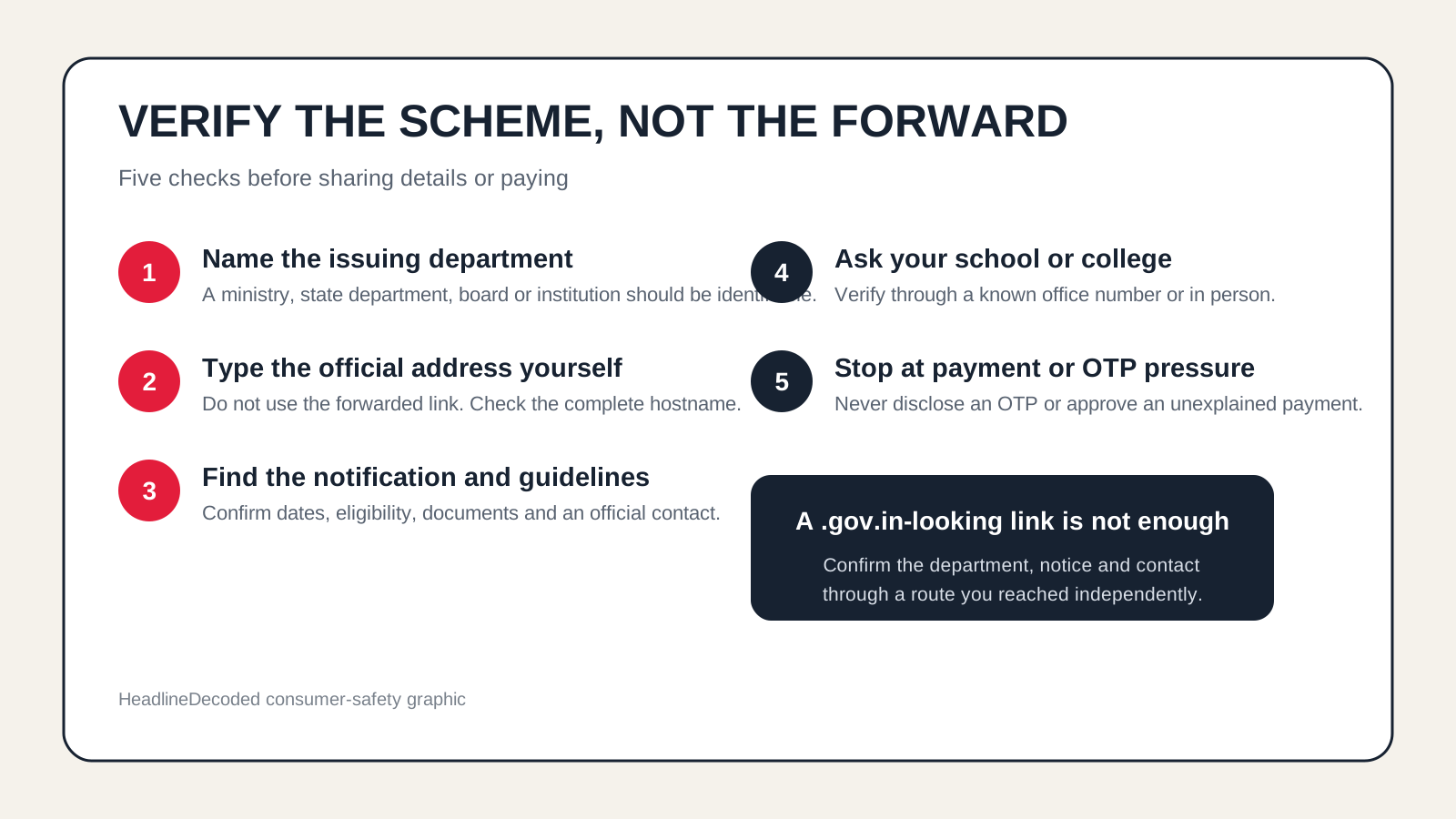
What the official warning actually establishes
Akashvani, India's public-service broadcaster, reported that the government had debunked a social-media message advertising free laptops under a “Students Laptop Scheme 2026.” Its report attributes the finding to PIB Fact Check: the claim is fake, the message is part of a scam, no such scheme has been announced, and recipients are being asked to share personal details.
That is enough to reject this advertised national scheme. It is not enough to conclude that every similarly named post, video or URL is operated by the same actor or uses the same collection method. A responsible fact-check separates the verified warning from reasonable security precautions.
What this fact-check does not claim
The previous version said the link was a cloned government form that harvested Aadhaar and bank information, extracted OTPs and drained accounts. The sources cited did not document a technical examination of the specific URL or establish that full sequence. Those assertions have been removed. The safer, evidence-based conclusion is narrower: the scheme announcement is false, the associated message seeks personal details, and information should not be submitted through an unverified link.
Likewise, this article no longer presents fixed Madhya Pradesh or Uttar Pradesh marks thresholds as current alternatives. State benefits change by academic year, institution and budget, and an old eligibility rule can be as misleading as a fake national promise.
How to verify a real student benefit
- Identify the issuer. A credible notice should name the responsible ministry, state department, education board, university or institution.
- Reach the source independently. Type the department's official address or use a known government portal. Do not enter through the forwarded message.
- Find the current notification. Check dates, eligibility, required documents, application route and an official contact. A social post without underlying guidelines is not an application notice.
- Confirm with your institution. Use a school or college number you already know, or visit the office. Do not call only the number printed in the message.
- Pause at pressure. Do not disclose an OTP, install remote-access software or approve an unexplained payment to “unlock” a benefit.
“Laptop” in a genuine programme does not always mean a free device
Scheme names and benefits must be read precisely. For example, the Ministry of Education's PM-Vidyalaxmi guidelines describe an education-loan product for eligible students at quality higher-education institutions. The permitted loan expenses can include the cost of a reasonable-quality laptop. That is not a universal free-laptop giveaway, and it should not be described as one.
Similarly, PM SHRI is a programme to strengthen selected schools and their learning environment; it is not evidence of a personal laptop entitlement for every student. Students looking for scholarships can start at the official National Scholarship Portal, but each listed scheme has its own eligibility and schedule.
If you already interacted with the message
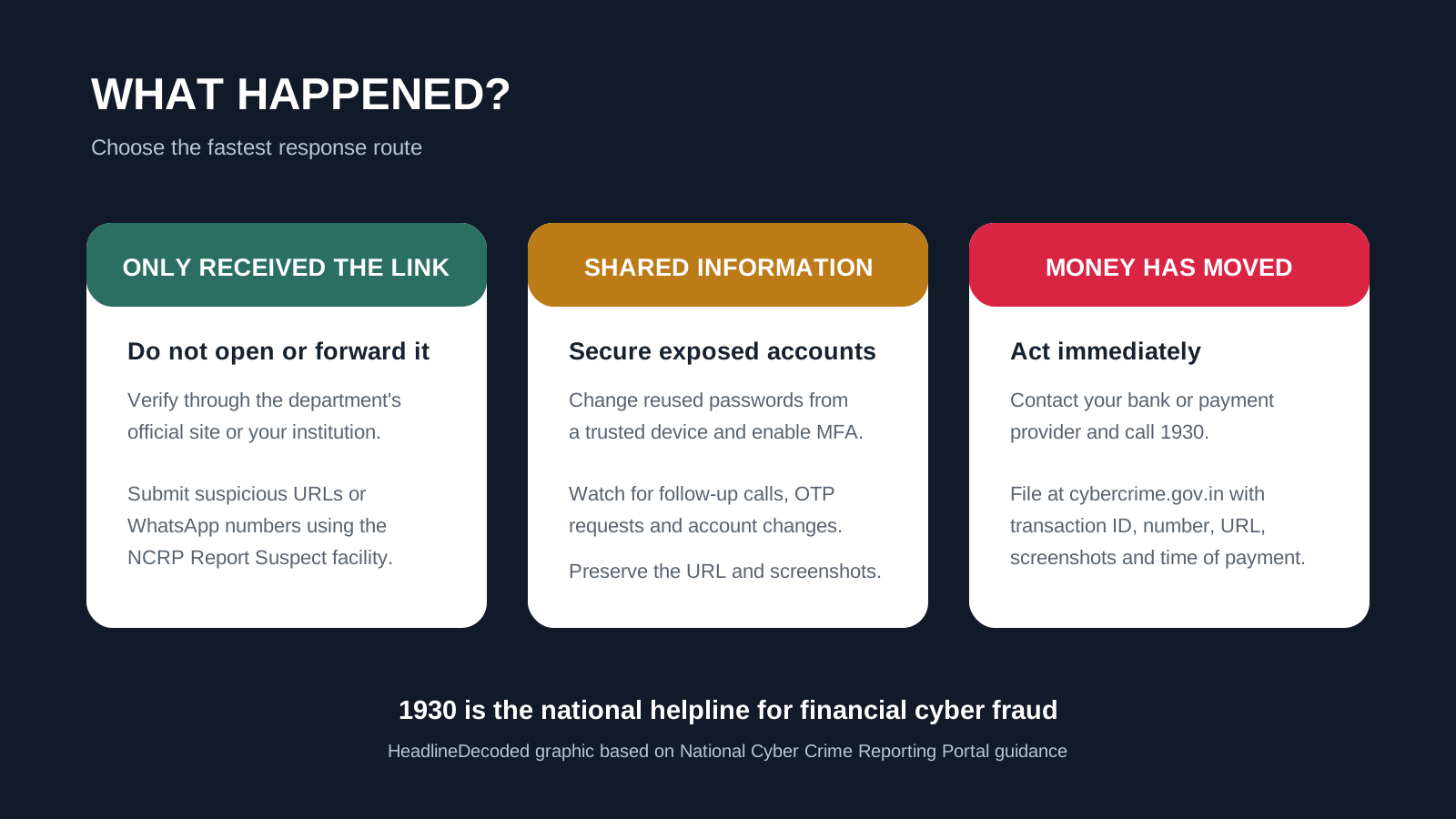
- You only received it: do not open or forward the link. Preserve the sender and URL if you intend to report it.
- You entered a password: change it from a trusted device, change any reused passwords and enable multi-factor authentication.
- You shared identity or financial information: monitor the relevant accounts and contact the issuing institution or bank through a trusted channel.
- You installed an app: disconnect the device if remote access is suspected, review permissions, remove the untrusted app and seek trusted technical help.
- Money moved: contact the bank or payment provider immediately, call 1930 and file a complaint at cybercrime.gov.in.
The portal's Report Suspect facility accepts suspicious website URLs, WhatsApp numbers, phone numbers, email addresses and social-media URLs. It is distinct from filing a victim complaint after a loss.
Claim versus evidence
- Claim: the Government of India announced a “Students Laptop Scheme 2026.”
Finding: false; PIB Fact Check said no such scheme had been announced. - Claim: the shared registration route is official.
Finding: unsupported; the government warning identifies the underlying offer as fake. - Claim: every version of the link steals Aadhaar, bank details and OTPs.
Finding: not established by the sources reviewed. Do not submit personal information, but do not turn a precaution into an unverified forensic claim. - Claim: genuine student benefits prove this national offer is plausible.
Finding: misleading. Real programmes have identifiable issuers, current guidelines and specific application routes; they do not authenticate a forwarded link.
Related fact checks
Read our guide to fake delivery messages, cloned stores and UPI payment traps, our NEET Telegram scam fact-check, and our explanation of why urgent “share this now” platform-ban messages keep returning.
For a verified 70+ health benefit, see our official-source guide to the Ayushman Vay Vandana Card.
Frequently asked questions
Is the National Student Laptop Scheme 2026 real?
No. PIB Fact Check said the circulating Government of India offer was fake and that no such scheme had been announced.
Does India have any genuine student laptop benefit?
Some states or institutions may announce device, cash-assistance or education-support programmes, but availability and eligibility change. Verify the current notification on the issuing authority's official site.
Is PM-Vidyalaxmi a free-laptop scheme?
No. It is an education-loan scheme. Its guidelines allow eligible education-loan expenses to include the cost of a reasonable-quality laptop; that is not a free device for all students.
Where should I report a suspicious scheme link?
Use the National Cyber Crime Reporting Portal's Report Suspect facility. If you lost money, contact your bank, call 1930 and file a cybercrime complaint immediately.
Primary sources
- Government warns against fake Students Laptop Scheme 2026 messages — Akashvani News, January 12, 2026
- PIB Fact Check post on the circulating claim — PIB Fact Check
- Report Suspect facility and 1930 guidance — National Cyber Crime Reporting Portal
- PM-Vidyalaxmi scheme guidelines — Ministry of Education
- About PM SHRI Schools — Ministry of Education
- National Scholarship Portal — Government of India
Related: See how we checked an unverified Rajasthan recruitment claim against official vacancy pages.
HeadlineDecoded is committed to accuracy and transparency. Read our standards or submit a correction.