Online-sale scams are real, but “Independence Day scam season” is a warning label—not a measured official trend. Indian authorities document phishing links, fake websites, courier and Customs impersonation, malicious apps and payment manipulation. What the available official evidence does not establish is a predictable Independence Day-specific spike or a single coordinated campaign targeting every sale shopper. The useful response is neither panic nor complacency: verify delivery messages independently, understand what a UPI PIN authorises and report financial fraud immediately.
Verdict
Partly true, overstated: the scam methods are real and documented; the claim that they reliably intensify during Independence Day sales is not supported by the official sources reviewed.
The story in 60 seconds
- Fake delivery or parcel messages can lead to credential theft, malicious downloads or fraudulent payment pages.
- Fake shopping sites may imitate familiar brands, use copied product images and advertise prices that are implausibly low.
- Courier or Customs impersonators may claim a parcel is delayed, seized or contains illegal goods, then demand money or personal information.
- Entering a UPI PIN or scanning a QR code is for authorising a payment, not receiving money. A genuine refund does not require you to pay first.
- Positive reviews are not proof that a seller or site is genuine. The government's safe-shopping guidance recommends researching unfamiliar sellers and checking contact and return information.
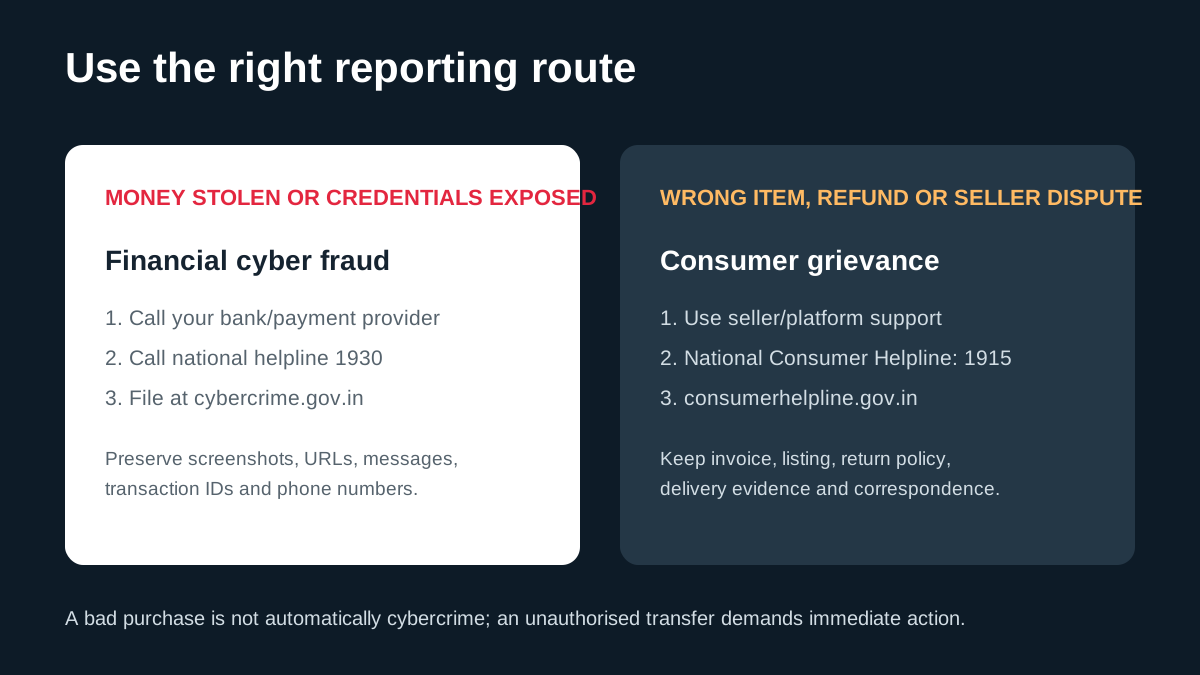
- If money has moved, contact the bank or payment provider and call 1930 immediately; file evidence at cybercrime.gov.in. Use 1915 for ordinary consumer disputes such as refunds or deficient service.
AI SummaryAI-generated summary, reviewed by editors
Fake delivery messages, cloned shopping sites and payment-request scams are documented threats in India. But there is no official evidence that they reliably spike during Independence Day sales. Here is the accurate verdict and the fastest reporting route.
Switch to Shorts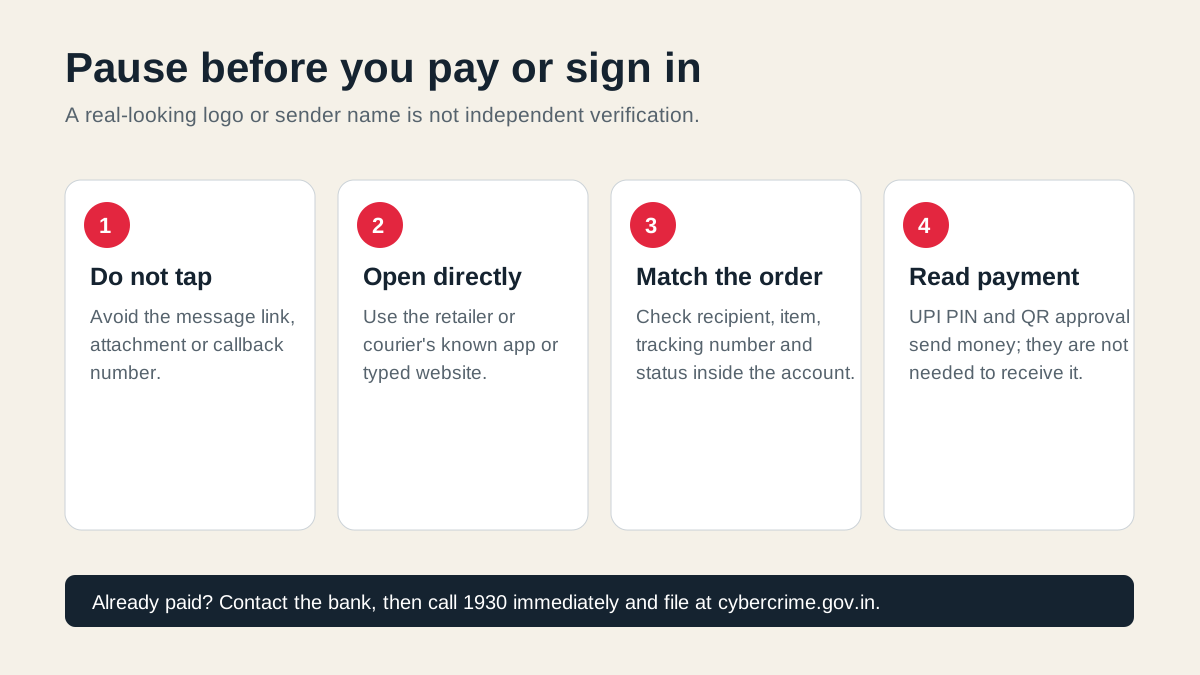
The delivery-message trap
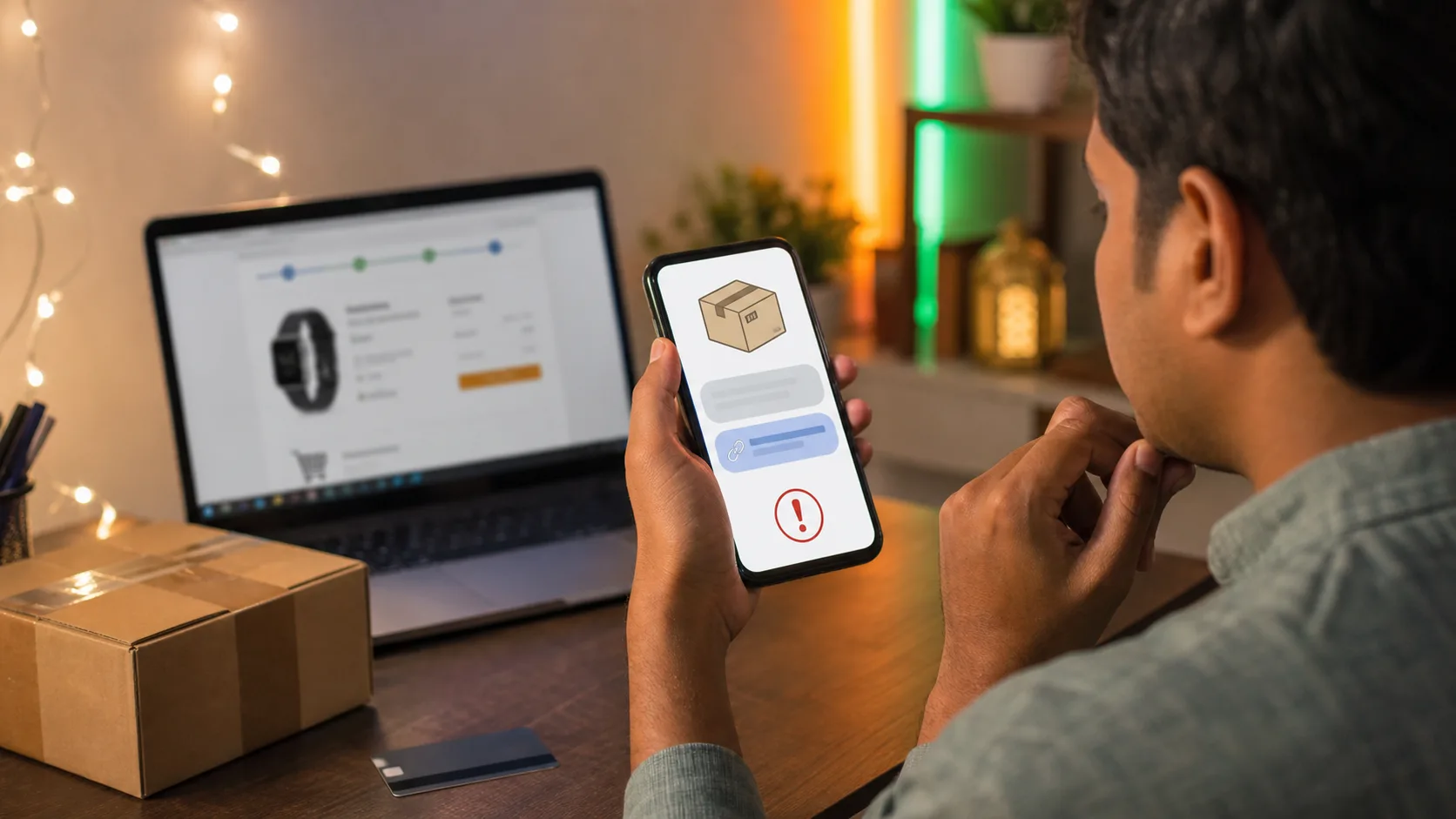
A message says your address is incomplete, a parcel failed delivery or a small fee is needed to reschedule it. The timing feels plausible because you are already expecting an order. But a sender name, logo and tracking-style language can all be copied.
Do not verify the claim through the same message. Open the retailer or courier's known app, type its official address yourself and compare the actual order or tracking number. Treat requests for passwords, OTPs, card details, remote-access apps or payment to a personal account as danger signals. CBIC specifically says Customs does not ask the public by phone, SMS or email to pay duty into private accounts.
The cloned-storefront trap
Fake stores can reproduce product photographs, layouts and brand colours. The Department of Consumer Affairs advises shoppers to compare suspiciously low prices, research unfamiliar sellers, inspect contact information and read shipping, warranty and return policies. A padlock only means the connection is encrypted; it does not prove the merchant is honest.
Use a known app or type the retailer's address instead of arriving through a social-media advertisement or forwarded message. Check the full hostname—not just the first familiar word—and be cautious when a store accepts only irreversible payment to an individual.
The payment-request trap
NPCI says scanning a QR code and entering a UPI PIN are actions for making a payment, not receiving one. A collect request can debit money only after the user reviews and authorises it. This matters when someone claims they are sending a refund, cashback or prize but asks you to scan, approve or enter a PIN.
UPI itself is not automatically compromised by opening an app. The danger is social engineering: a fraudulent request is made to look like verification, receipt or cancellation. Read the payer/payee name and amount on the final bank or UPI screen before authorising anything.
What about fake reviews and “AI influencer” videos?
Reviews can be manipulated and synthetic endorsements are technically easy to produce, so neither should be treated as identity verification. But the original article asserted widespread AI-generated review use in this particular sale period without primary evidence. The defensible conclusion is narrower: reviews are only one trust signal. Verify the seller, domain, payment recipient, return policy and independent complaint history.
If you already clicked, paid or shared information
- If money moved: contact the bank, card issuer or UPI provider immediately. Then call 1930 and file at cybercrime.gov.in.
- If you entered a password: change it from a trusted device and change any reused passwords. Enable multi-factor authentication.
- If you installed an app: disconnect the affected device if remote access is suspected, remove the app, review permissions and seek trusted technical help.
- Preserve evidence: keep the message, URL, screenshot, sender number, transaction ID, beneficiary details and time of payment.
- For a genuine merchant dispute: approach the platform, then use the National Consumer Helpline at 1915 or consumerhelpline.gov.in.
Claim versus evidence
- Confirmed: Indian authorities document phishing/fake sites, courier impersonation and digital-payment social engineering.
- Confirmed: suspicious URLs and communication identifiers can be submitted through the National Cybercrime Reporting Portal's Report Suspect facility.
- Confirmed: UPI PIN entry authorises a transaction; it is not required to receive ordinary money.
- Not established: an official Independence Day-specific surge across the three scam categories.
- Removed: precise Goa arrest and victim-loss figures that were supported only by secondary reports in the previous version.
Related fact checks
See how to verify a fabricated government offer in our fake national laptop scheme fact-check, how impersonation sells impossible returns in the Sitharaman deepfake investment scam, and how payment pressure works in the fake NEET paper Telegram scam.
Frequently asked questions
Are genuine Independence Day sales scams?
No. Legitimate retailers run genuine promotions. The risk is impersonation, deceptive listings or payment requests riding alongside them.
Can I receive money by entering my UPI PIN?
No. NPCI says PIN entry and QR approval are used to authorise payments. You do not enter a UPI PIN merely to receive a normal refund.
Is HTTPS proof that a shopping site is genuine?
No. HTTPS protects the connection; fraudulent sites can also obtain certificates.
Should I call 1930 or 1915?
Call 1930 immediately for financial cyber fraud. Use 1915 for consumer grievances such as unresolved refunds, wrong products or deficient service.
Primary sources
- Report Suspect and financial cybercrime guidance — National Cyber Crime Reporting Portal
- Customs and courier impersonation warning — CBIC/PIB
- Digital-payment fraud awareness — NPCI
- UPI PIN, collect request and complaint FAQ — NPCI
- RBI payment-fraud awareness advisory — Reserve Bank of India
- Safe online shopping guidance — Department of Consumer Affairs
HeadlineDecoded is committed to accuracy and transparency. Read our standards or submit a correction.