Since the real NEET-UG 2026 paper leak made headlines, a separate and ongoing scam has fed off the confusion: Telegram and WhatsApp channels claiming to sell a "leaked" question paper that does not exist, charging anywhere from a few thousand to several lakh rupees. The National Testing Agency (NTA) and the Press Information Bureau (PIB) have repeatedly confirmed these specific claims are fake.
The story in 60 seconds
- Telegram and WhatsApp channels have repeatedly claimed to sell "leaked" NEET question papers, with reported prices ranging from roughly ₹5,000 to ₹10,00,000, often around ₹14,000-₹25,000 for a "standard" set.
- NTA and PIB Fact Check have confirmed these specific claims are false on multiple occasions, across both the original May exam and the June re-examination.
- In at least one documented case, the "proof" shown to buyers was a genuine question paper photographed after the exam, then digitally altered to appear as if it had been shared before the exam began.
- This scam is distinct from the real, confirmed May 3, 2026 leak that caused NTA to cancel the original exam — that case is under CBI investigation with a chargesheet already filed against all 13 arrested accused.
- NTA has escalated the fraudulent channels to the Indian Cyber Crime Coordination Centre (I4C) and warned that creating or spreading fake leak claims is itself a criminal offence.
- The pattern resurfaces around nearly every exam and counselling cycle, which is exactly why it is worth understanding once, clearly, rather than re-verifying from scratch each time.
AI SummaryAI-generated summary, reviewed by editors
Telegram and WhatsApp channels keep selling a NEET question paper that does not exist, charging ₹5,000 to ₹10 lakh. NTA and PIB have repeatedly confirmed the claims are fake — here is exactly how the scam works and how it differs from the real 2026 leak.
Switch to ShortsWhat these channels actually offer
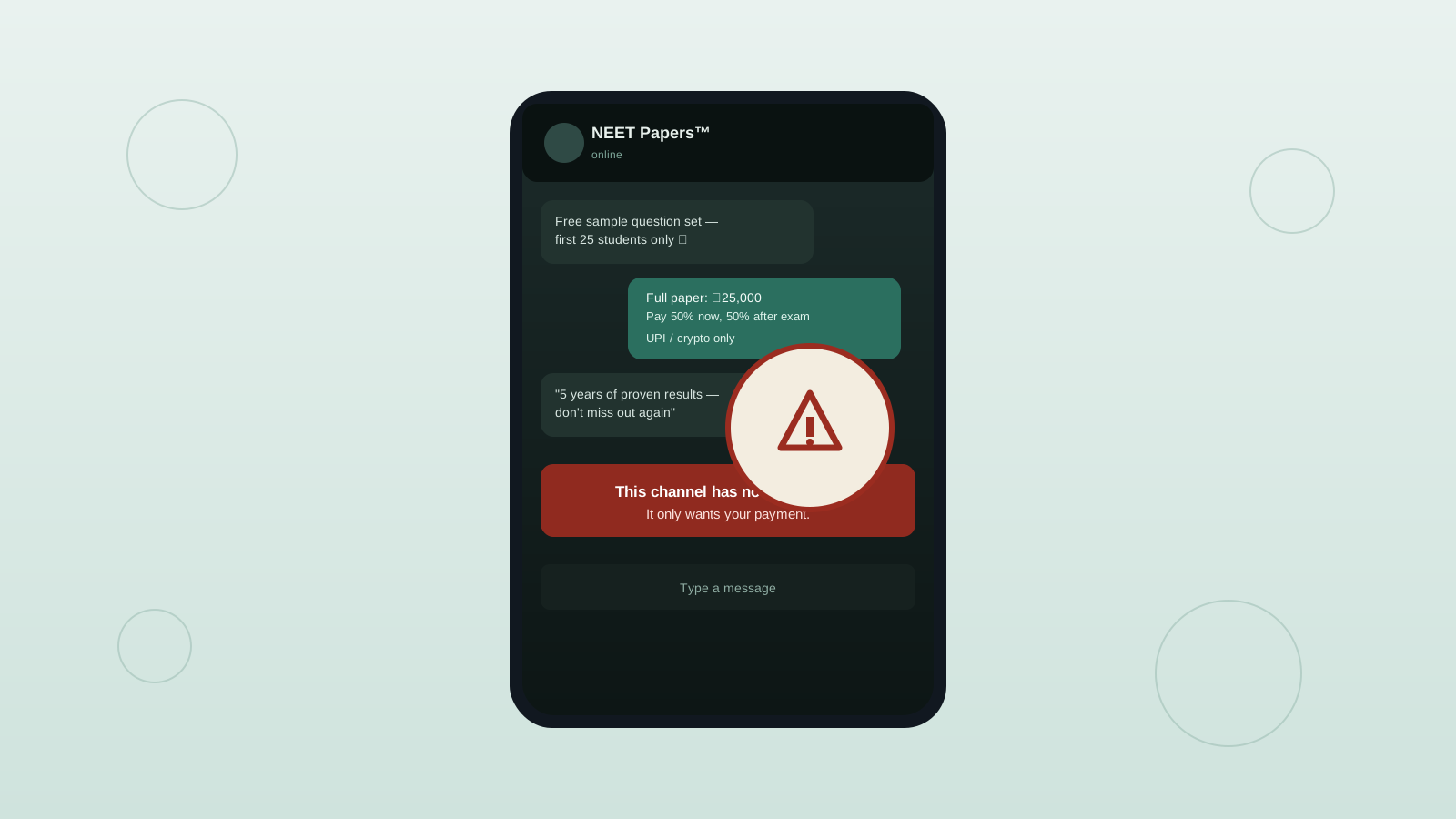
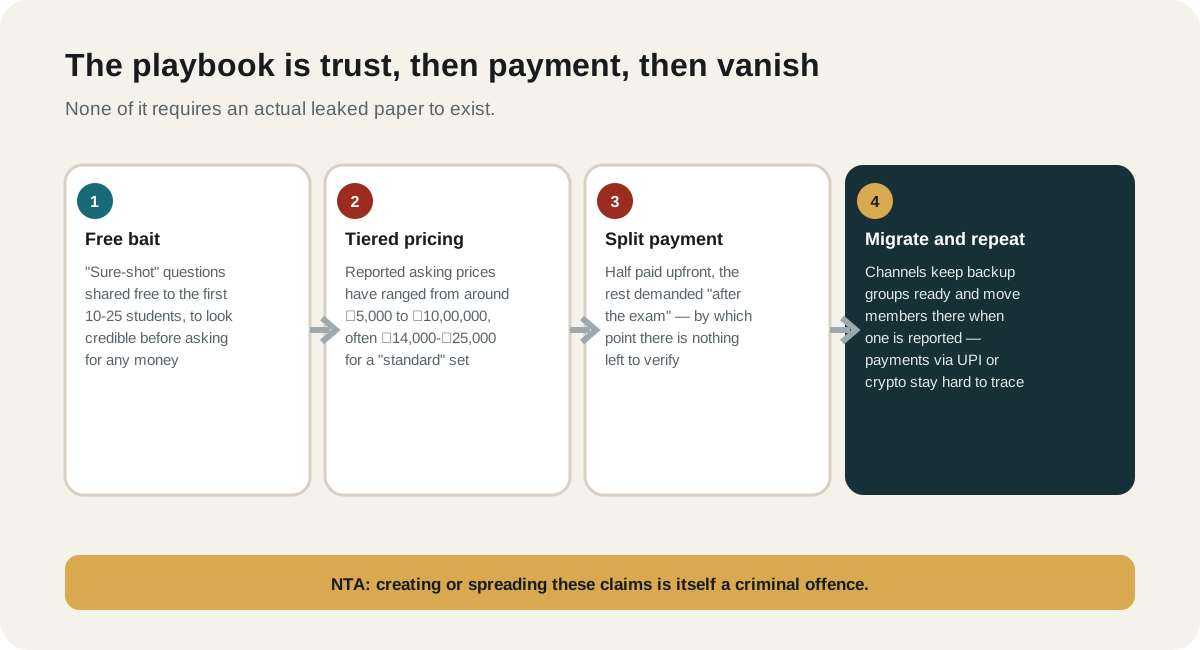
The channels typically follow a consistent script. They open with a free "sample" — a handful of "sure-shot" questions shared at no cost, often limited to "the first 10 to 25 students," designed purely to look credible before any money changes hands. Some channels claim a five-year track record of "proven" leaked papers, and publicly denounce rival channels as frauds, borrowing the language of legitimacy to distinguish themselves from the very scam they are running.
Once trust is established, pricing appears. Reported figures vary widely — from around ₹5,000 at the low end to as much as ₹10,00,000 for "premium" access — with a commonly cited mid-range of ₹14,000 to ₹25,000 for a full paper set. Payment is frequently split: roughly half upfront, the remainder demanded "after the exam," by which point a buyer has no way to verify anything and no realistic path to a refund. Payments are typically routed through UPI or cryptocurrency, chosen specifically because they are harder to trace and reverse.
How a fake "proof" gets made
Investigators examining one specific Telegram claim found that the channel's evidence was not a leaked pre-exam paper at all. A genuine question paper — legitimately photographed by a candidate after finishing the actual exam — had been digitally inserted into an older chat thread, made to look as though it had been circulating before the test started. The manipulation created the appearance of foresight where there was none. This is a useful detail for readers: the existence of a real photograph of a real question paper proves only that someone had a camera in the exam hall, not that anything leaked beforehand.
This is a different story from the real leak
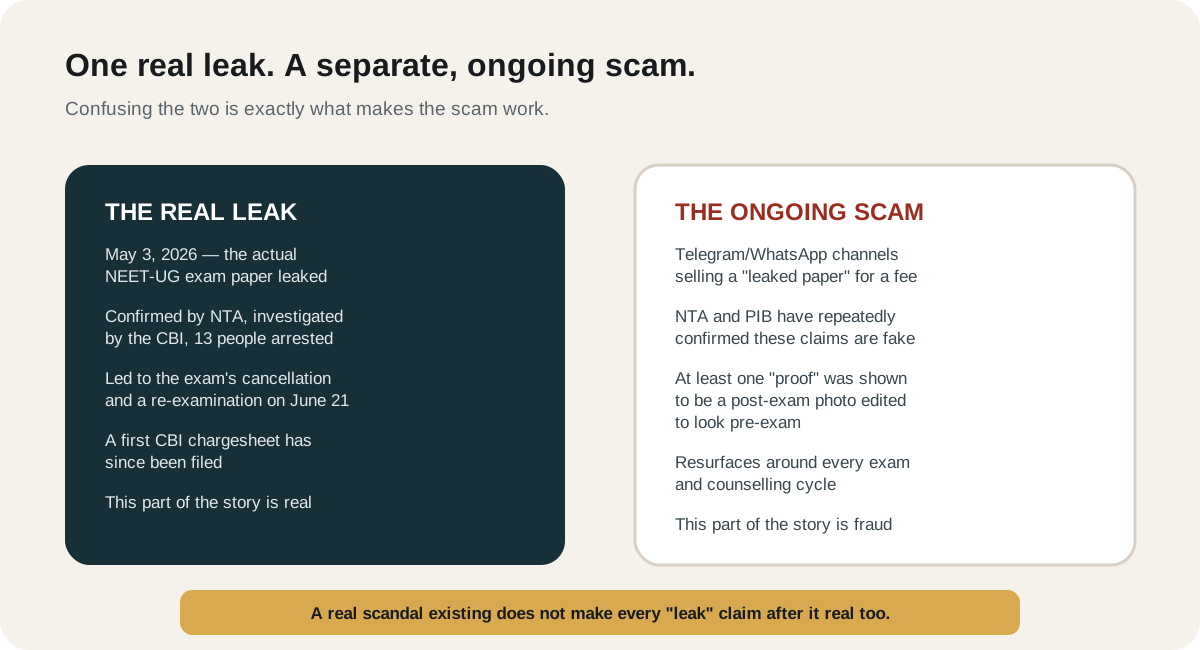
It matters that these are two separate stories, because conflating them is exactly what gives the scam its credibility. The real leak happened before the May 3, 2026 exam: NTA cancelled that test on May 12 after investigators found substantial overlap between a pre-circulated "guess paper" and the actual questions, particularly in Chemistry and Biology. The Central Bureau of Investigation (CBI) took over the case, arrested 13 people — reportedly including NTA-linked subject experts alleged to have coached select students and profited significantly — and has since filed its first chargesheet.
The Telegram and WhatsApp "buy the paper" scam is a different, ongoing phenomenon that piggybacks on the credibility of that real scandal. Because students already know a leak genuinely happened once, a fresh unverified claim reads as plausible rather than suspicious — which is precisely the vulnerability these channels are built to exploit.
What the law says about this
India's Public Examinations (Prevention of Unfair Means) Act, 2024 makes both participating in and facilitating exam fraud a criminal offence, with individual offenders facing three to five years in prison and fines up to ₹10 lakh, and organised syndicates facing five to ten years and fines starting at ₹1 crore. NTA has stated explicitly that creating or deliberately spreading fake leak claims — even without an actual leak involved — is itself a serious offence, separate from any fraud committed against people who pay for a nonexistent paper.
A practical checklist
- Treat "pay before the exam" requests as disqualifying on their own. No genuine information source needs your money in advance.
- A real photo doesn't prove a pre-exam leak. Ask when the material was supposedly obtained, and treat vague or shifting answers as a red flag.
- Check official channels only. Verify any leak claim against NTA's and PIB's own verified accounts, not against screenshots forwarded through group chats.
- Free "samples" are bait, not proof. Building trust cheaply before asking for a large payment is a standard fraud technique, not a sign of legitimacy.
- Report, don't just leave. Channels rely on quietly losing reported members and reappearing elsewhere — reporting to NTA, PIB, or 1930 (India's cybercrime helpline) helps close that loop.
The verdict
False, and recurring. No verified leaked NEET-UG paper has been available for purchase through Telegram or WhatsApp. NTA and PIB have repeatedly confirmed these specific claims are fake, separate from the one confirmed leak already under CBI investigation.
Sources
- NEET paper leak claims on Telegram, WhatsApp FAKE, do not fall for scams: NTA — Medical Dialogues
- NTA flags fraudulent Telegram channels claiming to sell leaked Re-NEET 2026 question papers — The420.in
- Telegram channels selling alleged NEET re-examination papers — Esya Centre
- NTA responds to viral paper leak claim on Telegram, says fake — Careers360
- NEET leak was designed to leave no trace, until accused 'recreated paper' and left digital trail — ThePrint
- BT Explainer: what the Public Examinations Act, 2024 says — Business Today
Full forms
- NTA — National Testing Agency
- PIB — Press Information Bureau
- CBI — Central Bureau of Investigation
- UPI — Unified Payments Interface
- I4C — Indian Cyber Crime Coordination Centre
Primary-source visual check
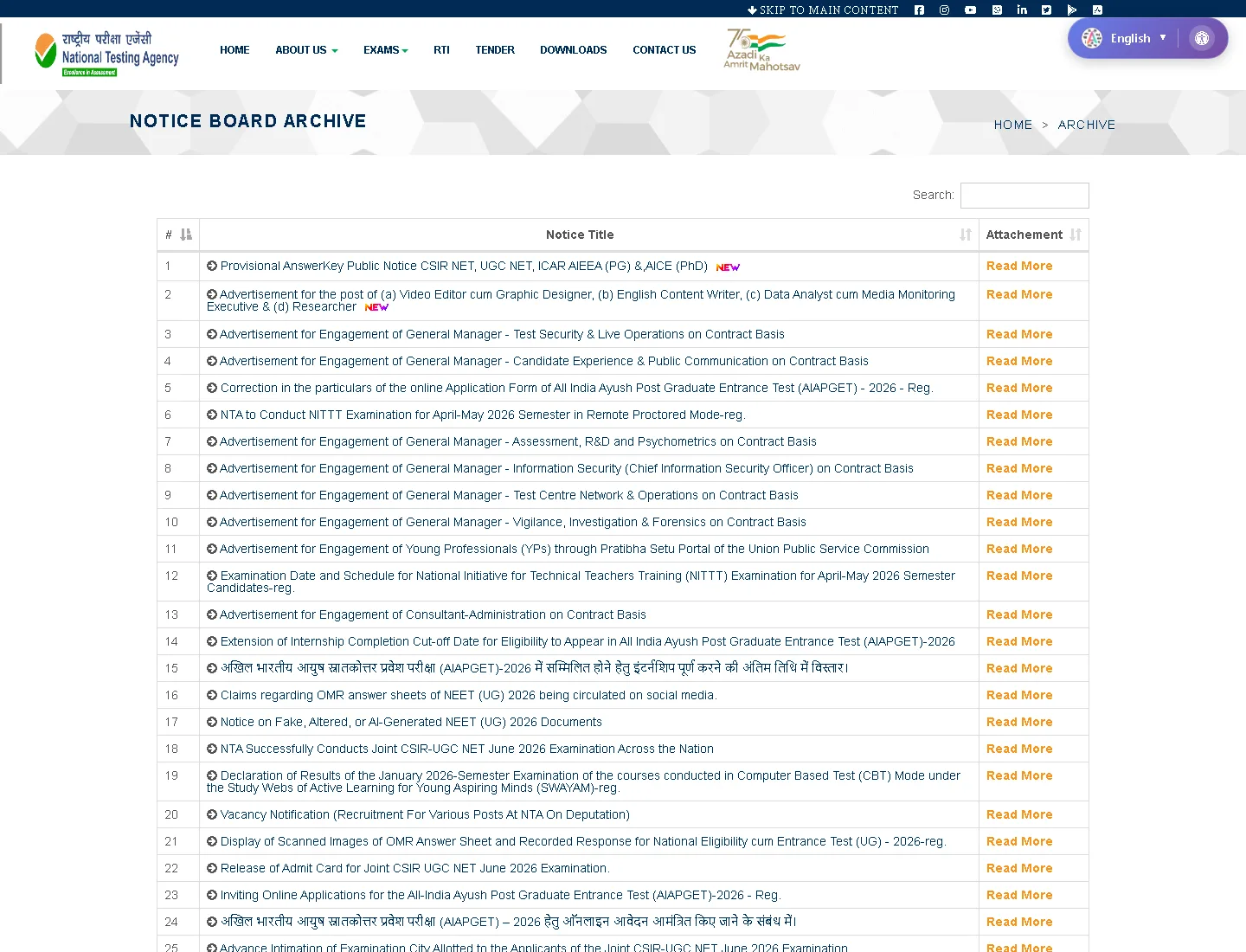
Update, August 12, 2026: We added this documentary capture from an authoritative source. Open the official source. The capture supports the verification route described here; it is not evidence for claims beyond what the linked source states.
HeadlineDecoded is committed to accuracy and transparency. Read our standards or submit a correction.