If you are preparing to vote for the first time, do not treat viral claims that delimitation will definitely transform the 2029 election—or definitely wait until 2034—as settled fact. Census 2027 is underway, but a new electoral map needs several later steps whose dates are not fixed: publication of census figures, a valid legal framework, constitution of a Delimitation Commission, draft proposals, objections, public sittings and final orders.
The story in 60 seconds
- Census 2027 has an official reference date of March 1, 2027; house-listing operations began during 2026.
- The 2026 fast-track package did not become law: its constitutional amendment was negatived and the linked delimitation proposal withdrawn.
- Article 82 keeps interstate seat readjustment frozen until figures from the first census taken after 2026 are published.
- No official record currently guarantees that new boundaries will apply in either the 2029 or 2034 Lok Sabha election.
- Women’s reservation is constitutionally linked to a post-2023 census and a subsequent delimitation, but its first election of operation is not officially fixed.
- Students can act now: use Form 6 to register, verify the electoral roll and use Form 8 after moving or to correct entries.
AI SummaryAI-generated summary, reviewed by editors
Census 2027 is underway, but neither 2029 nor 2034 is an official delimitation deadline. New boundaries require published census figures, a valid legal framework, a Commission and final orders. Here is the verified timeline—and what young voters can do now.
Switch to Shorts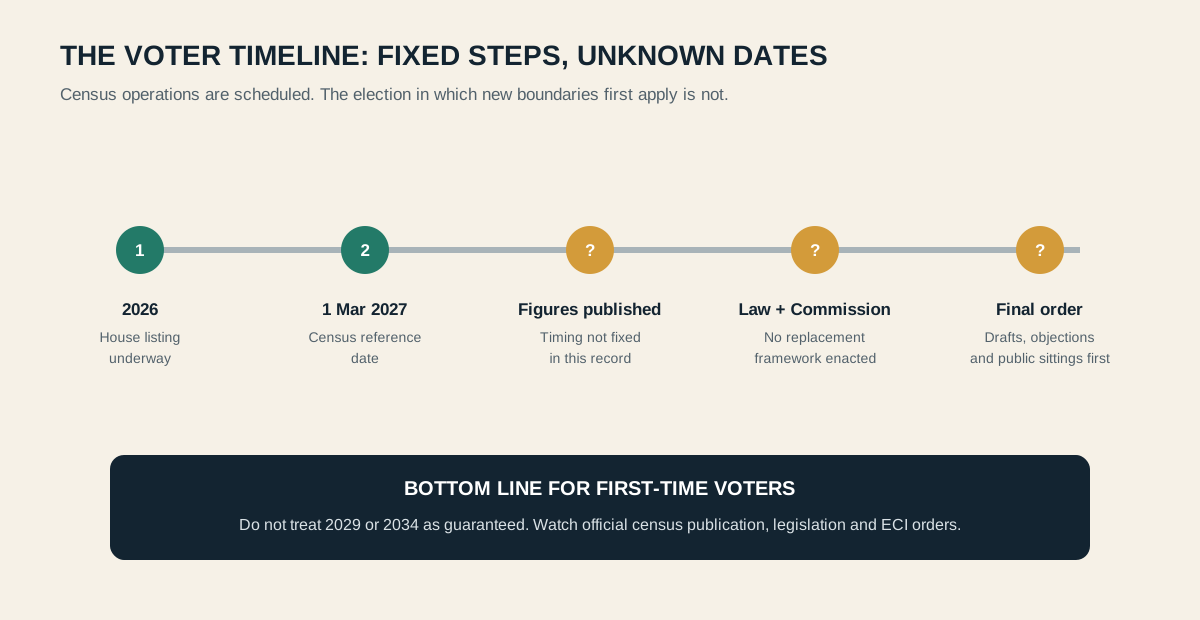
What is fixed on the calendar
The government notified Census 2027 with a March 1, 2027 reference date for most of India. Population enumeration is scheduled for February 2027, while specified snow-bound areas use an October 1, 2026 reference date. This is no longer an “expected around 2027” exercise; it is an officially scheduled census whose field operations began in 2026.
What is not fixed here is when the final population tables relevant to delimitation will be published. The constitutional trigger refers to published figures, not merely completion of household visits.
Why the 2026 bill does not settle 2029
The Constitution (131st Amendment) Bill proposed letting Parliament select the census basis and sought to accelerate the linked women’s-reservation trigger. It was negatived in the Lok Sabha on April 17, 2026, and the government withdrew the linked delimitation proposal. The earlier article correctly noted the defeat but overstated what followed by declaring 2029 effectively ruled out and 2034 the “real deadline.”
A fresh constitutional or statutory proposal could change the pathway. Conversely, even after census figures appear, drafting, hearings and implementation can take time. Without an enacted framework and official timetable, certainty in either direction is not justified.
Could existing boundaries still be used in 2029?
Yes, that is plausible—but it is a forecast, not a guarantee. The current Lok Sabha has 543 elected seats and the 2026 expansion package failed. For a new map to govern 2029, Parliament and election authorities would need to complete every necessary legal and administrative step in time. No current final order establishes that outcome.
Students should distinguish three statements: “the current map remains law” is confirmed; “the current map will definitely govern 2029” is a prediction; and “2034 will definitely use new boundaries” is also a prediction.
Is 2034 the first guaranteed delimitation election?
No. It may be a plausible scenario if census figures, legislation and Commission work take several years, but it is not a constitutional deadline. The 2002 Commission offers useful process history, not a stopwatch: its nationwide work extended to the 2008 order, while some states were deferred and later exercises followed different routes.
The responsible formulation is conditional: 2034 could be the first general election under a new nationwide map, but only if the required legal process finishes after 2029 and before that election.
What about women’s reservation?
The 106th Constitutional Amendment provides that one-third reservation for women becomes operative after delimitation based on the first census conducted after that amendment. Census 2027 supplies the relevant future census, but the Constitution still requires the subsequent delimitation step. Neither 2029 nor 2034 is written into that provision as the guaranteed start election.
What first-time voters should do now
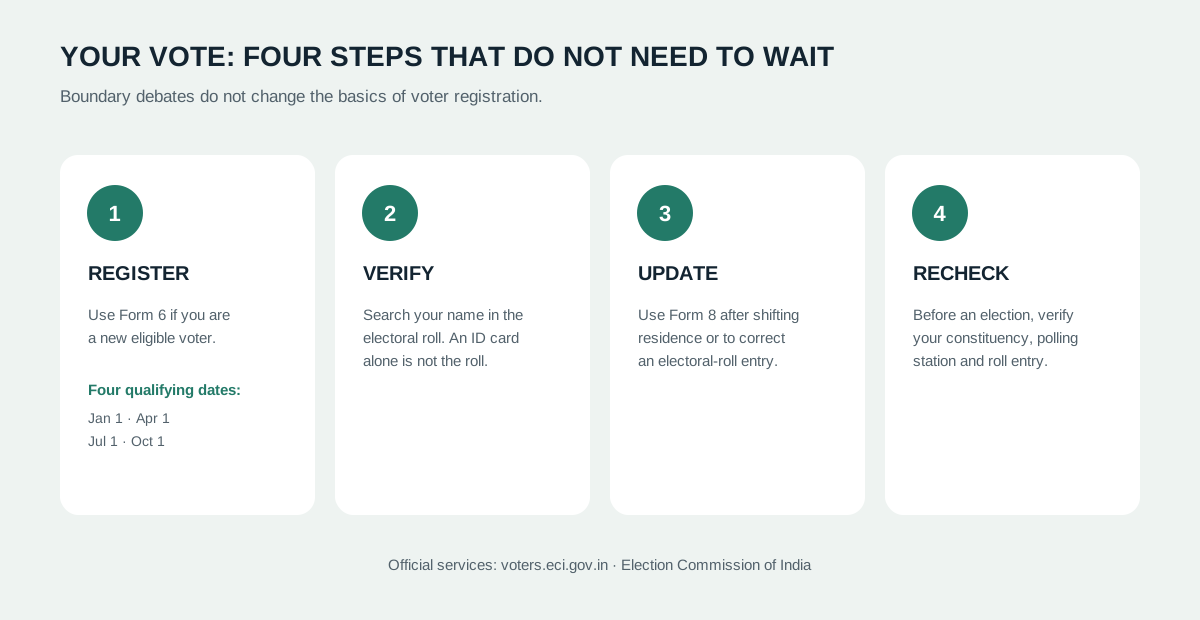
- Register: new eligible voters use Form 6. Citizens turning 18 on January 1, April 1, July 1 or October 1 can apply under the four qualifying-date system.
- Verify your name: check the electoral roll at the official ECI voter portal. Possessing an EPIC does not replace checking the roll entry.
- Update after moving: use Form 8 for shifting residence or correcting existing entries.
- Recheck before polling: confirm your constituency, polling station and roll entry from official election information.
Do not wait for delimitation. Registration follows your ordinary residence under the map currently in force; election authorities update rolls when lawful boundary changes take effect.
Different democracies handle population and chamber size differently. Our international seat-allocation comparison explains the US, German and EU models without treating them as direct equivalents.
The milestones that would make a new map real
- publication of relevant Census 2027 population figures;
- an enacted constitutional and statutory framework;
- formal constitution of a Delimitation Commission;
- published draft allocation and boundary proposals;
- objection periods and public sittings;
- final gazetted orders and an official commencement date;
- updated electoral rolls and polling arrangements from ECI.
Related coverage
Read the full 2026 bill and status explainer, our guide to how a Delimitation Commission works, and the ongoing coverage hub.
Frequently asked questions
Will my constituency definitely change before 2029?
No official final order says that. Existing boundaries remain law unless a completed process replaces them.
Is 2034 officially confirmed?
No. It is one plausible scenario, not an announced constitutional or election deadline.
Can I register before my eighteenth birthday?
ECI permits advance applications linked to four annual qualifying dates—January 1, April 1, July 1 and October 1.
What if I move for college or work?
Eligibility follows ordinary residence. Existing electors use Form 8 to shift their electoral-roll entry to a new address.
Sources
- Official Census 2027 phases and reference date — PIB / Registrar General and Census Commissioner
- Constitution (131st Amendment) Bill and status — PRS
- Constitutional freeze and women’s-reservation trigger — PRS
- How to register and verify your electoral-roll entry — Election Commission of India
- Four qualifying dates and Form 8 guidance — Election Commission of India
HeadlineDecoded is committed to accuracy and transparency. Read our standards or submit a correction.