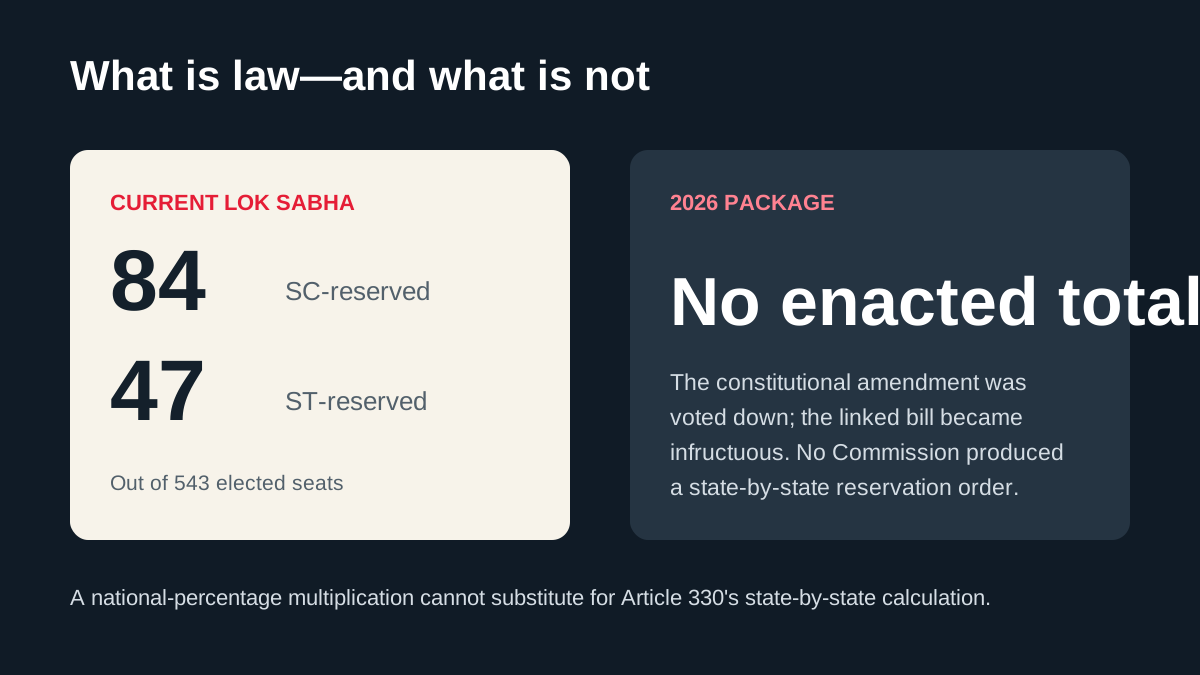
Delimitation affects more than the number of MPs allotted to each state. It can also change how many constituencies are reserved for Scheduled Caste (SC) and Scheduled Tribe (ST) candidates and where those constituencies are located. But the distinction between current law and political projection matters: India still has 84 SC-reserved and 47 ST-reserved Lok Sabha seats. The 2026 delimitation package did not become law, no new Commission completed an exercise, and no official future SC/ST seat count exists.
The story in 60 seconds
- Article 330 requires SC and ST representation in the Lok Sabha, calculated approximately in proportion to their population within each state or Union Territory, subject to constitutional qualifications.
- The current 543 elected Lok Sabha seats include 84 SC-reserved and 47 ST-reserved constituencies, according to Election Commission statistics.
- The 2002–08 delimitation used 2001 Census figures to redraw constituencies and update reserved-seat locations while state Lok Sabha totals remained frozen.
- SC seats must be spread across different parts of a state and placed, as far as practicable, where the SC population share is comparatively large. ST seats are placed where the ST share is largest, as far as practicable.
- A reserved constituency is not a separate electorate: every registered voter there may vote, but only a candidate from the specified community may contest the reserved seat.
- The Constitution (131st Amendment) Bill, 2026 was voted down. Its linked Delimitation Bill became infructuous, so projections such as “141 SC and 73 ST seats” are not official and should not be presented as likely outcomes.
AI SummaryAI-generated summary, reviewed by editors
India currently reserves 84 Lok Sabha seats for Scheduled Caste candidates and 47 for Scheduled Tribe candidates. Delimitation can change both the number and location of reserved constituencies—but the failed 2026 package produced no official new totals.
Switch to Shorts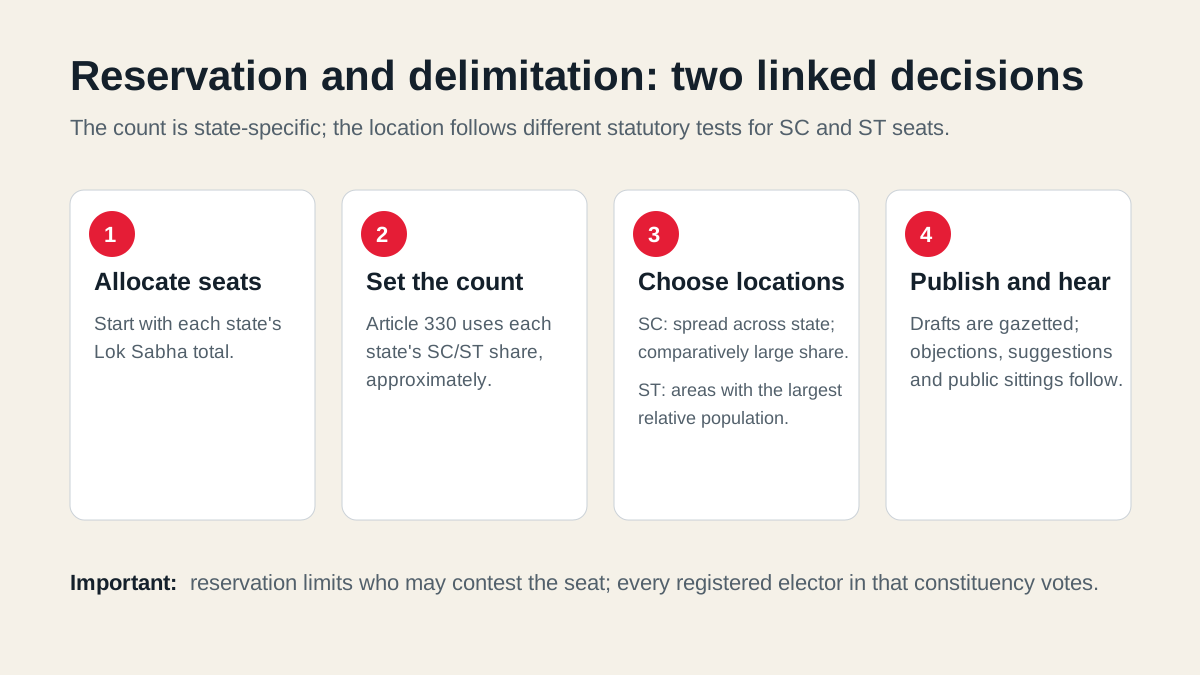
Two decisions are often confused
A delimitation exercise may involve two related but distinct choices. First comes the allocation of total seats among states under the governing constitutional framework. Then Article 330 determines, approximately and state by state, how many of those seats are reserved for SCs and STs. A single national percentage multiplied by a hypothetical House size cannot reproduce that calculation.
Second, the Commission decides which constituencies carry the reservation. Section 9 of the Delimitation Act, 2002 does not prescribe a universal percentage cutoff. For SC seats, it requires geographic distribution across the state as well as comparatively large SC population shares. For ST seats, it points to areas where the ST proportion is the largest. Compactness, administrative boundaries, communication and public convenience also shape the map.
What 84 and 47 actually mean
The Election Commission's electoral statistics record 84 SC and 47 ST reserved seats from the 2009 Lok Sabha election onward, compared with 79 and 41 through 2004. The change followed the 2008 delimitation order. Those numbers reserve candidacy, not the electorate: an SC-reserved seat may be contested only by an SC candidate, and an ST-reserved seat only by an ST candidate, while all eligible voters in the constituency participate.
Reservation also does not predetermine party, ideology or policy. It guarantees an electoral route for candidates from constitutionally recognised communities; whether that produces substantive representation depends on candidate selection, party power, constituency design and the elected MP's accountability.
Why there is no reliable “next” seat count
The 2026 constitutional amendment proposed a new framework and a higher Lok Sabha ceiling, while the accompanying Delimitation Bill would have empowered a Commission to determine seats reserved for SCs, STs and women. But the amendment failed to obtain the required special majority on April 17, and PRS records the linked bill as rendered infructuous.
That leaves three missing inputs for any credible forecast: an enacted constitutional rule, a valid operational law and a Commission's state-by-state orders based on the census specified by law. Even if a future House expands, absolute reserved-seat totals could rise, fall in particular states or move between constituencies depending on the final framework and population data. Certainty is not warranted.
How communities can scrutinise a future map
The 2002 Act requires draft proposals to be published in the Gazette, invites objections and suggestions, and requires public sittings before final orders. That process is where residents, civil-society groups and political parties can test whether boundaries divide concentrated communities, whether reserved seats are appropriately located and whether administrative or geographic reasons justify the draft.
The useful evidence will be constituency-level census tables, the Commission's reasons, dissenting proposals and final orders—not viral maps or national back-of-the-envelope totals. Our guide to the Commission process explains those checkpoints in detail.
What remains unresolved
- Census basis: a future exercise needs the population figures specified by a valid legal framework.
- House and state totals: neither the proposed 850 ceiling nor the government's 816-seat illustration became law.
- Intersection with women's reservation: the failed 2026 bill contemplated determining seats reserved for women, including within SC/ST representation, but produced no operative map.
- Location effects: even where a state's reserved-seat count remains stable, redesignating constituencies can reshape party competition and local representation.
Related delimitation coverage
Read the 2026 bill and North–South dispute explainer, the fact-check of the government's seat illustration, and the first-time voter's timeline.
Frequently asked questions
How many Lok Sabha seats are currently reserved for SCs and STs?
There are 84 SC-reserved and 47 ST-reserved seats among the Lok Sabha's 543 elected constituencies.
Does only the reserved community vote in these seats?
No. Every eligible elector in the constituency votes. The reservation governs candidate eligibility for that seat.
Will delimitation automatically increase SC and ST seats?
No official future total exists. The result would depend on the enacted rules, state seat totals, legally applicable census figures and Commission orders.
Did the 2026 delimitation proposal become law?
No. The constitutional amendment was voted down and the linked Delimitation Bill became infructuous.
Primary sources
- Constitution of India, Article 330 — Legislative Department
- Delimitation Act, 2002, Section 9 — India Code
- Delimitation of Parliamentary and Assembly Constituencies Order, 2008 — Election Commission of India
- Electoral Statistics: SC/ST seats in Lok Sabha — Election Commission of India
- Budget Session 2026 bill status — PRS Legislative Research
HeadlineDecoded is committed to accuracy and transparency. Read our standards or submit a correction.