Air India flight AI2379 from Phuket to Delhi experienced an in-cruise event on August 4, 2026, involving a momentary altitude change, and landed safely in Delhi. That is the firm public core. Beyond it, accounts of an approximately 300-foot loss, warning indications, hydraulic failures, injury totals and the pilot-in-command's drug-screening results come from attributed or anonymously sourced reporting—not a public AAIB technical report. This explainer separates those layers instead of treating every repeated detail as an established finding.
Status at a glance
Investigation ongoing: the occurrence is real and the landing was safe. The initiating event, technical sequence, crew response, verified injury count and causal significance of any medical result remain matters for investigators or on-record authorities to establish.
The story in 60 seconds
- Air India's public account said AI2379 experienced a brief turbulence-related event during cruise and a momentary change in altitude before landing safely in Delhi.
- The airline said a small number of passengers and crew received precautionary medical examination and reported no serious injuries. Media totals have varied.
- Reports have described a roughly 300-foot altitude change and possible aircraft-system indications. No public AAIB preliminary or final report reviewed on August 12 established the full technical sequence.
- The Ministry of Civil Aviation reportedly said the inquiry was examining technical, operational, medical and human-factor evidence and warned against drawing a conclusion from one piece of information.
- Media reports say the pilot-in-command's initial psychoactive-substance screening required confirmatory testing; later reports cited sources saying the laboratory result was positive for marijuana. An Air India statement reported by Reuters said the results had not been shared with the airline at that stage.
- A screening result, even if confirmed, does not by itself establish why an aircraft changed altitude. Causation requires the complete operational and technical record.
AI SummaryAI-generated summary, reviewed by editors
Air India confirmed an in-cruise event and safe landing on the August 4 Phuket–Delhi flight. Claims about a 300-foot drop, technical failures, injuries and pilot testing require different levels of confidence while the safety investigation continues.
Switch to Shorts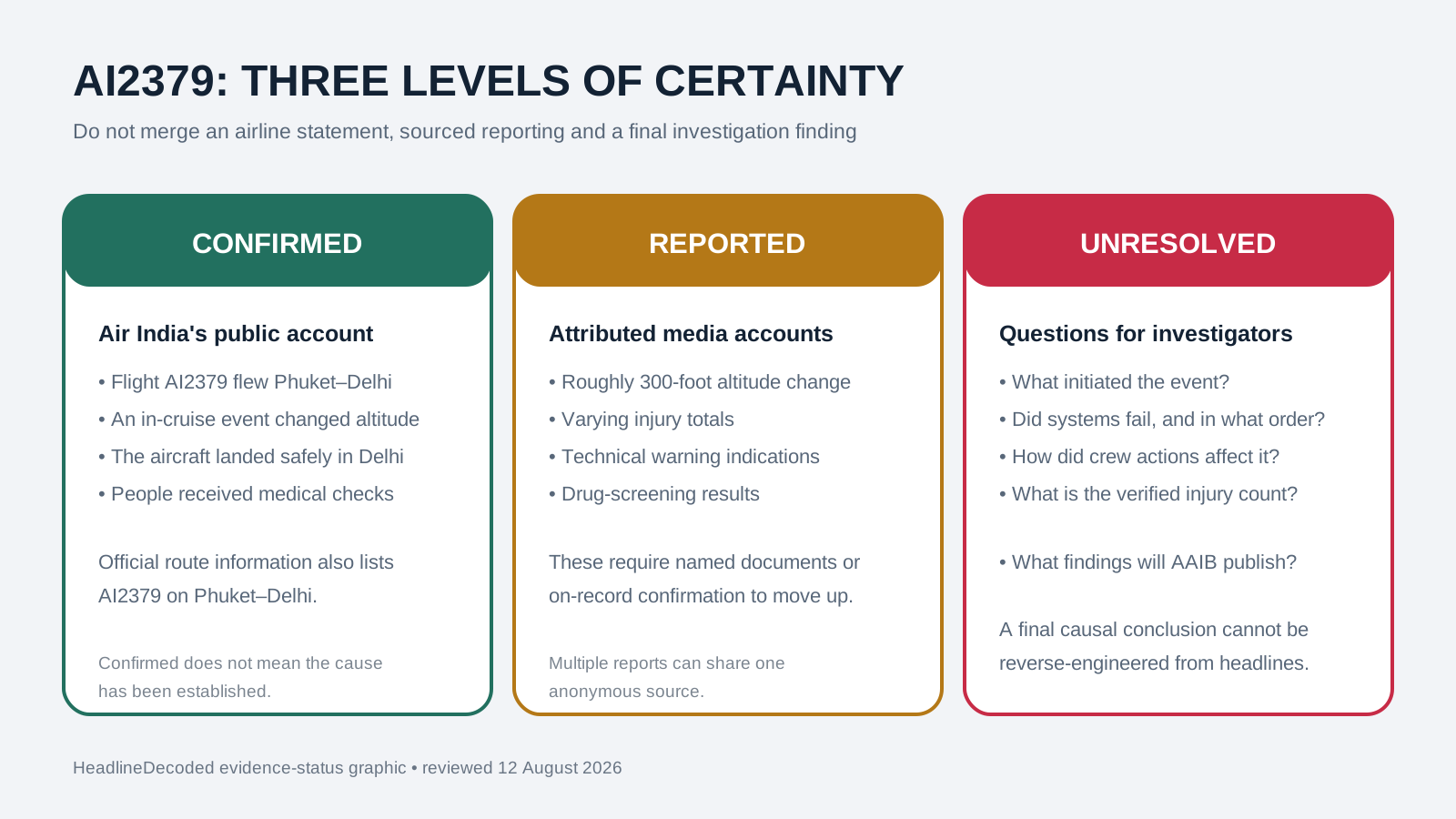
What Air India has put on the record
The airline's statement, widely carried on August 4, provides the safest starting point: Flight AI2379, operating from Phuket to Delhi, encountered a brief turbulence-related event during cruise, producing a momentary altitude change. The aircraft landed safely in Delhi. Air India said no serious injuries were reported and that a small number of passengers and crew were taken for precautionary medical examination.
Air India's own route page independently confirms that AI2379 is used for the Phuket–Delhi service. Neither the route page nor the initial airline statement establishes the detailed sequence now circulating in reports.
The “300 feet” and technical-failure claims
Several news organisations have described an approximately 300-foot altitude loss. Later accounts added alleged cockpit indications, autopilot behaviour and hydraulic-system problems. Those details may eventually be supported, modified or rejected by recorded data, maintenance evidence and investigator analysis. Until an AAIB document or an on-record authority publishes them, they should be labelled reported, not “what the flight data confirms.”
The previous version of this article went too far: it presented failure of all three hydraulic systems, an autopilot disconnect, a stall warning and a particular sequence of crew actions as confirmed facts. It did not cite a public flight-data readout or investigation report. Those assertions have been downgraded and the wording corrected.
How many people were injured?
The initial airline statement used the phrase “a small number” and said there were no serious injuries. News reports have published different totals, including 17 and 24. Without a later on-record manifest-linked count from the airline, airport, hospital or investigating authority, a precise number should remain provisional. “Taken for medical examination” also should not automatically be translated into a specific severity classification.
What “Serious Incident” means
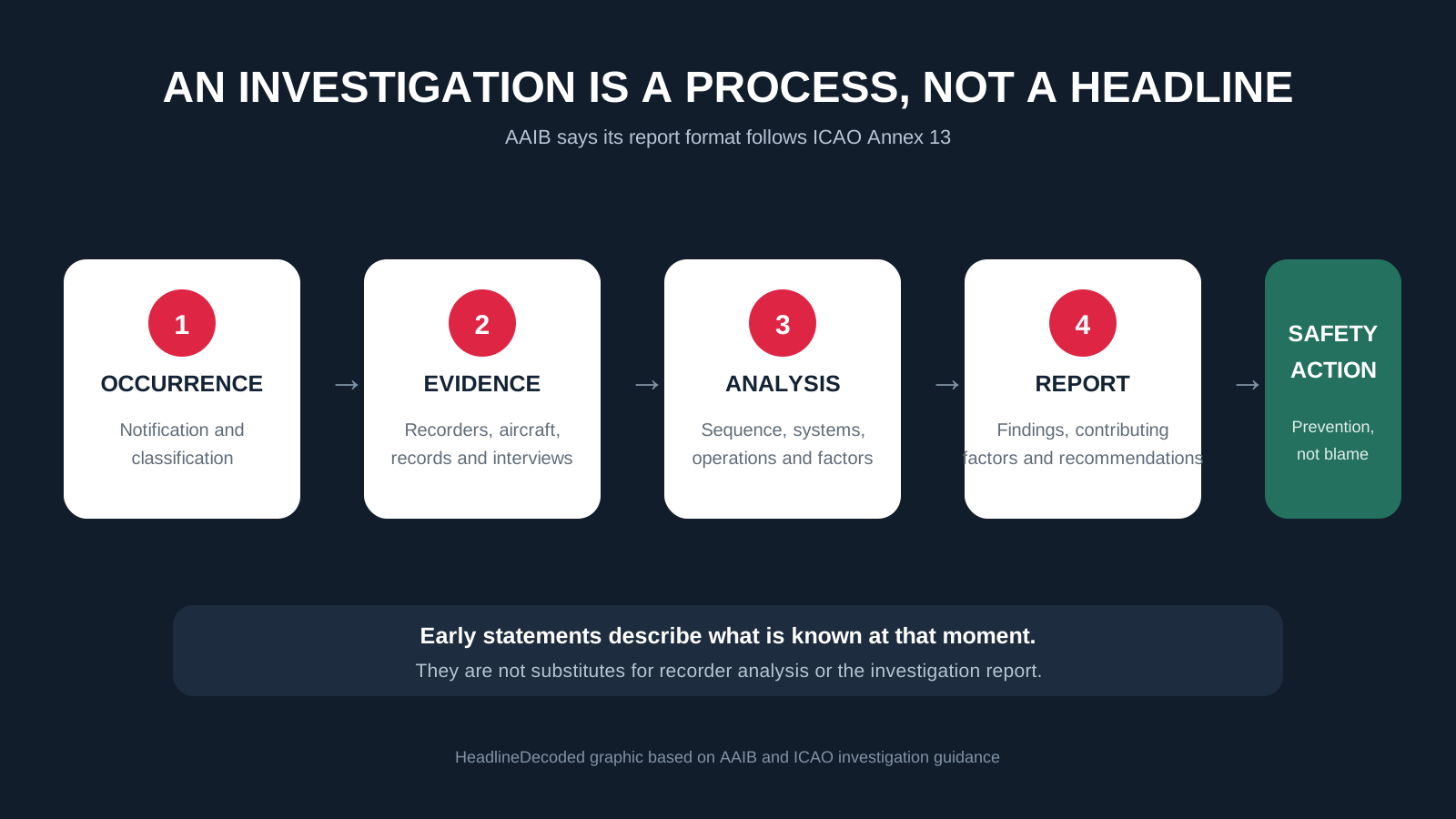
Reports citing the Civil Aviation Ministry say the occurrence was classified as a serious incident and investigated by the Aircraft Accident Investigation Bureau. AAIB explains that once an occurrence is classified as an accident or serious incident, investigators are appointed under India's 2017 rules and the report format follows ICAO Annex 13.
ICAO says the sole objective of an Annex 13 safety investigation is prevention, not assigning blame or liability. Investigators build a record from aircraft and recorder data, maintenance and operational documents, weather information, medical evidence and interviews. That is why an early headline cannot settle cause.
The pilot-testing question
Media reports said the pilot-in-command's initial screening for psychoactive substances required laboratory confirmation. Reuters reported on August 9 that the Civil Aviation Ministry had acknowledged an initial screening that led to further testing; the same report quoted Air India as saying the result had not been shared with the airline and it therefore could not comment on findings. Later outlets, citing sources, reported a confirmatory positive for marijuana.
This article does not convert that sourced claim into an official AAIB, DGCA or airline finding. It also does not infer impairment during the flight. A toxicology result, the timing and meaning of exposure, fitness for duty, crew actions and the cause of the altitude event are distinct questions requiring appropriate evidence.
What DGCA rules say—and what they do not say
DGCA's published framework requires operators to arrange examination of aviation personnel for psychoactive-substance consumption. Reporting on the CAR describes a two-stage process in which an initial non-negative screening is followed by confirmatory laboratory testing. A first confirmed positive is handled through medical review and de-addiction or rehabilitation provisions; repeated confirmed positives attract progressively stronger licensing consequences.
Those administrative consequences should not be confused with an accident-investigation conclusion. Personnel rules answer what follows a confirmed test. AAIB's investigation addresses what happened to the aircraft and why.
Claim versus evidence
- Confirmed by the airline: an in-cruise event and momentary altitude change occurred; AI2379 landed safely in Delhi; some occupants received precautionary medical examination.
- Reported by multiple outlets: the altitude change was approximately 300 feet.
- Reported, not established in a public AAIB report: the detailed sequence of hydraulic indications, autopilot disconnect, warning messages and crew actions.
- Reported with varying figures: the exact number of injured passengers and crew.
- Reported from sources: the confirmatory laboratory result for the pilot-in-command.
- Not established: that turbulence alone, a technical failure alone or any individual action caused the event.
What to watch next
- An AAIB investigation order, preliminary information or final report tied specifically to AI2379.
- On-record clarification from DGCA or Air India about the testing process and final administrative action.
- A reconciled injury count and severity classification.
- Any safety recommendation concerning aircraft systems, maintenance, weather avoidance, cabin procedures or crew operations.
Related HeadlineDecoded coverage
For another example of separating an event from viral embellishment, read our evidence-led gravity-hoax fact-check. Our Gaganyaan G1 explainer shows why safety-critical programmes use staged tests, while the sale-scam evidence review demonstrates the same distinction between documented methods and an unproven trend.
Frequently asked questions
Did AI2379 crash or make an emergency landing?
No crash occurred. Air India said the aircraft landed safely in Delhi. The public airline statement did not describe a crash.
Did the aircraft definitely lose 300 feet?
Approximately 300 feet is widely reported, but the reviewed public airline statement says only “momentary change in altitude.” Treat the precise number as reported until an official technical record publishes it.
Did all three hydraulic systems fail?
That claim appears in media reporting, but no public AAIB technical report reviewed for this update established it. It should not yet be presented as a final finding.
Did the pilot test positive for marijuana?
Later reports citing sources say a confirmatory laboratory test was positive. This update did not find an on-record result published by Air India, DGCA or AAIB, so it remains attributed reporting here.
Does a positive test prove the cause?
No. A test result and the cause of an aircraft event are separate evidentiary questions. Investigators must analyse the full technical, operational and human-factor record.
Sources and source status
- Official Phuket–Delhi route and AI2379 listing — Air India
- Investigation process — Aircraft Accident Investigation Bureau
- Annex 13 investigation purpose and reporting framework — ICAO
- Civil Aviation Ministry statement on the investigation — The Week
- Initial screening and Air India response — ThePrint
- Source-based report on confirmatory testing — Business Today
Editor's note: This article will require another review when AAIB, DGCA or Air India publishes a substantive on-record update.
HeadlineDecoded is committed to accuracy and transparency. Read our standards or submit a correction.