
A job ending after a background-verification (BGV) issue can make the next application feel impossible. It is not proof that an IT career is over. The useful starting point is to stop guessing, get the exact reason in writing, correct any genuine error, and make every future application match records you can support.
This is a service guide for a worker whose employment ended after BGV—whether the employer named a mismatch in dates, education, prior employment, identity details or another document. It cannot decide whether a particular termination was valid, predict a recruiter’s decision or tell a reader to hide information. If the issue involved a false document, an omission or a disputed record, the safest next step is an accurate, document-led account.
The story in 60 seconds
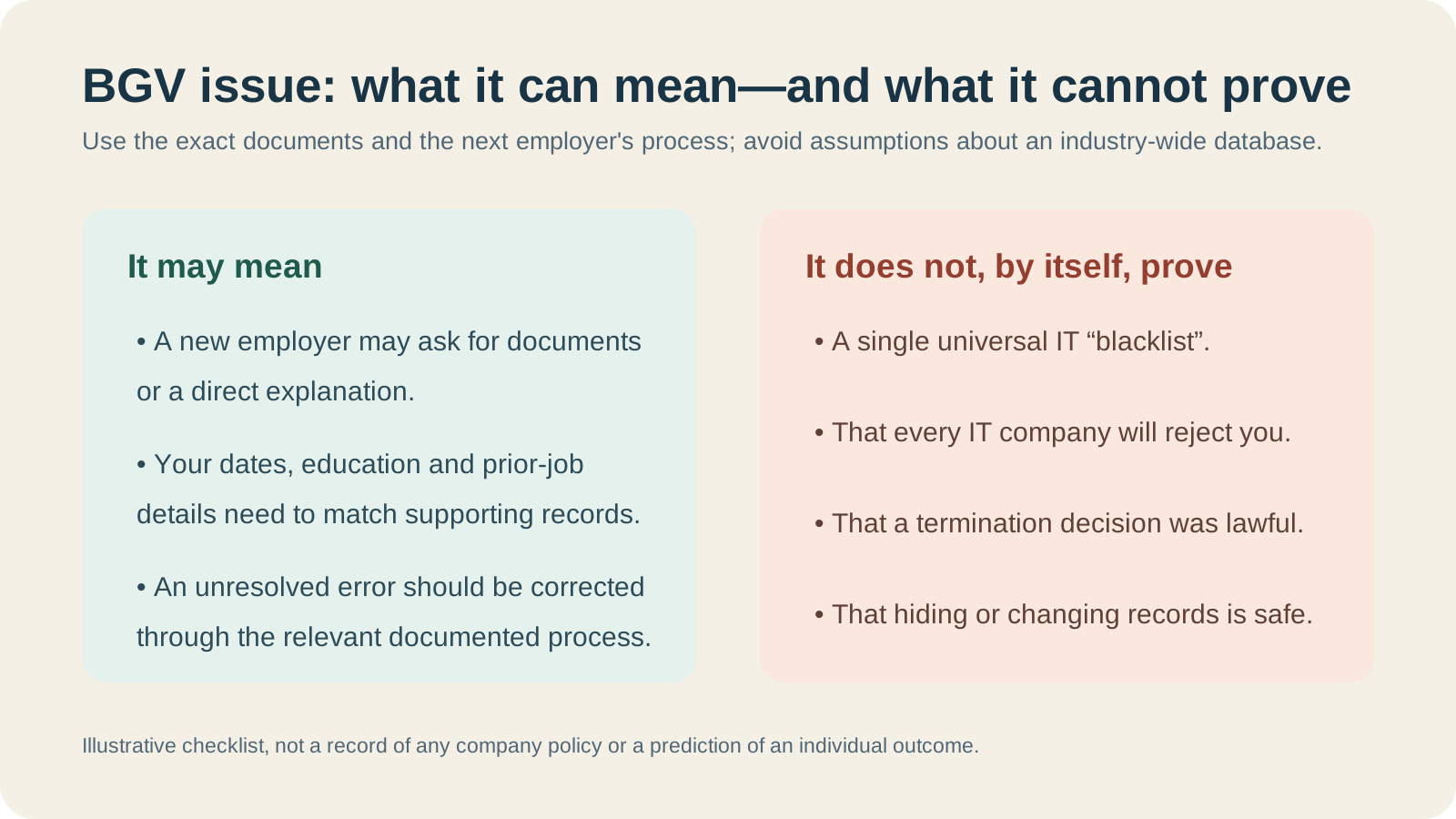
- One BGV-related termination can lead future employers to ask questions, but it does not by itself prove a permanent ban from IT work.
- We found no authoritative evidence for a universal, industry-wide IT “blacklist”; do not base a career decision on that claim.
- Get the exact reason, dates and documents from the former employer or verifier before rewriting a CV or answering an interviewer.
- Correct a real record error through the documented process. Do not alter dates, fabricate letters or conceal a direct question about a previous job.
- If you believe the termination may have been unlawful, preserve evidence and seek individual employment-law advice; eligibility for a labour remedy depends on the facts and legal status of the worker.
AI SummaryAI-generated summary, reviewed by editors
A BGV-related termination can complicate an IT job search, but it is not proof that a career is over. Here is how to verify records, correct genuine errors and apply honestly.
Switch to ShortsFirst: separate a BGV issue from an industry-wide ban
Background checks are a normal part of hiring. Infosys’ public candidate privacy statement says that it processes employment-related information and background-check details in recruitment, including verification by an authorised vendor. That is evidence that BGV is part of a hiring process; it is not evidence that every future employer receives a termination reason or that all large IT companies use one shared blacklist.
Each new employer can set its own hiring conditions, obtain consent for its own checks and assess what it finds. A mismatch that cannot be explained can hurt an application. A documented correction, a narrow and truthful explanation, or an issue unrelated to capability may be assessed differently. No article can promise an offer, but “no future IT job is possible” is too broad to treat as fact.
Find the exact mismatch before you apply again
“BGV failed” is too vague to solve. Ask for the written communication you received, the stated reason, the date of the decision and the documents or records involved. Keep copies of the offer letter, appointment letter, termination or separation letter, emails, payslips, bank-credit evidence and any correspondence with the verification provider. Store copies securely and remove unnecessary personal identifiers before sharing documents in a job application.
Write down a factual timeline: what you declared, what the employer checked, what did not match, what evidence you supplied and whether there was an appeal or correction request. Do not fill gaps with assumptions. If the concern is a spelling error, an inaccurate joining date, a missing education document or a mistaken identity, identify the record owner and use its formal correction route. If the stated information was inaccurate, start with a complete and truthful correction rather than a new version of the same claim.
Why employment history needs to match official records
For employees covered by the Employees’ Provident Fund system, the EPFO’s employer guidance describes a process in which an employer links a new member’s employment to the Universal Account Number (UAN) or prior member ID provided in the declaration. The guidance says that the system can display previous membership details and prompt verification if identity details differ. It does not make the UAN system a general BGV database or disclose a reason a job ended. It does show why dates and identity details should be consistent with the records a candidate provides.
Do not try to “fix” a mismatch by changing a CV to conflict with UAN, prior-employer, education or identity records. That can create a new issue. Instead, use dates, titles and employer names that you can document, and explain any correction before a recruiter discovers a difference.
How to explain the situation without over-sharing
A recruiter may ask why a short job ended or why a verification record needs context. Prepare a short answer that is true, specific and calm. It should state the employment dates, the nature of the issue at an appropriate level, what you did to resolve or document it, and what the next employer can verify. Do not claim you resigned if the record says your employment was terminated. Do not volunteer private detail that has not been requested, but do answer a direct application or interview question accurately.
A useful structure is: “My employment ended during/after verification because of [brief, truthful reason]. I have kept the relevant documents, corrected [a genuine error, if applicable], and my employment dates and qualifications in this application match those records.” Use this only if it is accurate. A reader whose case involves alleged fraud, a criminal matter, harassment, confidentiality, immigration status or a disputed finding should obtain tailored professional advice before using any stock wording.
Can two years of genuine experience still help?
Genuine, documented skills and experience still matter. A portfolio, specific work samples where disclosure is permitted, certifications, references that are authorised to speak, and evidence of what you built or supported can help an employer assess ability. But they do not erase a material BGV discrepancy. The goal is not to make a past job disappear; it is to make the complete record consistent and explainable.
Early-career candidates in growing cities may have fewer large employers within commuting distance, so the practical search can include reputable local product firms, service companies, remote roles and structured trainee programmes. Check that every employer has a real website, business address, written offer and payroll process. Do not pay a recruiter to “clear” a BGV record or buy a fake relieving letter. For a wider view of where non-metro jobs have been growing, read our guide to India’s rising non-metro job markets.
A document-first plan for the next application
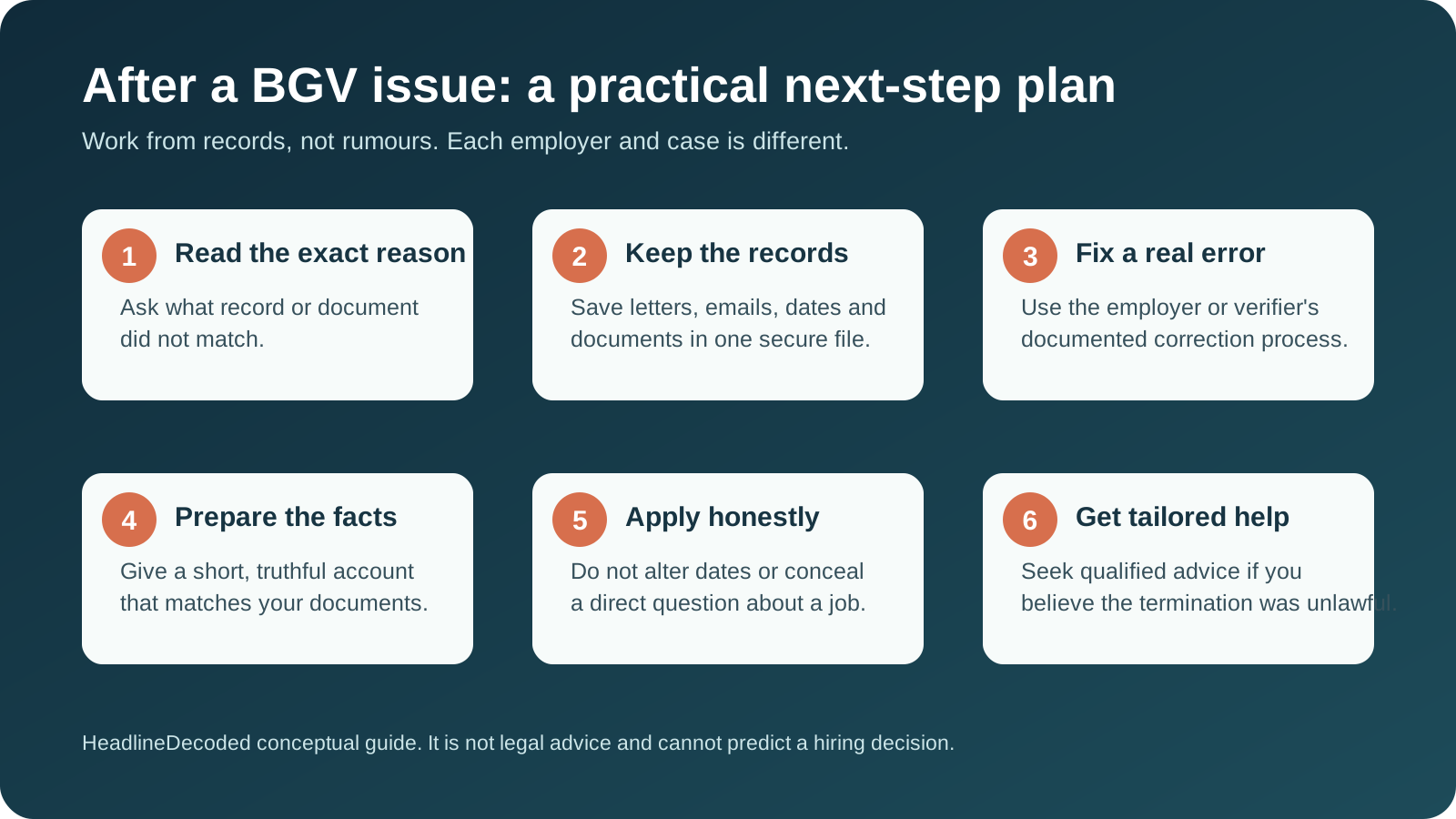
- Read the decision carefully. Identify the stated mismatch, not just the label “BGV”.
- Preserve the evidence. Keep unaltered copies of communications and records; note dates and who sent them.
- Correct an actual error. Ask the record owner or authorised verifier what documentation and route it accepts.
- Build one accurate application pack. Make your CV, application dates, education information and interview answer agree with the documents.
- Apply honestly and selectively. Read each employer’s form. Answer direct questions truthfully; do not submit altered records.
- Get case-specific help when needed. A qualified employment lawyer, workers’ organisation or authorised adviser can assess the contract, evidence and applicable law.
When the question becomes a legal or grievance question
Whether a termination is lawful depends on facts such as the employment contract, role, workplace, applicable law, process followed and evidence. This article cannot determine that. The Ministry of Labour and Employment’s SAMADHAN FAQ says that an individual workman may raise an illegal-termination dispute under Section 2A of the Industrial Disputes Act, 1947. That wording does not decide whether a particular IT employee falls within that category or whether a claim will succeed. Preserve the documents, check the relevant forum and get individual legal advice before missing a deadline.
Do not treat a termination letter as either proof that nothing can be done or as a document that must be hidden. It is part of the record. An adviser can help a worker understand what it says, whether there is an internal appeal or correction process, and which facts should be challenged with evidence.
What not to do
- Do not forge a relieving, experience or salary letter.
- Do not change employment dates from one application to the next.
- Do not pay a third party who promises to remove a BGV finding or delete a purported blacklist entry.
- Do not accuse a former employer of sharing data or blacklisting you without evidence.
- Do not let a short job erase the skills you can honestly demonstrate. Our AI-skilling explainer also distinguishes a certificate from demonstrated, job-ready capability.
Frequently asked questions
Does a BGV termination from Infosys automatically stop me getting another IT job?
No automatic outcome can be inferred from a public privacy notice or from online anecdotes. Infosys says it may conduct BGV through an authorised vendor in recruitment. We found no authoritative source establishing a universal IT blacklist that automatically determines every other employer’s decision. A new employer may still ask questions or conduct its own check, so accuracy and documentation matter.
Should I show the termination letter to every recruiter?
Follow the employer’s application requirements and answer direct questions truthfully. Keep the letter and related evidence ready. Before sharing sensitive documents, understand who is asking, why it is needed and how it will be handled. For a complex or disputed case, seek tailored advice.
Can I remove the old job from my CV?
Do not use omission to make declarations or records inaccurate. A short job may still appear in payroll, UAN or former-employer records. If an application asks for all employment or a background check will cover the period, answer accurately and explain the gap or short tenure truthfully.
What if the BGV result itself is wrong?
Ask for the exact discrepancy and use the employer’s or verifier’s documented correction process. Keep the request and supporting records. Do not send unnecessary identity documents to an unverified contact.
The bottom line
A BGV-related termination is a serious employment record issue, not a reason to abandon a career plan. The next job search has to be slower and more precise: identify the real issue, document it, correct what is genuinely wrong, and make all future statements consistent. The part no one can promise is an employer’s decision. The part a candidate can control is the accuracy and credibility of the record they present.
Sources
- Infosys personal-information privacy statement — describes candidate and employment-related information, including background-check details and verification by an authorised vendor.
- EPFO UAN 2.0 FAQ for employers — explains how employers link present employment to a supplied UAN or EPF account number.
- EPFO employer manual: confirm previous employment — explains the previous-member/UAN confirmation workflow and identity-detail verification prompts.
- Ministry of Labour and Employment: SAMADHAN FAQ — describes grievances and the route for an individual workman’s illegal-termination dispute under Section 2A.
- MeitY notification on phased commencement of the Digital Personal Data Protection Act — official implementation schedule; it does not decide an individual employment dispute.
Image disclosure: the header is an AI-generated HeadlineDecoded editorial illustration of a fictional job seeker organising records. It is not a photograph of an Infosys employee, a real IT office, a termination event or an authentic document.
Abbreviations and full forms
- BGV — Background verification
- EPF — Employees’ Provident Fund
- EPFO — Employees’ Provident Fund Organisation
- HR — Human resources
- IT — Information technology
- UAN — Universal Account Number
HeadlineDecoded is committed to accuracy and transparency. Read our standards or submit a correction.