AI SummaryAI-generated summary, reviewed by editors
LinkedIn’s India list ranks Visakhapatnam, Ludhiana, Surat, Vadodara and Prayagraj highest for job-market momentum. It measures growth signals among non-metros—not total jobs, salaries or a verdict that metros are declining.
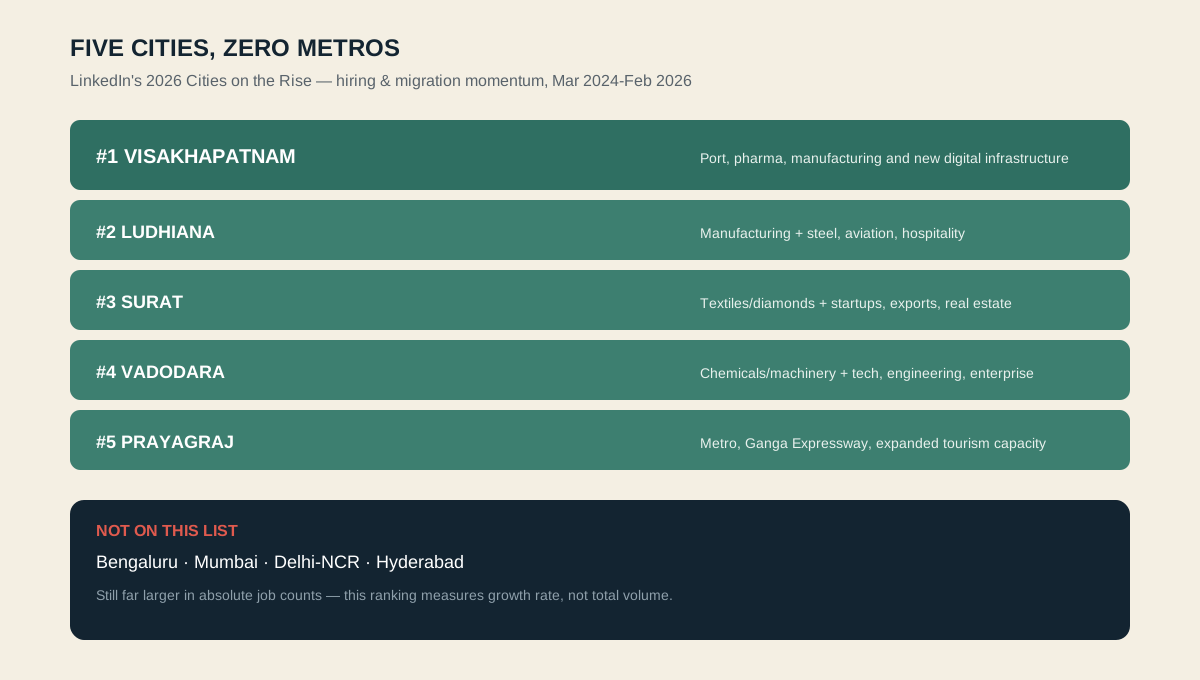
Switch to ShortsVisakhapatnam, Ludhiana, Surat, Vadodara and Prayagraj lead LinkedIn News India’s 2026 “Cities on the Rise” list of non-metro job markets. The result is useful for jobseekers, students and employers—but it is easy to overread. The ranking measures momentum in hiring, job postings and professional migration among eligible non-metro regions. It does not say these cities have more jobs than Bengaluru, Mumbai, Delhi-NCR or Hyderabad.
Correction: An earlier version linked to LinkedIn’s US ranking as if it were the India source and used stale DPIIT totals. This version links to LinkedIn News India’s original embedded post and uses the latest official startup figures available during review.The top 10
- Visakhapatnam
- Ludhiana
- Surat
- Vadodara
- Prayagraj
- Rajkot
- Jabalpur
- Ranchi
- Raipur
- Vijayawada
LinkedIn describes these as regions with the strongest job-market momentum and a greater inflow than outflow of members. Contemporary coverage of the company’s India release says IT services and technology consulting appear among the top three hiring industries in all ten cities, while banking and financial services appear among the leaders in eight.
What the ranking can—and cannot—tell a jobseeker
Platform data can spot changes quickly because LinkedIn observes job postings, hiring and member location changes. But it represents LinkedIn members and employers using the platform, not every worker or vacancy in a city. Informal work, small local firms and occupations recruited offline may be underrepresented.
A high rank means momentum, not necessarily the largest number of openings, the highest pay or the lowest unemployment. The exclusion of the biggest metros is built into the non-metro framing; it is not evidence that metro labour markets failed to “make the cut.” Before moving, compare actual vacancies in your occupation, offered salary after housing and transport costs, contract type, commute, safety and the depth of alternative employers.
Why the five leaders are not one identical story
Visakhapatnam: the port, pharmaceuticals and manufacturing base is being joined by digital infrastructure. Google says construction has begun on a five-year, approximately $15 billion AI-hub investment that includes gigawatt-scale compute and new subsea connectivity. Google also announced local training programmes, but an investment commitment is not the same as a verified count of permanent jobs.
Ludhiana: manufacturing remains central, with hiring signals extending into steel, aviation, hospitality, banking and services. Applicants should distinguish factory, logistics and skilled-trade roles from office jobs grouped under the same city trend.
Surat and Vadodara: Gujarat’s established textiles, diamonds, chemicals, machinery and engineering ecosystems are being complemented by technology, finance, exports and enterprise services. Growth across sectors does not mean every occupation is expanding at the same rate.
Prayagraj: services, infrastructure and tourism can create demand, but some hiring may be project-based or seasonal. Candidates should ask whether a role continues after a construction or event cycle.
Startup data supports decentralisation—but measures something else
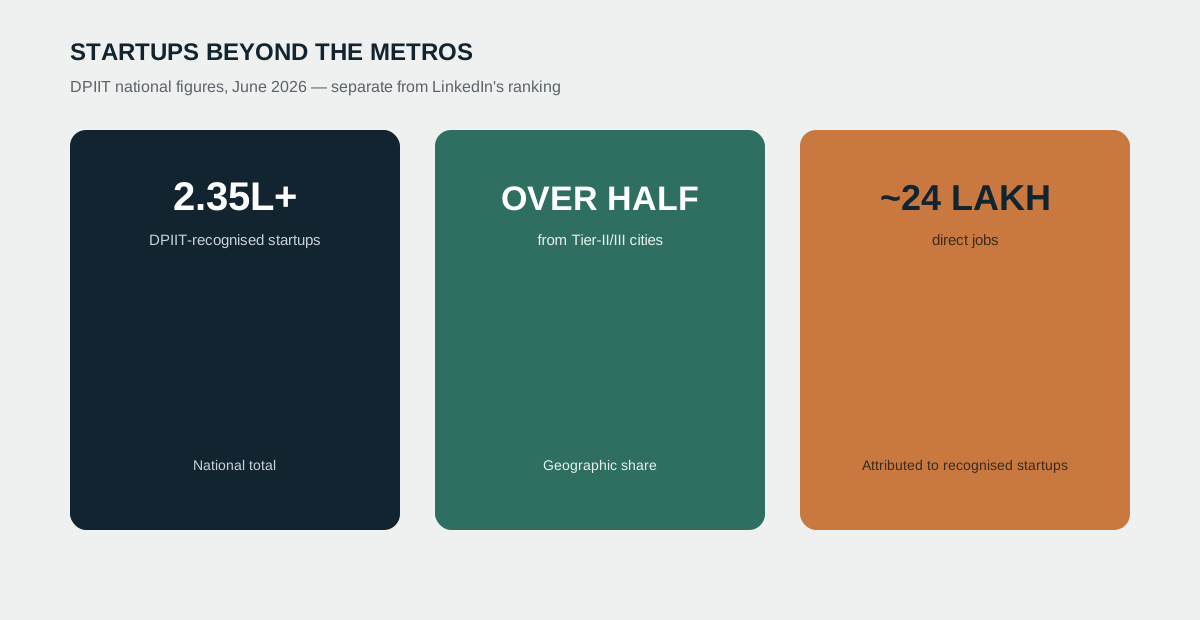
DPIIT said in June 2026 that India had more than 2.35 lakh recognised startups generating around 24 lakh direct jobs, with over half emerging from Tier-II and Tier-III cities. That is a national stock of recognised firms, not a city ranking and not proof that the same five cities created those jobs. It supports the broader conclusion that entrepreneurship is geographically dispersed, while remaining a separate dataset from LinkedIn’s labour-market signals.
A practical checklist before relocating
- Search for your exact role and experience level, not only the city name.
- Compare median offered pay with rent, transport and relocation costs.
- Check whether hiring is permanent, contractual, construction-linked or seasonal.
- Look for at least three plausible employers so one closure does not strand your career.
- Verify offer letters through the employer’s official domain; never pay a recruiter for a job.
- Students should compare internships, apprenticeships and entry-level roles—not investment announcements alone.
Impact beyond the metros
For families in smaller cities and nearby districts, more local hiring can reduce the cost and social strain of long-distance migration. The gains are not automatic: reliable public transport, women’s safety, rental housing, electricity, water, training and fair wages determine who can actually use the opportunity. Rural and peri-urban workers may benefit most when industrial and service growth connects to accessible training and commuting rather than requiring expensive relocation.
Related HeadlineDecoded guides
Read our evidence-led guide to India’s skills-to-jobs gap and the rural employment-rights explainer. They cover national and rural labour questions that a city momentum ranking cannot answer.
Sources and provenance
- LinkedIn News India’s original Cities on the Rise 2026 post — authenticated company newsroom account; the embed was preserved by contemporaneous coverage.
- India ranking, sectors and methodology summary — Moneycontrol, with the original LinkedIn embed.
- DPIIT startup and direct-jobs figures, June 2026 — Press Information Bureau.
- Google AI Hub construction and community programmes — Google, April 2026.
Image disclosure: the hero is an AI-generated staged editorial illustration of a generic Indian employment district. It does not depict any ranked city, LinkedIn research participant or real hiring event.
HeadlineDecoded is committed to accuracy and transparency. Read our standards or submit a correction.