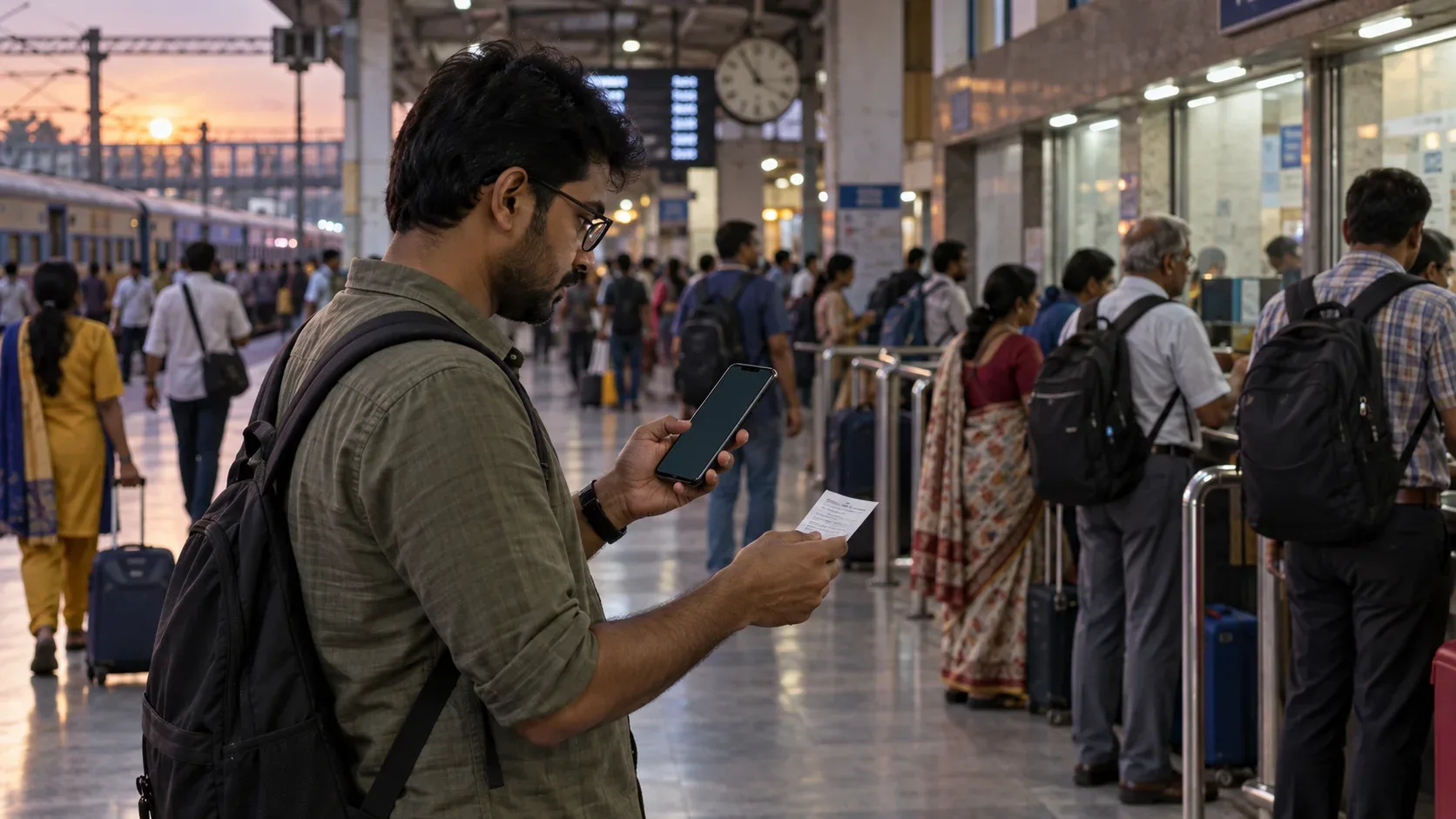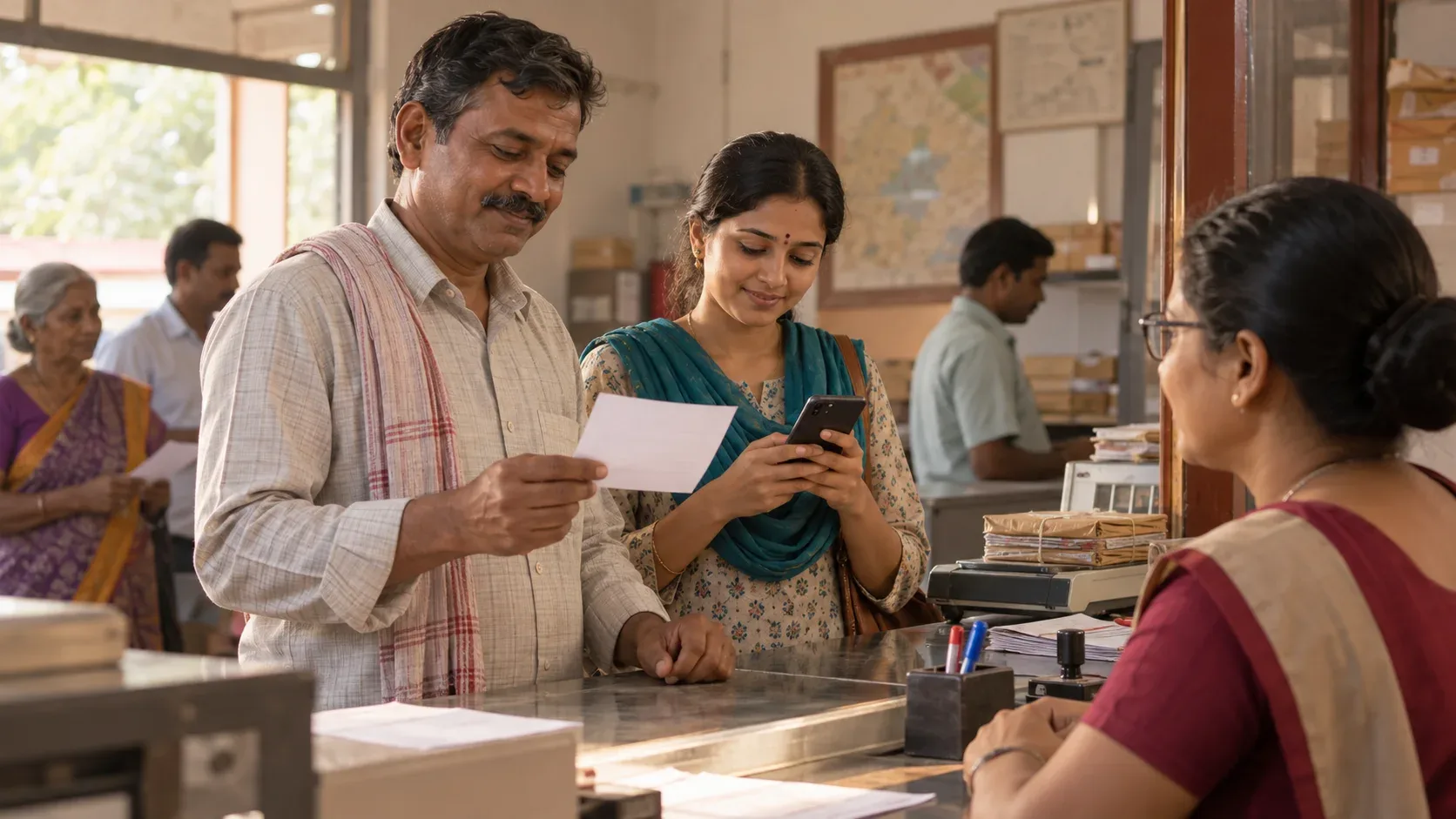
The public telephone booth is no longer the centre of everyday communication. Yet it has not vanished from the regulator’s count: the Telecom Regulatory Authority of India (TRAI) recorded 7,901 Public Call Offices (PCOs) in the April–June 2025 quarter. In the same quarter, India had 1,002.85 million internet subscribers. The useful question is not whether the phone replaced the booth; it is whether a connection is personal, affordable and usable when a form, an OTP or a payment depends on it.
The story in 60 seconds
- TRAI counted 1,002.85 million internet subscribers at the end of June 2025; 958.14 million were wireless subscribers.
- The same official snapshot still listed 7,901 PCOs, so shared calling access remains part of the service landscape.
- Urban telephone density was 133.56%, while rural telephone density was 59.43%. These are subscriptions per 100 people, not a count of individual ownership.
- National totals do not tell us who can keep a device charged, afford data, read an interface or use a phone privately.
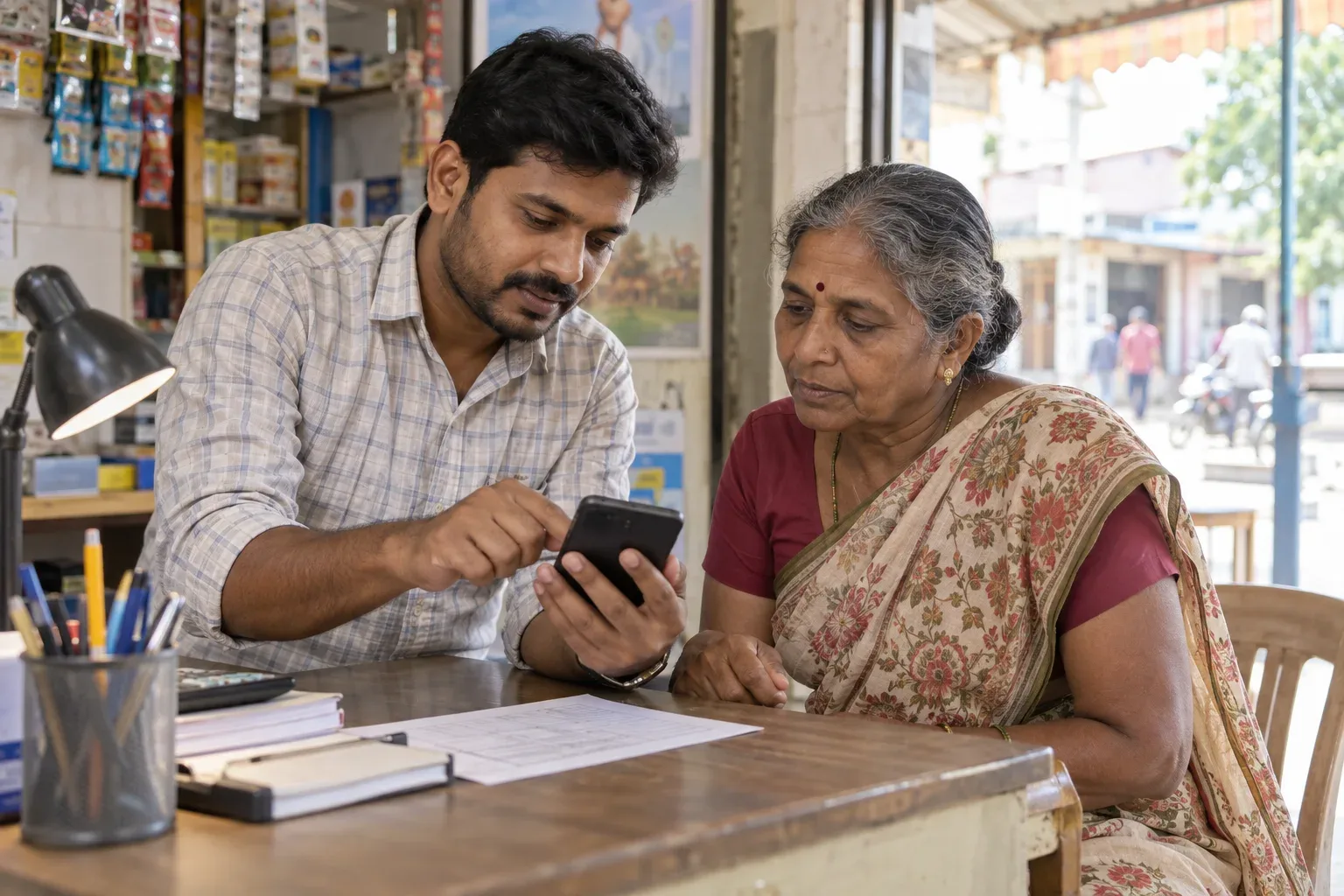
- For families, the practical issue is often assisted access: a trusted person, a reliable signal and a safe way to complete a time-sensitive task.
AI SummaryAI-generated summary, reviewed by editors
A PCO is no longer the main way to reach someone, but TRAI still counted 7,901 of them as internet subscriptions topped one billion. The missing part of the story is whether access is personal, affordable and usable.
Switch to ShortsA national leap, a local gap
TRAI’s quarter-end figures describe enormous scale: 1,218.36 million telephone subscribers and more than one billion internet subscriptions. But the urban and rural figures are not interchangeable. The regulator reported urban telephone density of 133.56% and rural telephone density of 59.43%. A density above 100% can reflect multiple connections for one person; it does not mean every resident has a working personal handset.
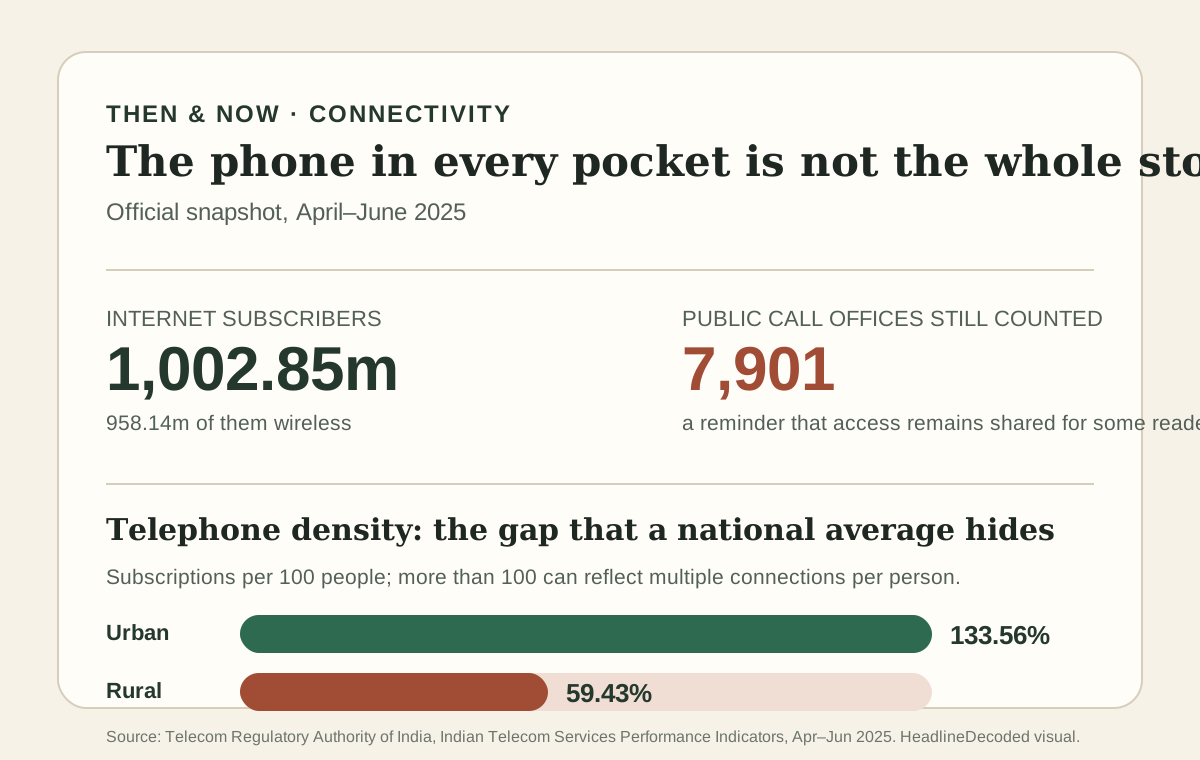
The rural number is not proof that a village is offline, nor does the urban number prove that every household has equal access. It is a useful warning against treating a national subscription total as a measure of a person’s ability to finish a task.
Why the PCO number still matters
A PCO once made communication a visible, shared service: someone could walk to a counter, pay for a call and use a fixed line. A smartphone moves much of that work into a personal device. That can make messages, tickets and payments faster. It can also shift the cost of a failed battery, weak signal, missing document or unfamiliar screen onto the individual household.
The 7,901 PCO figure should not be romanticised. It does, however, show why a design that assumes one person, one phone and continuous data can leave readers needing help from a family member, shopkeeper, operator or local service point.
What this changes for ordinary readers
- Applications and OTPs: use a phone number that can receive messages when a deadline matters, and keep a second contact route where rules allow it.
- Shared devices: do not leave passwords, PINs or identity documents saved after receiving help. Ask the helper to sign out and delete downloads.
- Travel and payments: confirm the final amount and recipient yourself before authorising a transaction; speed is not a substitute for checking.
- Local follow-up: district-level network quality, charging access and assisted-service availability matter more than a national headline when a public service moves online.
What the figures cannot tell us
The TRAI table does not measure digital literacy, disability access, gendered control of devices, affordability, privacy in a shared household or the quality of a particular village’s signal. It therefore cannot prove that a person has meaningful access to every online service. Those are the questions a local survey or public-service audit would need to answer.
Sources and method
- TRAI’s April–June 2025 performance-indicator report supplies the subscriber, PCO and urban/rural tele-density figures.
- TRAI’s annual-report archive provides the regulator’s public record for longer-term telecom context.
Continue the series
See how the same shift changed household transfers in our money-order-to-UPI analysis, and how phones reshaped planning for a rail journey in our reservation-counter-to-rail-apps guide.
HeadlineDecoded is committed to accuracy and transparency. Read our standards or submit a correction.