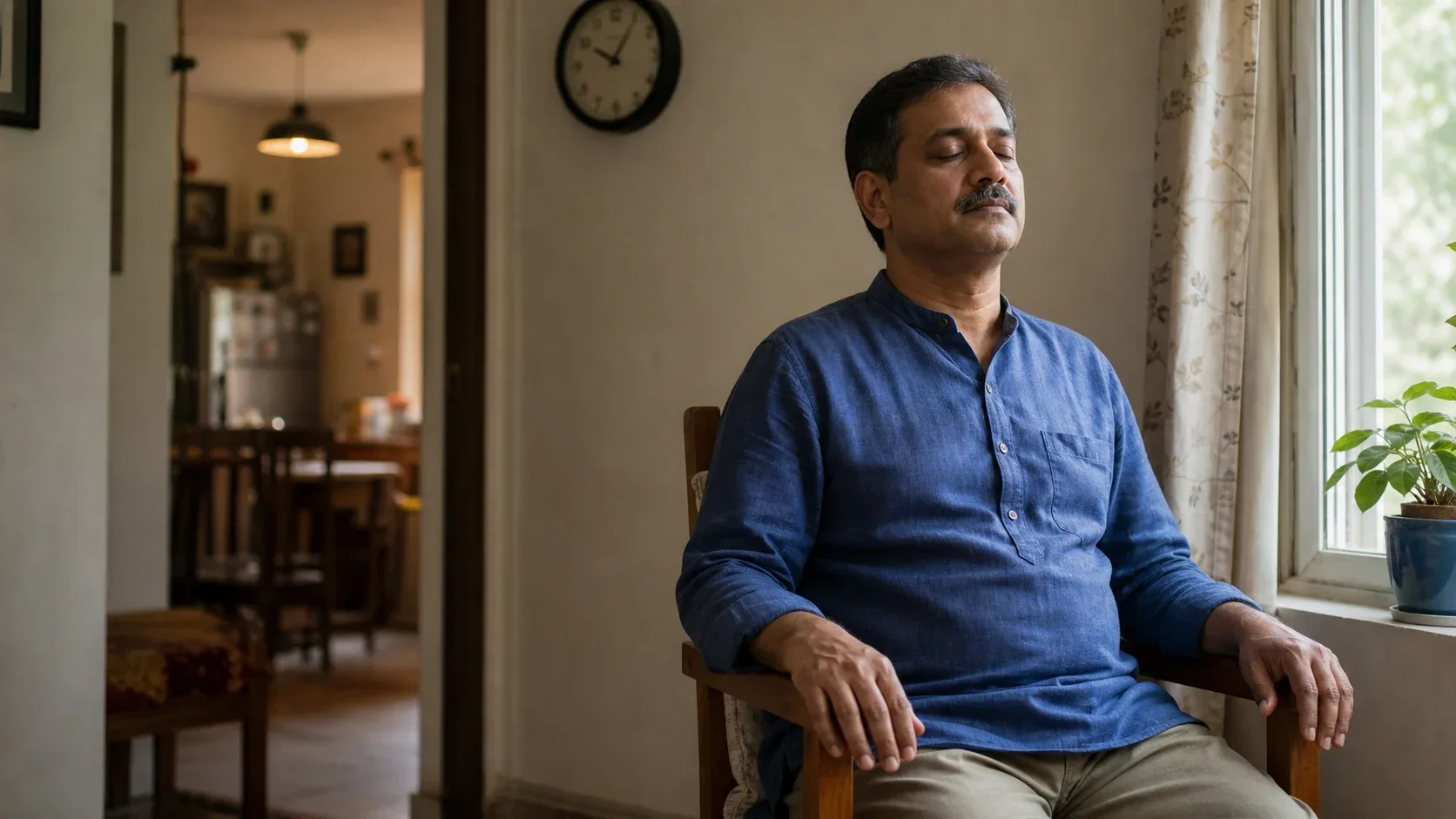
The offer at the centre of this discourse is modest on purpose: not a life of renunciation, not a cave in the Himalayas, just one hour out of twenty-four, spent sitting quietly in the house you already know.
Editorial note: The discourse’s title, speaker, date and original publication could not be independently verified. This essay therefore leaves it unattributed and treats descriptions of inner experience as the discourse’s claims, not established facts.The story in 60 seconds
- The discourse asks for one hour a day, not a change of address — give the other twenty-three to the world, and keep one for yourself.
- It recommends practising at home rather than travelling to a remote retreat, using an ordinary, familiar setting for the exercise.
- Its core practice is witnessing: sit by the side of the mind's road and watch thoughts, memories and images pass, without favoring or opposing any of them.
- It presents attention and reaction as fuel for mental “traffic”, and proposes non-engagement—not force—as the way to stop feeding it.
- When there is nothing left outside to know, it says, the knower has nowhere left to point except at itself.
- The promised change — a settled peacefulness spreading across the whole day — is described as the discourse's own testimony, not something this article can independently confirm.
AI SummaryAI-generated summary, reviewed by editors
A meditation discourse proposes setting aside time at home to watch thoughts pass without chasing, resisting or judging them—and explains why patience matters more than forcing silence.
Switch to ShortsTwenty-three hours for the world, one for yourself
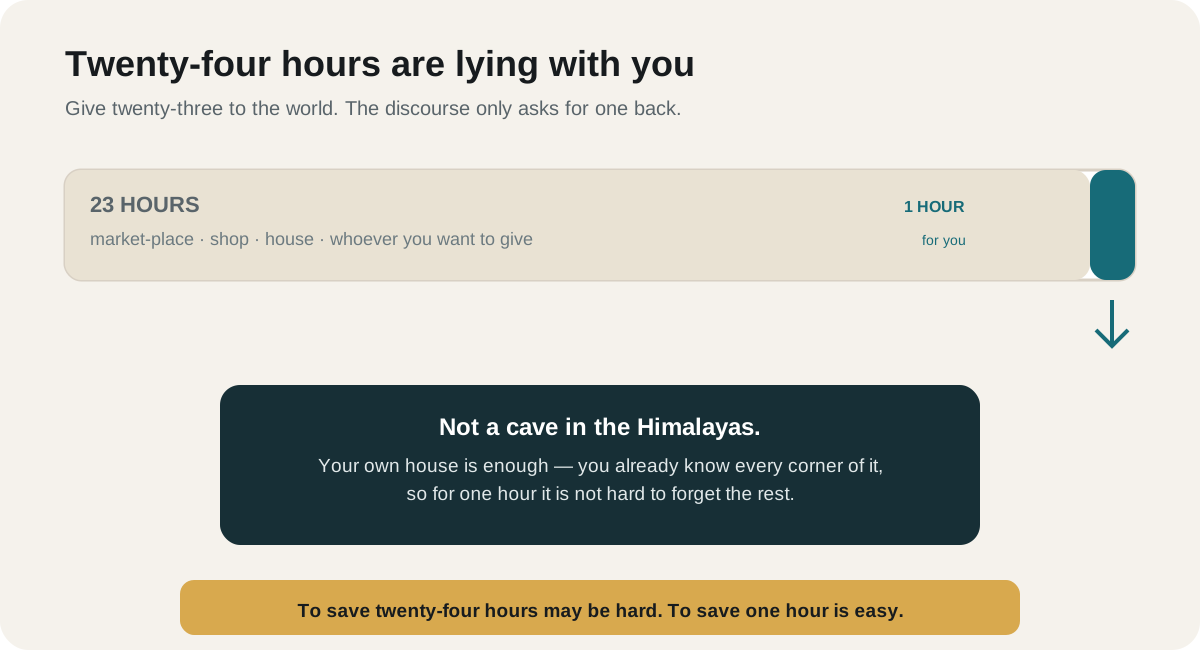
The discourse opens with simple arithmetic. A day holds twenty-four hours. Give twenty-three to the marketplace, the shop, the house, to whoever needs them — that leaves exactly one that belongs to no one else. To save an entire day for reflection would be difficult for almost anyone with a job, a family and a commute. To save a single hour is not.
That framing matters more than it first appears. It removes the usual excuse for never starting — that a serious inward life requires withdrawing from work and relationships. Here the proposal is deliberately smaller than renunciation: protect some regular time for inward attention within ordinary life. An hour is the discourse’s ideal, but readers can begin with a shorter period that fits their circumstances.
Why home, not a Himalayan cave
The discourse is specific that this hour does not require travel to a monastery or a mountain retreat. Your own house, it says, is the easiest possible place — precisely because it is familiar. You already know its walls, its sounds, its furniture; nothing in the room demands your curiosity. For one hour, it becomes easy to set all of that aside, simply because there is nothing new in it competing for attention.
This is a practical rather than a mystical claim. A novel setting — a retreat hall, a foreign temple, a mountain view — supplies its own stream of things to notice, which is exactly the kind of distraction the practice is trying to quiet. An ordinary, over-familiar room removes that layer of stimulation almost by default.
Sitting by the road: what witnessing means here
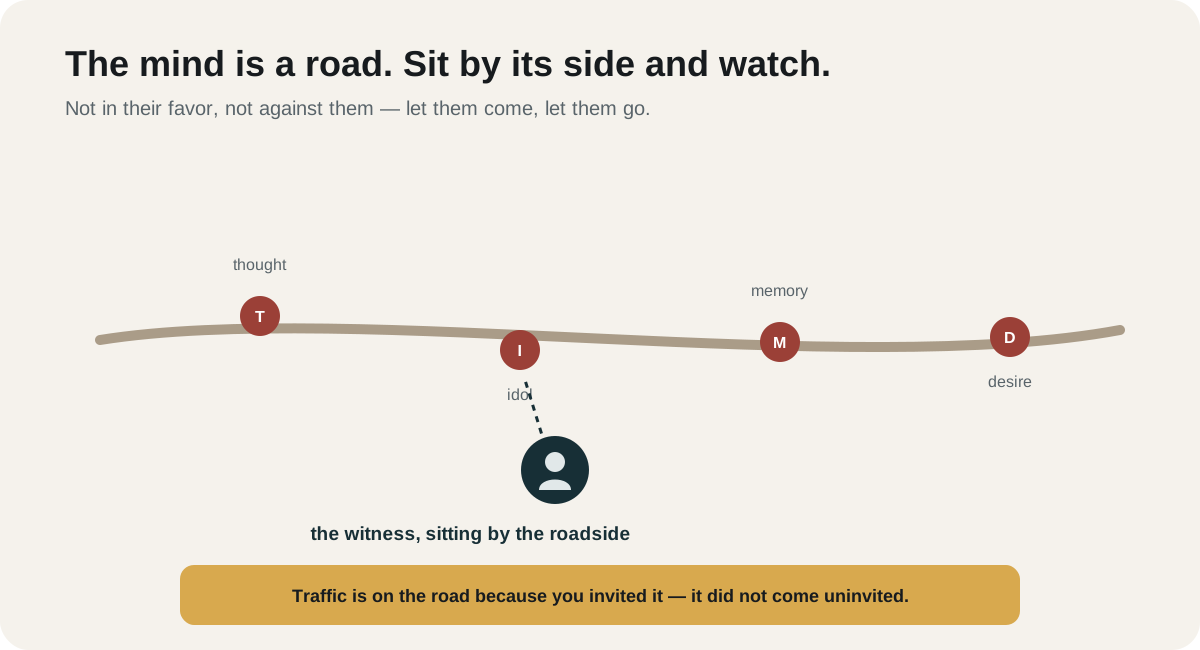
The central instruction is to sit by the side of the mind's road and watch what moves along it — thoughts, memories, desires, "idols" of approval or judgment — without taking an interest in them, neither for nor against. Let them come, and let them go. The mind is described as a road that keeps going; the practitioner's job is only to sit at its edge and observe the traffic, as if it belonged to someone else.
This is not the same as suppressing thought or forcing the mind blank. The discourse is careful to distinguish watching from fighting: there is no instruction to stop thoughts, argue with them, or judge which ones are good or bad, beautiful or ugly, one's own or another's. The only discipline asked for is that of a bystander who does not run into the road to greet every passer-by.
Why the crowd thins: an invitation, not an invasion
The discourse's sharpest claim is about cause. Mental traffic, it argues, is not an uninvited intrusion — it is a guest you have been welcoming, moment by moment, through interest, reaction and argument. Every thought that gets chased, resisted or replayed is, in that sense, a thought that has been asked to stay. When the sitting figure stops looking back to check who has arrived, who has left, and whether the visit was good or bad, the traffic — the discourse says — begins, slowly, to lessen on its own.
Read cautiously, this is the discourse’s explanation of what keeps thoughts active; the supplied transcript does not provide scientific evidence for the claim. One sitting—or many—may not empty the mind, and the discourse itself describes change as gradual rather than instant. Readers should also note that indifference to a passing thought is different from indifference to a real obligation or another person — the practice is aimed at the hour of sitting, not at disengagement from daily responsibilities.
When nothing remains to be known, the knower remains
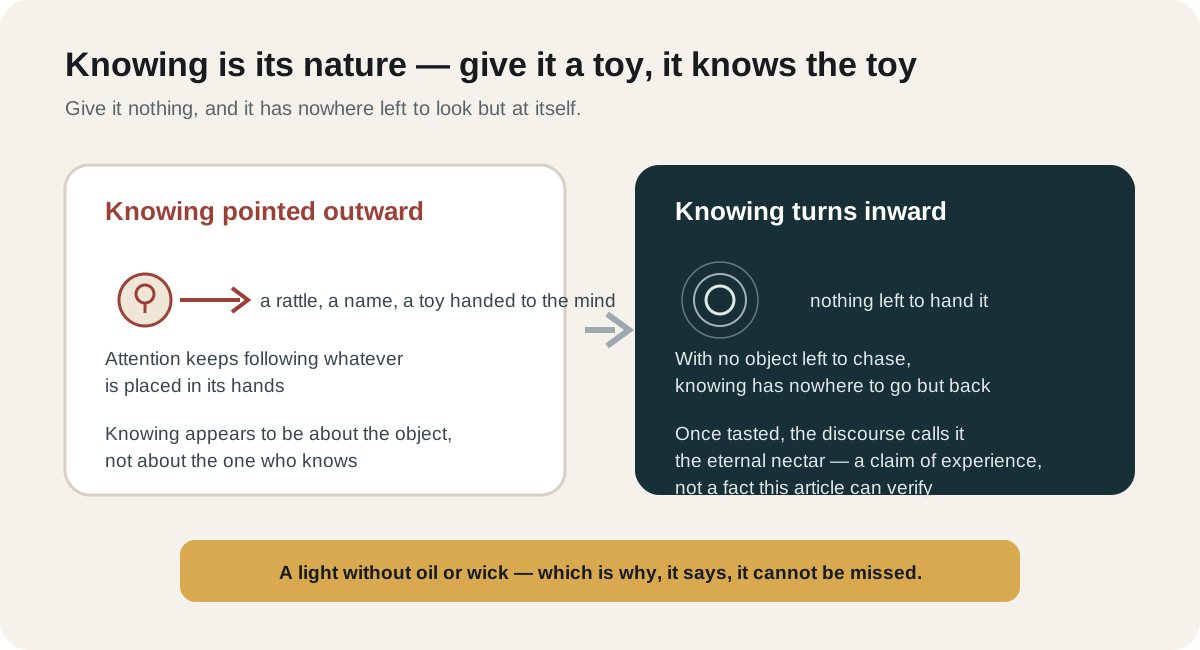
The discourse's furthest claim concerns what is left when the road empties. If there is nothing left outside to know — no toy, no rattle, no image handed to the mind — then knowing, which it describes as the mind's basic nature, has nowhere left to point except back at itself. What remains, it says, is not an absence but a "knower" who now only knows itself.
The supplied transcript does not identify the tradition, teacher or original-language source behind this idea, so the article does not assign it a lineage. The discourse calls the resulting taste “eternal nectar” and says that once experienced, “there is no darkness, no unconsciousness”—language about inner experience that should be read as testimony and metaphor, not independently verified fact.
A light without oil or wick
The discourse's closing image is that this single hour, practiced patiently, does not stay confined to itself. It says the quality found in that hour slowly spreads across the other twenty-three — the same wife, the same children, the same marketplace, but a different person meeting them. It describes the outcome as a peacefulness "whose depth no one could ever measure," and a light that needs neither oil nor wick, which is offered as the reason it says such a light is impossible to miss.
These are the discourse's own metaphors for an inner shift, not measurable claims. What can be said more plainly is the shape of the argument: a daily hour of unreactive attention, repeated without forcing an outcome, is proposed as a habit that eventually reorders how the other hours are lived — not by changing the circumstances, but by changing the way they are met.
In plain terms: the practice does not demand that the road stop moving. It asks whether you can stop running into it and learn to watch from the side.
A safe, practical way to begin
- Pick a familiar room. Your own home is the point — nothing about the setting should be new or distracting.
- Choose a realistic duration. The discourse asks for an hour, but a beginner can start with 10 minutes and extend the session gradually.
- Sit in a stable, comfortable position. Close your eyes only if that feels safe; otherwise, keep a soft downward gaze. No special posture is required.
- Let thoughts arrive without chasing them. Notice memories, images and plans the way you would notice traffic passing a window.
- Neither argue nor applaud. Notice the impulse to label a thought good, bad, welcome or unwelcome, then return to watching without adding another argument.
- Expect gradual change, not a single breakthrough. The discourse itself describes the road slowly emptying, not vanishing on the first sitting.
If stillness increases anxiety, panic, dissociation or distress, shorten or stop the session and consider guidance from a qualified mental-health professional. Meditation may support wellbeing, but it is not a replacement for mental-health care.
Even readers who set aside every claim about “nectar” or a light without oil or wick can test the more modest version of the practice: does a period of less reactive attention change how the rest of the day is lived? Each person’s experience may differ.
A note on verification: As with everything published on HeadlineDecoded, readers are encouraged to independently verify any claim, quotation or detail in this article before relying on it.Primary-source visual check
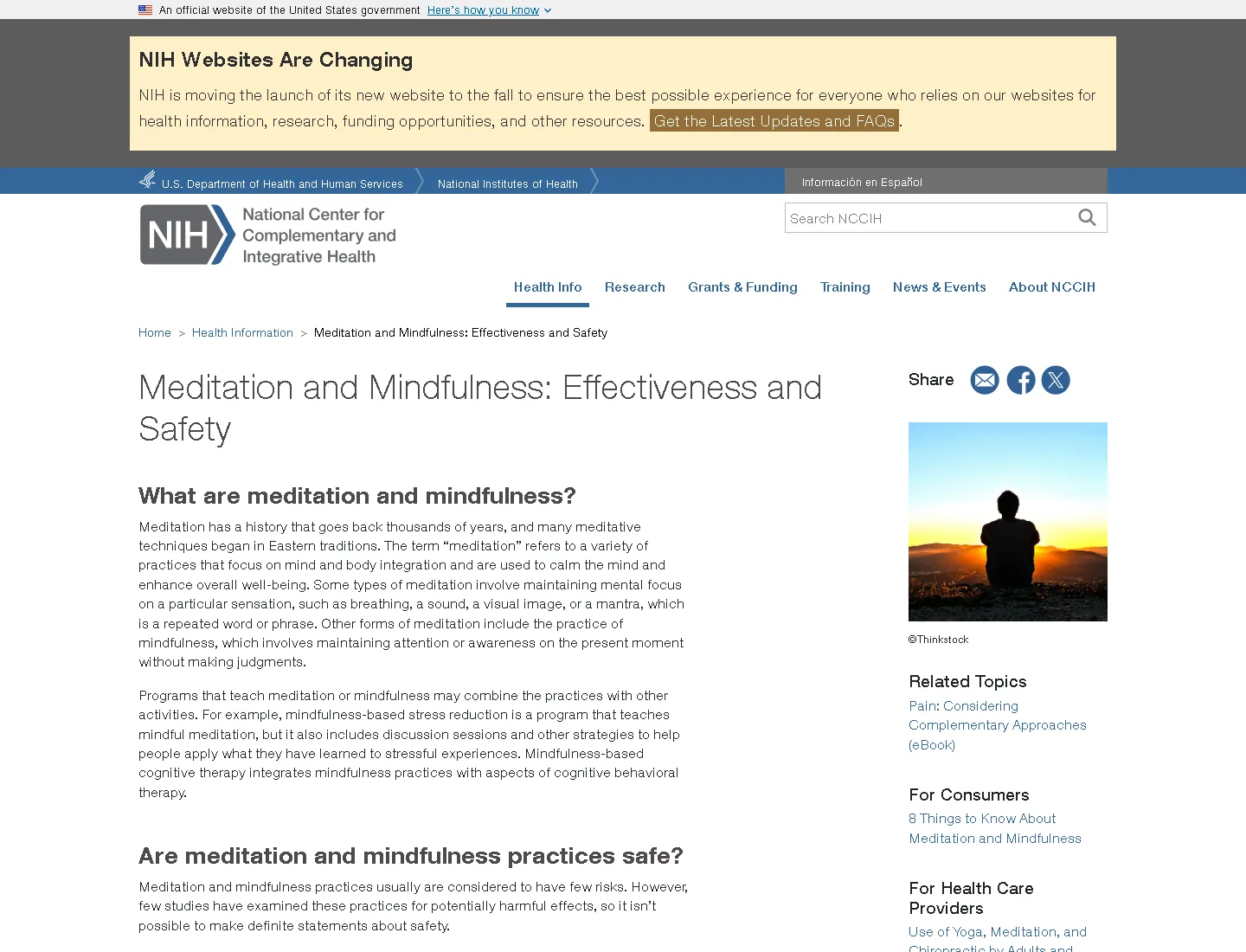
Update, August 12, 2026: We added this documentary capture from an authoritative source. Open the official source. The capture supports the verification route described here; it is not evidence for claims beyond what the linked source states.
Related: Our “Live As You Are” explainer examines when learning from a spiritual teacher turns into imitation.
HeadlineDecoded is committed to accuracy and transparency. Read our standards or submit a correction.