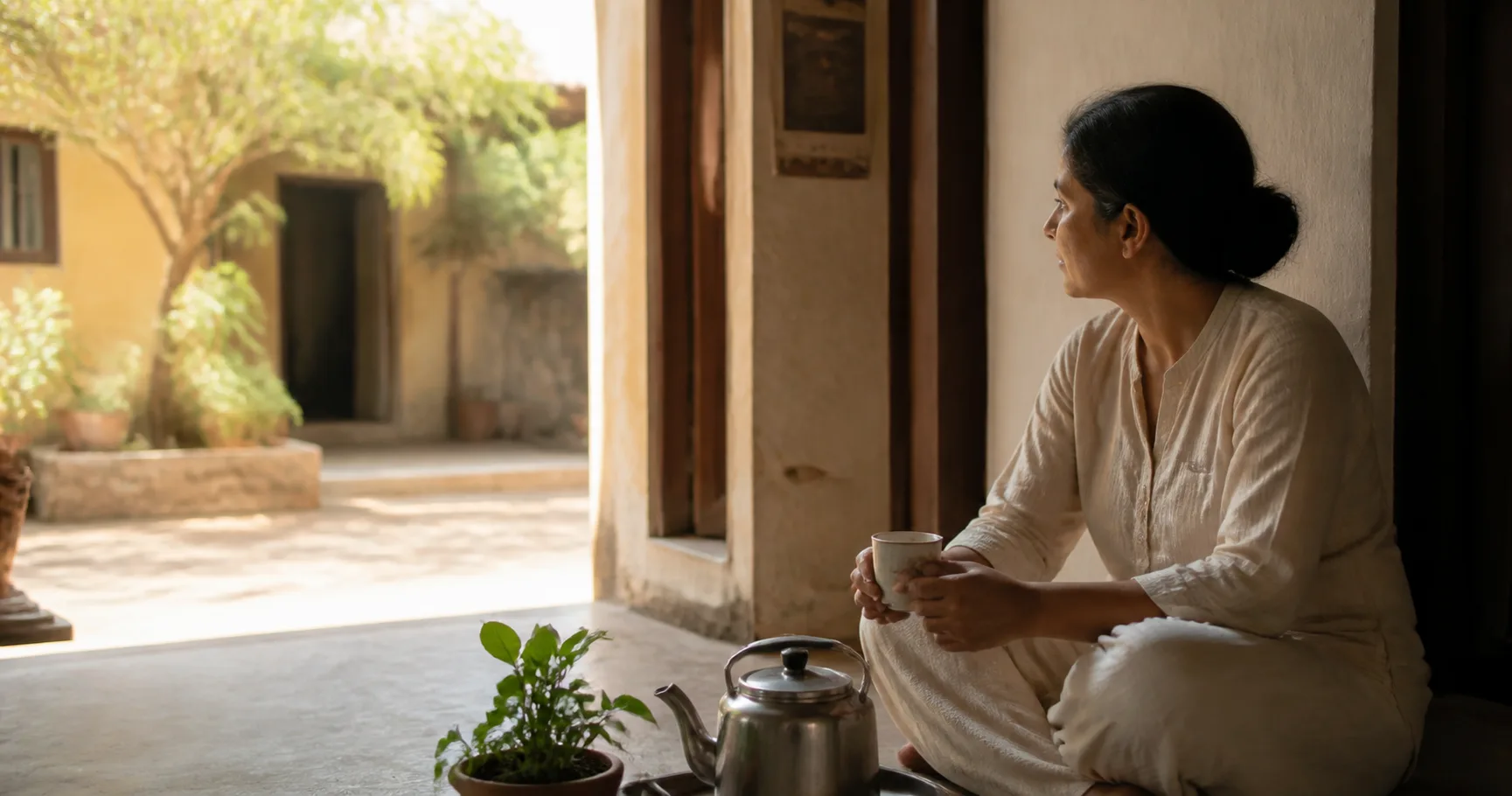
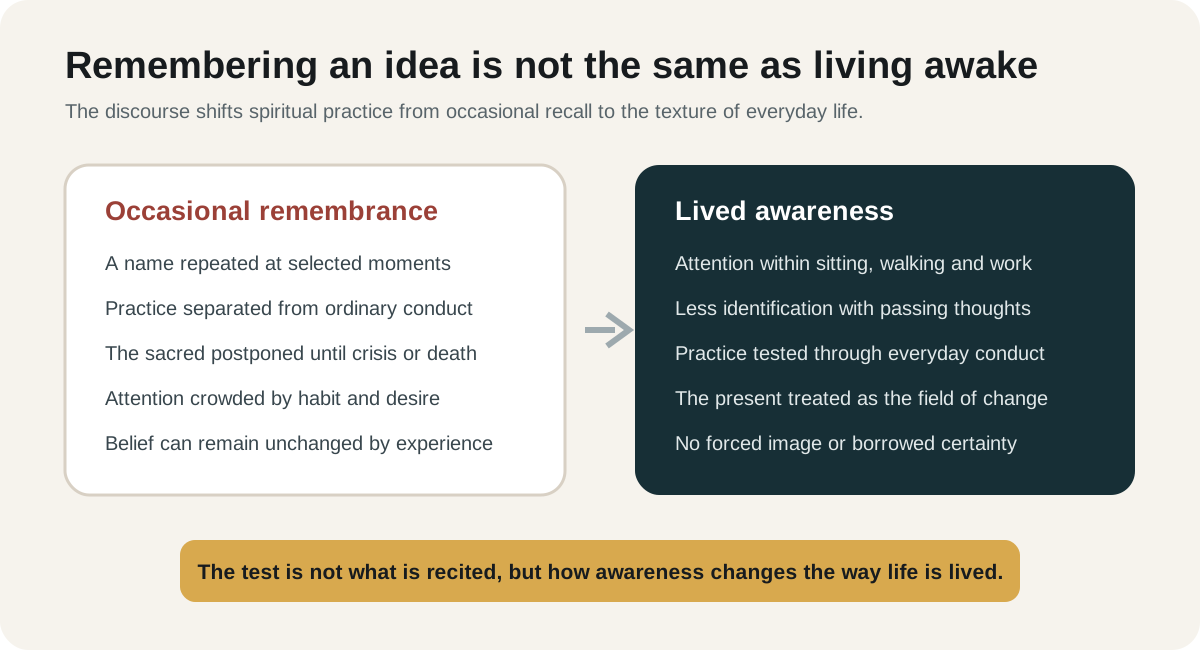
There is a difference between remembering the divine and living in such a way that the divine is not forgotten. The first treats spirituality as an object brought into the mind. The second asks for a transformation in the person who is looking.
Editorial note: This essay is an original adaptation of a translated discourse transcript supplied to HeadlineDecoded. Its exact discourse title, publication and the authorship of the embedded poem could not be independently verified, so the poem has not been reproduced and no uncertain quotation has been assigned to a named speaker.The story in 60 seconds
- The discourse distinguishes deliberate recollection of God from a form of awareness in which the sacred is no longer experienced as separate from life.
- It argues that spiritual practice should transform daily conduct rather than appear only in prayer, ritual, fear or the approach of death.
- Meditation is presented not as concentration on a divine image but as loosening identification with body, thought and emotion.
- The present matters because any imagined spiritual tomorrow is produced by how a person lives today.
- The argument challenges mechanical chanting, but it should not be mistaken for proof that prayer or devotional practice is worthless for everyone.
- Its practical test is simple: does awareness change how we sit, work, eat, speak, desire and respond to other people?
AI SummaryAI-generated summary, reviewed by editors
A provocative meditation asks whether spirituality is something recalled in ritual and crisis—or a quality expressed through attention, conduct and ordinary life.
Switch to ShortsThe difference hidden inside one sentence
“Remember the divine” sounds like an instruction to the mind. It assumes two things: a person who remembers and a divine reality being remembered. The mind calls up a name, form, story or belief, much as it recalls a face or a line of music.
“Do not let the divine be forgotten” points somewhere else. It suggests that the problem is not a missing religious thought but the habits that make life feel divided: sacred and ordinary, prayer and work, temple and marketplace, spirit and body. The task is no longer to add another thought. It is to notice what makes awareness narrow.
This is why the discourse speaks of moving beyond identification with body, mind and heart. That language need not mean despising the body, suppressing thought or becoming emotionless. Read carefully, it asks whether any one layer of experience should be mistaken for the whole self. A sensation appears. A thought passes. An emotion changes. Awareness can observe all three without being reduced to any of them.
Why wait for death?
Many religious cultures contain practices for the final hours: prayers, sacred names, recitations and rituals intended to orient a dying person toward what matters most. The supplied discourse does not focus on judging those traditions. Its sharper question is why the sacred should be postponed until life is almost over.
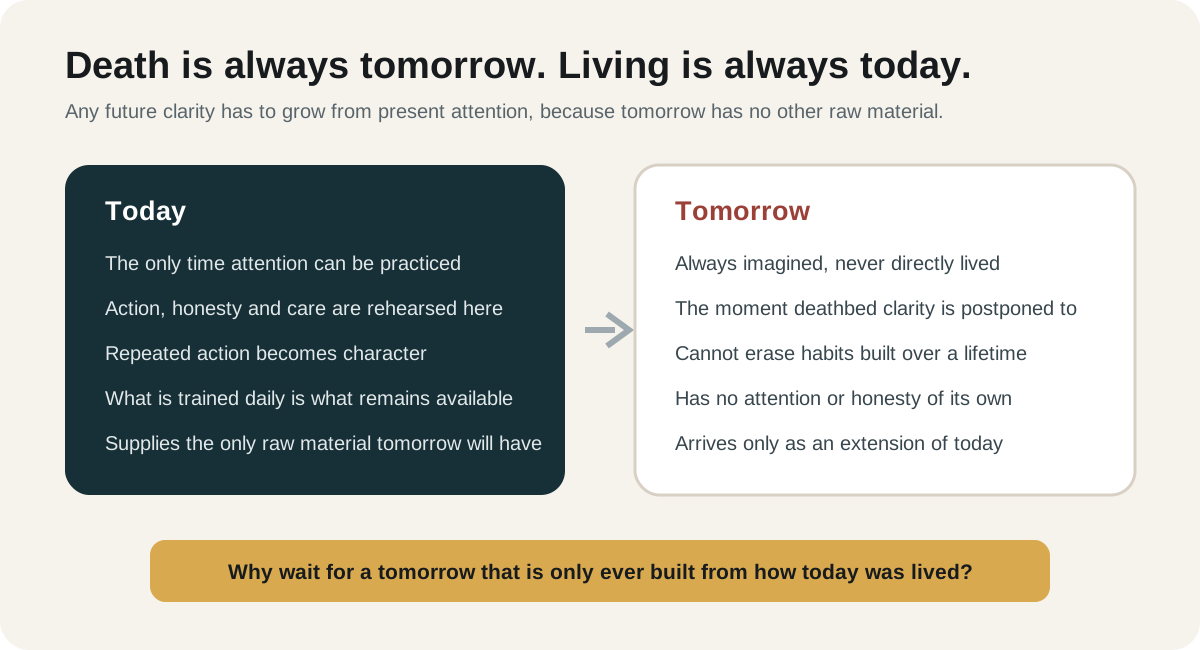
A lifetime builds momentum. If attention has been trained only toward status, money, resentment or anxiety, a final command to become peaceful cannot magically erase those grooves. The argument is psychological before it is theological: repeated action becomes character. What we rehearse every day is likely to be available when control is weakest.
Death, in this sense, is always imagined as tomorrow. Living is available only today. Any future clarity must grow from present attention, because tomorrow has no other raw material.
Spirituality as a way of doing ordinary things
The essay's strongest idea is also its least dramatic. The divine is not confined to a remembered name, a bell, a lamp or a formal place of worship. It must become visible in the manner of sitting and standing, eating and drinking, sleeping and waking, listening and speaking.
That claim turns spirituality from a special event into a style of relationship. How quickly do I interrupt? What happens in my body when I am criticised? Can I notice ambition without allowing it to decide every action? Do I treat another person as fully real when they are inconvenient? Awareness is tested in these small encounters, not only in extraordinary states.
Calling this a “poetry of living” does not mean making life aesthetically perfect. It means discovering rhythm: action followed by reflection, speech balanced by silence, effort without total possession by the result. Music does not consist of one sustained note. An attentive life also needs pauses.
Prayer and meditation are not simple opposites
The transcript sets up a deliberate contrast. Prayer is described as remembering the divine; meditation as entering a condition in which forgetting becomes impossible. This is rhetorically powerful, but traditions use both words in many different ways.
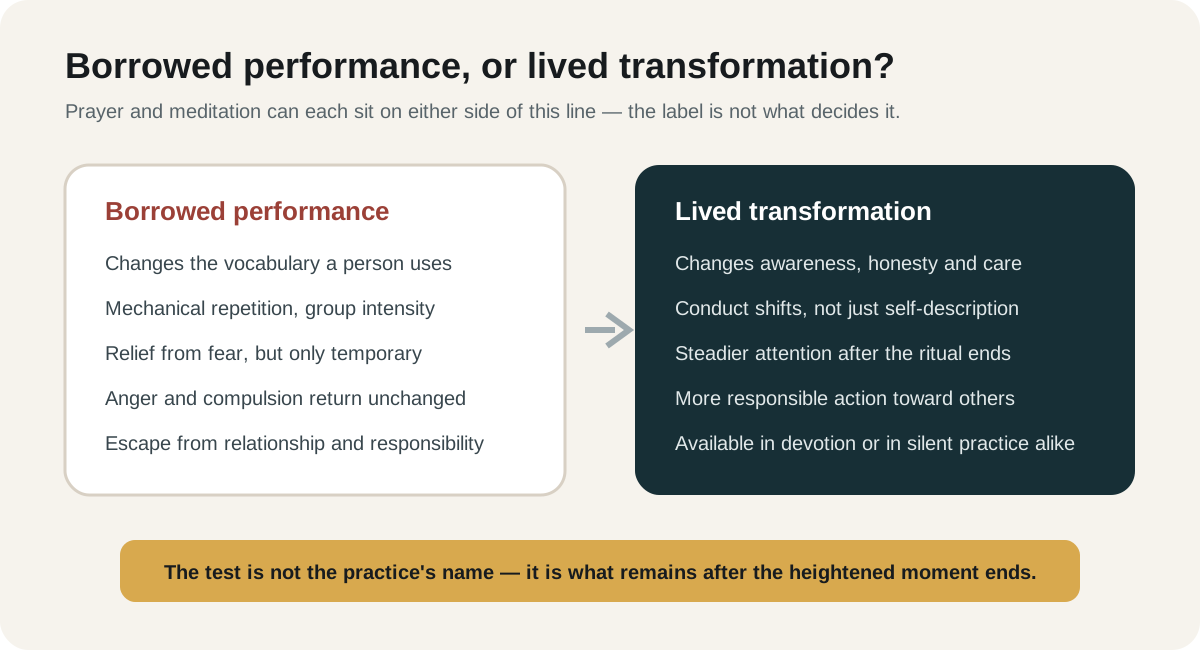
Prayer can be petition, praise, lament, gratitude, surrender or silence. Meditation can involve breath, a mantra, inquiry, visualisation, compassion or open awareness. Devotional repetition may be mechanical, but it can also reshape attention and conduct. Silent meditation may reveal clarity, but it can also become an escape from relationship and responsibility.
The useful distinction is therefore not prayer versus meditation. It is borrowed performance versus lived transformation. Any practice becomes hollow when it changes only the vocabulary a person uses. Any practice becomes meaningful when it increases awareness, honesty and care.
What “no-mind” can mean without mystification
The discourse describes meditation as a state beyond choice and mental noise, where the usual division between knower and known falls away. Such language appears in several contemplative traditions, though their explanations differ.
“No-mind” should not be confused with unconsciousness, intellectual laziness or the literal destruction of thought. A practical interpretation is that thought continues without occupying the throne. The mind becomes a tool rather than a permanent narrator whose every judgement must be believed.
During a quiet moment, sounds may be heard before they are named. Breath may be felt without a story about whether it is good or bad. For a few seconds, experience is not organised around defending an image of “me”. The discourse identifies this non-dual openness with direct experience of the divine. Readers do not have to accept that metaphysical conclusion to investigate the quality of attention being described.
The danger of spiritual intoxication
The transcript uses provocation and comedy to warn that noise can imitate transformation. Repetition, emotional intensity and group enthusiasm can temporarily overwhelm fear. That relief may be genuine, but temporary relief is not necessarily insight.
The criticism becomes less reliable when it generalises about whole religious traditions. Claims reducing Vedic religion to intoxication, for example, are polemical interpretations rather than neutral historical conclusions. The responsible way to retain the underlying challenge is to ask what remains after the heightened moment ends.
If anger, dishonesty and compulsive desire return untouched, the experience may have functioned mainly as escape. If a practice produces steadier attention and more responsible action, something deeper may have occurred. The evidence is life after the ritual.
A practical way to explore the idea
- Choose one ordinary activity. Drinking tea, walking to work or washing dishes is enough.
- Notice direct experience. Feel posture, movement, breath, temperature and sound before turning them into commentary.
- Notice the narrator. Observe planning, judgement and memory without fighting them.
- Return without punishment. Each return is the practice; distraction is not failure.
- Test it in relationship. Bring the same attention to one conversation, especially when disagreement appears.
- Examine the result. Ask whether awareness made conduct clearer, kinder or less automatic.
This exercise does not require belief in a particular deity. Nor does it disprove devotional approaches. It tests the discourse's central proposition: awareness becomes real when it leaves the protected space of spiritual language and enters ordinary behaviour.
Living what cannot be forgotten
Memory always comes and goes. Names fade. Images change. Concentration breaks. If the divine depends entirely on holding one thought, then a distracted mind seems spiritually empty.
The alternative offered here is not better memory but less separation. The sacred is approached as a quality of being fully present, not as an object retrieved from mental storage. One does not remember awareness in the way one remembers a password. One notices that awareness was already the space in which remembering and forgetting occurred.
The question is not how often a sacred name enters the mind. It is whether attention has entered the way we live.
Sources and attribution
- Translated discourse transcript supplied by the commissioning reader; exact edition and original-language source require verification before publication.
- Related Osho discourse on moving from the concept of God toward lived experience — Osho Search archive; used only as contextual comparison, not as proof of the supplied transcript's source.
Related: Our newer Osho self-acceptance explainer examines the difference between learning from a teacher and imitating one.
HeadlineDecoded is committed to accuracy and transparency. Read our standards or submit a correction.