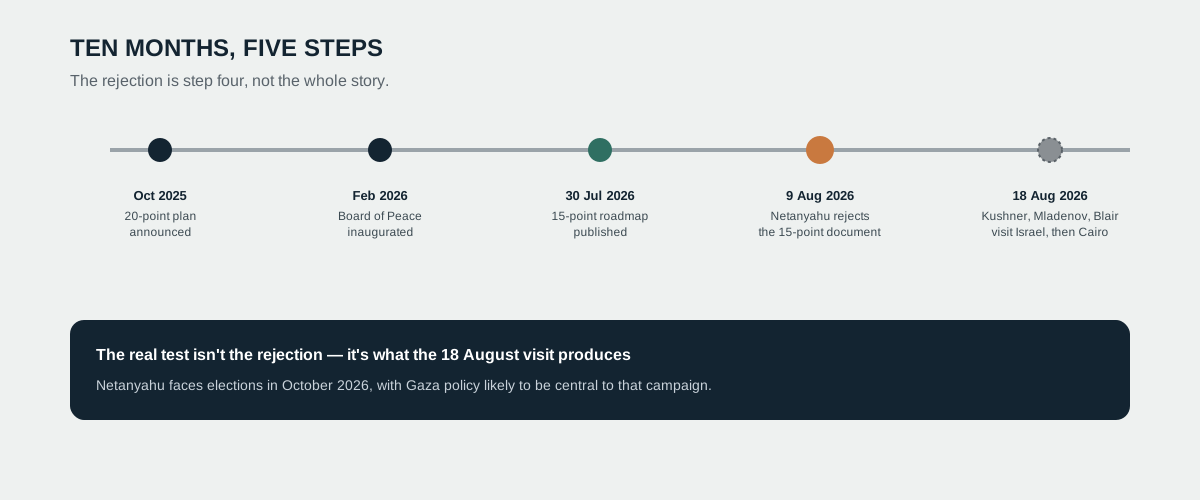
When Israeli Prime Minister Benjamin Netanyahu told his Cabinet on 9 August 2026 that "Israel rejects the 15-point document," most headlines treated it as a rejection of Trump's Gaza peace plan, full stop. That's not quite what happened. The 15-point document is a specific implementation roadmap for disarming Hamas and withdrawing Israeli forces — published by Trump's Board of Peace on 30 July 2026 — and it's meaningfully different from the broader 20-point framework announced back in October 2025 that most people think of as "the Gaza peace plan." Understanding that distinction is the difference between following this story and just watching headlines repeat a number.
The story in 60 seconds
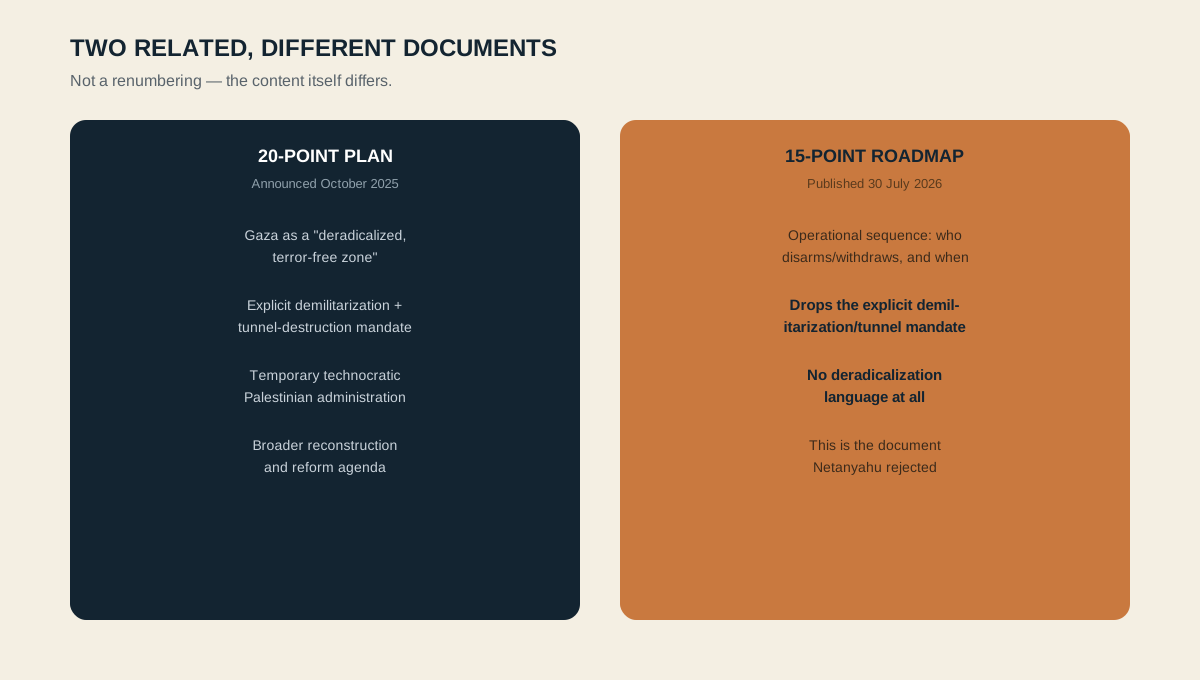
- The original 20-point Gaza peace plan, announced by President Trump in October 2025, set out a broad framework: Gaza as a "deradicalized, terror-free zone," a temporary technocratic Palestinian administration excluding Hamas, and eventual reconstruction.
- On 30 July 2026, Trump's Board of Peace — a roughly 40-country body Trump chairs, inaugurated February 2026, with no Palestinian representation — published a separate 15-point roadmap specifically implementing the disarmament-and-withdrawal phase of that broader plan.
- The 15-point roadmap links Hamas's full disarmament to a phased Israeli military withdrawal and a handover of governance to a transitional Palestinian technocratic body — and notably drops the original 20-point plan's explicit demilitarization and tunnel-destruction requirements and its deradicalization language.
- Netanyahu formally rejected the 15-point document on 9 August 2026, stating "the IDF will not carry out any withdrawal until Hamas is disarmed" — demanding disarmament happen fully first, rather than in the phased, linked sequence the roadmap describes.
- Jared Kushner, Board of Peace high representative Nickolay Mladenov and executive board member Tony Blair are due in Israel on 18 August 2026, then Cairo, to try to salvage the roadmap — while Netanyahu faces elections in October 2026 with Gaza policy likely to be pivotal.
AI SummaryAI-generated summary, reviewed by editors
Netanyahu's rejection of Trump's '15-point plan' has been covered everywhere as a fresh crisis. What's missing from most of that coverage: the 15-point document isn't the peace plan itself — it's a specific implementation roadmap for one phase of an older, broader 20-point plan, and the two documents don't actually say
Switch to ShortsThe two plans almost nobody is distinguishing
Most coverage treats "20-point plan" and "15-point plan" as if they're just two names for the same thing, or assumes the number simply got revised downward. Neither is accurate. The 20-point plan, unveiled in October 2025, is the broad strategic framework: Gaza's disarmament and demilitarization as a stated goal, destruction of tunnels and militant infrastructure, a temporary technocratic Palestinian administration with no Hamas role, and a longer-term reconstruction and reform agenda. The 15-point document published on 30 July 2026 is narrower by design — it's the Board of Peace's specific operational roadmap for one part of that plan: how Hamas disarmament, Israeli withdrawal and a governance handover are actually supposed to happen, in what order, on what timeline. Critically, in translating the broad framework into an operational sequence, the 15-point roadmap drops the original plan's explicit demilitarization and tunnel-destruction mandates and its deradicalization language entirely. That's not a footnote — it's a real substantive gap between what was originally promised and what's actually on the table for implementation right now.
The actual sticking point: who moves first
Strip away the numbering confusion, and the dispute Netanyahu is actually raising is about sequencing, not the plan's existence. The 15-point roadmap envisions Hamas's disarmament and Israel's military withdrawal as linked, phased steps — reported details describe Hamas first handing civilian governance and security functions to a transitional Palestinian technocratic body, both sides halting military operations, then a full disarmament phase in which Hamas surrenders weapons and tunnel control, with Israeli withdrawal proceeding as that phase completes. Netanyahu's rejection reframes that sequence into a stricter precondition: "The IDF will not carry out any withdrawal until Hamas is disarmed," he told his Cabinet — full disarmament first, withdrawal only after, not the interleaved phases the roadmap describes. That's the entire dispute in one sentence, and it's the part of the story that a "rejects the peace plan" headline doesn't actually capture.
Why this is landing three months before an election
Netanyahu's rejection didn't happen in a political vacuum. He's facing elections in October 2026, and how the Gaza and Iran conflicts are perceived to have been resolved — or not — is likely to be central to that campaign. In the same Cabinet remarks rejecting the 15-point document, Netanyahu also reaffirmed that "as long as I am prime minister, there will be no Palestinian state" — a position that goes considerably further than simply disputing a disarmament timetable, and one that signals this is as much a domestic political stance as a negotiating position on the roadmap's specific terms.
What happens next
Kushner, Mladenov and Blair are scheduled to arrive in Israel on 18 August 2026, then travel to Cairo, where a Palestinian technocratic group intended to eventually take over Gaza's governance under the ceasefire framework has reportedly been meeting for months. The stated purpose of the visit is to salvage the roadmap Netanyahu just rejected — which means the real test of this story isn't the rejection itself, but whether the Board of Peace can produce a revised sequencing that Netanyahu will actually accept without abandoning the disarm-first precondition he's now stated publicly and repeatedly.
Claim versus evidence
- Confirmed: Trump's original 20-point Gaza plan (October 2025) and the Board of Peace's 15-point implementation roadmap (published 30 July 2026) are two distinct documents; the latter operationalises part of the former and omits its explicit demilitarization, tunnel-destruction and deradicalization provisions.
- Confirmed: Netanyahu rejected the 15-point document on 9 August 2026, stating the IDF will not withdraw until Hamas is fully disarmed — a stricter sequencing than the roadmap's phased, linked approach.
- Confirmed: Netanyahu also stated there will be no Palestinian state as long as he is prime minister, in the same set of remarks.
- Confirmed: Kushner, Mladenov and Blair are scheduled to visit Israel on 18 August 2026 and then Cairo to discuss advancing the roadmap.
- Context, not a new finding: Netanyahu faces Israeli elections in October 2026; his rejection follows reporting that frames Gaza and Iran policy as likely to be central to that campaign.
- Our analysis: Framing this purely as "Israel rejects Trump's peace plan" collapses a specific sequencing dispute over one implementation roadmap into a rejection of the entire process — the distinction matters for understanding what a resolution would actually require.
Frequently asked questions
Did Israel reject the entire Gaza peace plan?
No. Netanyahu rejected the 15-point implementation roadmap for Hamas disarmament and Israeli withdrawal specifically — not the broader 20-point framework from October 2025, which remains the stated overarching plan.
What's the actual disagreement between Netanyahu and the roadmap?
Sequencing. The roadmap links Hamas's disarmament and Israel's withdrawal as phased, interleaved steps. Netanyahu wants full Hamas disarmament to happen completely before any Israeli withdrawal begins.
Why did the 15-point roadmap drop parts of the original 20-point plan?
Reported analysis describes the 15-point document as an operational implementation roadmap rather than a restatement of the full strategic framework — in translating the broader plan into a specific sequence of steps, it omits the original plan's explicit demilitarization, tunnel-destruction and deradicalization provisions.
What happens next?
Jared Kushner and Board of Peace officials Nickolay Mladenov and Tony Blair are due in Israel on 18 August 2026, then Cairo, to try to negotiate a version of the roadmap Netanyahu will accept.
The bottom line
"Israel rejects Trump's peace plan" is a simpler headline than what's actually happening, and simpler headlines tend to travel further than accurate ones. The real dispute is narrower and more specific: a sequencing disagreement over one implementation roadmap for a broader plan that's still, at least officially, intact. Whether that distinction survives the next round of shuttle diplomacy — or whether Netanyahu's disarm-first position hardens into something the Board of Peace can't work around before an October election — is the actual story to watch, not the rejection itself.
Sources
- Board of Peace outlines 15-point roadmap to disarm Hamas, withdraw Israeli forces from Gaza — The Hill
- What now as Israel rejects Trump's 15-point plan for Gaza? — Al Jazeera
- Netanyahu rejects Trump-backed plan for Hamas to disarm, Israel to leave Gaza — The Washington Post
- Kushner to visit Israel after Netanyahu rejects Gaza Board of Peace plan — Al Jazeera
- Read Donald Trump's 20-point Gaza peace plan in full — Yahoo News
Related coverage
For a similar international-law lens applied to another active 2026 conflict, see our explainer on what the Geneva Conventions actually say about Ukraine's detained civilians.
Full forms
- IDF — Israel Defense Forces
HeadlineDecoded is committed to accuracy and transparency. Read our standards or submit a correction.