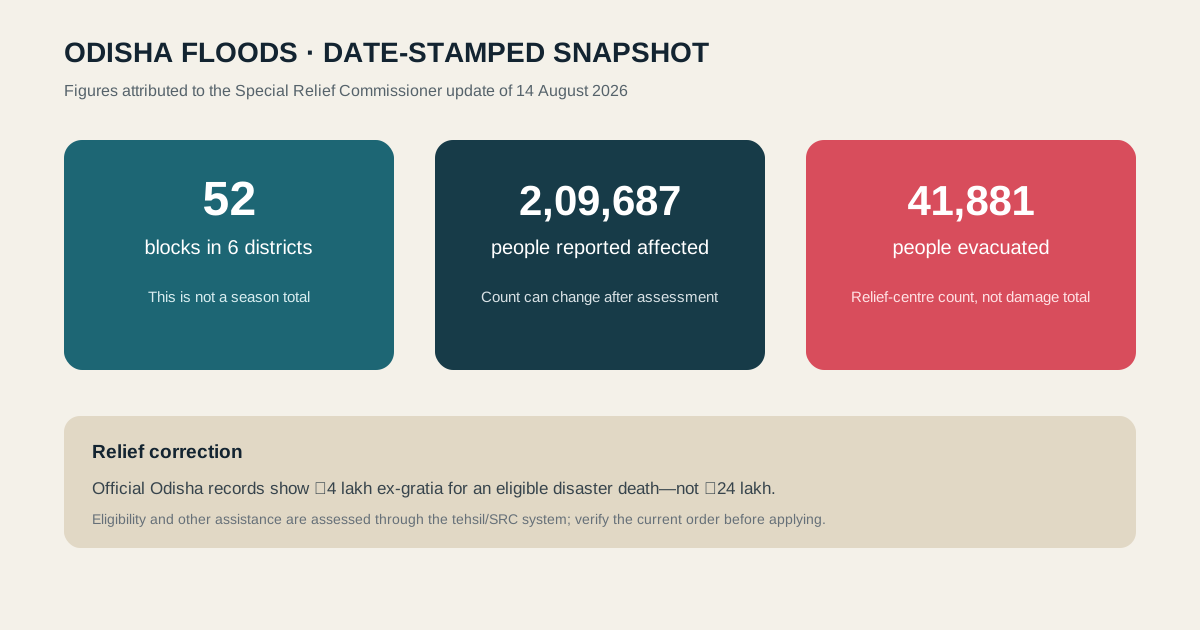
North Odisha entered another flood emergency in mid-August after repeated rain pushed the Baitarani, Budhabalanga, Jalaka and other rivers above danger levels. A Special Relief Commissioner (SRC) update reported 2,09,687 people affected and 41,881 evacuated across 52 blocks in six districts as of 14 August 2026. Those are date-stamped figures for the latest assessment—not a final monsoon total.
Correction: An earlier version said families were entitled to ₹24 lakh for each flood death. Official Odisha records show ₹4 lakh ex-gratia for an eligible disaster death. It also treated changing figures from separate flood waves too freely as one running total. This version labels the date and source for each number and removes claims that could not be verified from an official record.The story in 60 seconds
- The 14 August SRC update, as reported by Pragativadi, covered 52 blocks in Balasore, Bhadrak, Jajpur, Kendujhar, Mayurbhanj and Sundargarh.
- It reported 2,09,687 people affected, 41,881 evacuated, 429 villages and 170 gram panchayats affected.
- Earlier late-July and early-August reports used larger cumulative figures for different dates and areas; they must not be added to the latest-wave count.
- IMD documented a deep depression crossing the West Bengal–north Odisha coast in late July, with extremely heavy rain warnings that raised river and flash-flood risk.
- Repeated flooding reflects renewed catchment rain, already wet ground, river overflow and breaches or unfinished repairs that allow water back into low-lying settlements.
- Eligible next of kin should use the tehsil/SRC process; Odisha’s official disaster-assistance record shows ₹4 lakh ex-gratia per eligible death, not ₹24 lakh.
AI SummaryAI-generated summary, reviewed by editors
A 14 August update reported 2.09 lakh people affected and 41,881 evacuated across six districts. The figures describe one flood wave, not the whole monsoon; repeated rain, saturated catchments and damaged embankments explain the recurring risk.
Switch to ShortsLatest verified snapshot
According to the 14 August update quoted by Pragativadi, Balasore had 79,443 people affected, Bhadrak 51,560 and Jajpur 46,570. The report said four rivers were above danger marks. These numbers can change as water moves and field assessment improves, so every update should carry a timestamp.
Why the same corridor floods repeatedly
North Odisha’s coastal river basins collect rain from both Odisha and upstream catchments. When a depression brings widespread heavy rain, water can arrive from local runoff and swollen rivers together. If soil and wetlands remain saturated after an earlier wave, the next spell runs off faster. Low-lying villages in the Baitarani, Budhabalanga, Jalaka, Salandi and Brahmani systems can therefore flood again even after water briefly recedes.
Infrastructure condition changes the impact. OdishaTV reported renewed ingress near the Anandapur ring embankment while earlier repair work was incomplete, and another breach along the Kani system in Jajpur. These are attributed field reports, not a statewide engineering audit. The evidence supports scrutiny of repair timing and access roads; it does not by itself prove one cause for every flooded village.
How to read the death and affected-population totals
Around 29 July, reports cited three deaths and more than two lakh people affected in six districts. By 3 August, another report cited a cumulative six deaths and about 8.64 lakh affected across 22 districts. The 14 August figure describes a later assessment across six districts. “Affected” can include people whose homes, crops, roads or services were disrupted; it is not the same as evacuated, displaced or living in a relief camp.
No new death should be added to the article without an SRC or district confirmation tied to a date. This matters because early disaster reports are frequently revised.
Relief: what families should do
- For immediate danger, move to the shelter identified by the local administration and do not cross flowing water.
- Report a death, house damage, crop loss or livestock loss to the local tehsil/revenue office so it enters the official assessment.
- Keep acknowledgement numbers and copies of identity, bank and damage records where safe to do so.
- Track assistance through official SRC/DAMPS or district channels. Do not pay an agent to register a claim.
- For an eligible disaster death, official Odisha records show ₹4 lakh ex-gratia. House, crop and livestock assistance have separate eligibility and assessment rules.
What is still unverified
HeadlineDecoded could not locate a public 14 August situation-report PDF on the SRC archive during this review. The latest-wave figures therefore remain attributed to Pragativadi’s direct report of the SRC briefing and should be replaced by the official PDF if published. Claims that Jajpur flooded on exactly four specified dates were not retained as an official count. No authenticated original government social post containing the full data table was found.
Questions readers are asking
How many people were affected?
The 14 August update reported 2,09,687 across six districts. A larger 8.64 lakh figure reported earlier covered a different cumulative date and 22 districts.
How much is death compensation?
Odisha’s official records show ₹4 lakh for an eligible disaster death. Approval depends on official verification; it is not an automatic cash payment for every reported death.
Are river levels still rising?
Conditions change hourly. Check the Odisha Water Resources flood bulletin, SRC/district advisories and IMD Bhubaneswar before travel.
Sources
- IMD Bhubaneswar warnings
- IMD deep-depression and flash-flood material
- Odisha SRC flood archive
- Official Odisha flood ex-gratia record
- Pragativadi report of the 14 August SRC update
- OdishaTV field report on river levels and breaches
For comparison, read our wave-by-wave Assam floods explainer. Before forwarding dramatic clips, use the checks in our guide to spotting recycled flood videos.
Image disclosure: the header is an AI-generated editorial illustration of a generic eastern Indian floodplain after rain. It is not a photograph of Odisha, a named village or a real 2026 flood event.
HeadlineDecoded is committed to accuracy and transparency. Read our standards or submit a correction.