The story in 60 seconds
- Assam’s flood death toll has reached 100, according to officials cited by AP.
- More than 700,000 people have been displaced since the floods began last month.
- Nearly 300,000 people were moved into government relief camps during the worst phase.
- About 49,000 people remain in 125 relief camps and distribution centres.
- Several rivers, including the Brahmaputra, remain above danger levels.
- Homes, farmland, roads and livestock losses are slowing recovery.
AI SummaryAI-generated summary, reviewed by editors
Assam’s flood death toll has reached 100, while hundreds of thousands of people face displacement, damaged homes and a difficult recovery along the Brahmaputra.
Switch to ShortsWhat is happening now?
Assam’s flood crisis remains critical after days of heavy monsoon rain pushed the Brahmaputra and other rivers beyond their banks. The Brahmaputra originates in Tibet and flows for roughly 900 kilometres through Assam, crossing densely populated floodplains and river islands.
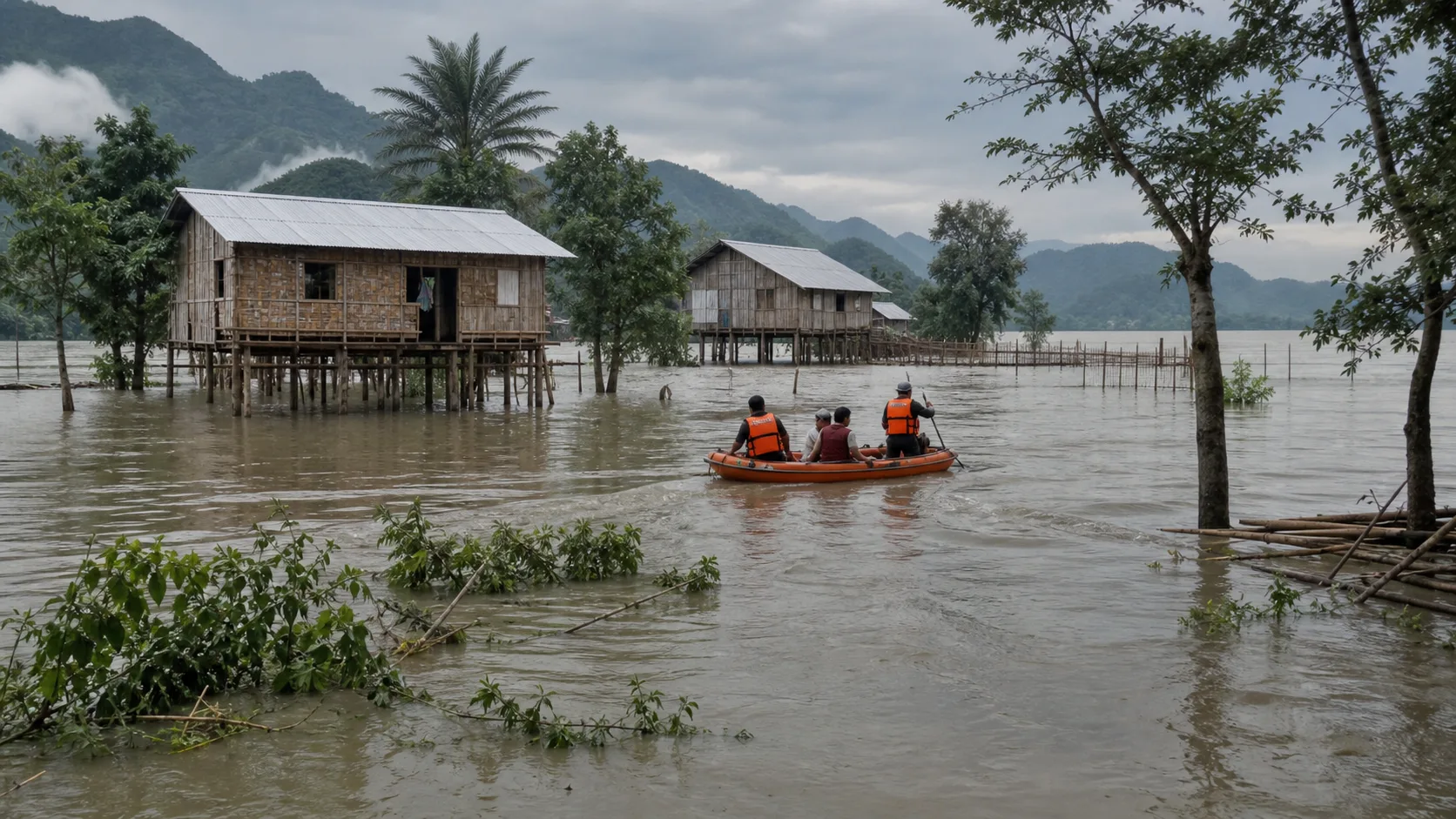
Floodwater has submerged villages, damaged roads and disrupted basic services. In some areas, people are returning as water recedes, but homes remain covered in silt and farmland has been damaged.
Why displacement continues
Families cannot safely return while rivers remain above danger levels. Even after water falls, homes may be uninhabitable because of silt, damaged drinking-water systems, broken toilets, missing electricity and unsafe roads.
Rural households have also lost crops, cattle, tools and stored food. For farmers and dairy families, losing livestock removes both household assets and future income. Repeated rises in water can force families to move more than once, delaying repairs, schooling and the next planting season.
Relief and the recovery gap
Authorities have opened relief camps and distribution centres while assessing damage. Assam’s agriculture and irrigation minister said about 50,000 affected people had received interim compensation. Roofing sheets and construction materials were beginning to reach some communities.
That assistance is only an initial response. Longer recovery will require clean water, healthcare, school access, livestock replacement, livelihood support and safe housing. Accurate damage assessments matter because compensation depends on documenting what was lost.
Why evacuation is difficult
Many communities live beside rivers, on low-lying floodplains or on river islands. Roads can disappear quickly, leaving boats as the only practical transport. Moving people is easier than moving cattle, food, documents and farming equipment, so some families delay evacuation while trying to protect their livelihoods.
Climate change and uncertainty
The immediate causes are heavy rain and overflowing rivers. Experts cited by AP say human-caused climate change is intensifying South Asian monsoons, with rainfall arriving in more erratic bursts followed by dry periods. That can place sudden pressure on drainage and embankments.
Climate change is not the only factor. River management, land use, embankments, drainage, settlement patterns and preparedness also shape the damage. The evidence supports a combined focus on earlier warnings, safer housing, resilient infrastructure and livelihood protection.
What happens next
The immediate priorities are keeping people safe, maintaining relief supplies and preventing disease. The next stage will involve damage assessment, compensation and restoring roads, electricity, schools and healthcare. Assam cannot eliminate seasonal floods, but better preparation can reduce how many people are trapped or forced to rebuild from nothing.
Sources: Associated Press report, August 10, 2026; Assam State Disaster Management Authority.
Abbreviations and full forms
AP — Associated Press.
HeadlineDecoded is committed to accuracy and transparency. Read our standards or submit a correction.