AI SummaryAI-generated summary, reviewed by editors
NEET PG 2026 cuts the paper from 200 to 180 questions, but timed sections are not new. Here is the verified pattern, what candidates can review, and the official timeline to the August 30 exam.
Switch to ShortsNEET PG 2026 has a smaller paper, not an entirely new navigation system. The July 2026 information bulletin reduces the test from 200 to 180 questions and from 800 to 720 marks. But the five time-bound sections and the rule preventing candidates from returning to a completed section date to an NBEMS notice issued in May 2024. That distinction matters for candidates deciding what they need to change in their preparation.
Editorial review, August 12, 2026We corrected the earlier framing that the no-backtracking format had just been introduced. NBEMS introduced mandatory time-bound sections in 2024. The 2026 change is the reduction to 180 questions—36 in each of five sections—while the 42-minute sectional structure continues. We also removed an unsupported September 1 answer-key date and replaced secondary-source scheduling claims with official NBEMS dates.
The verified pattern in 60 seconds
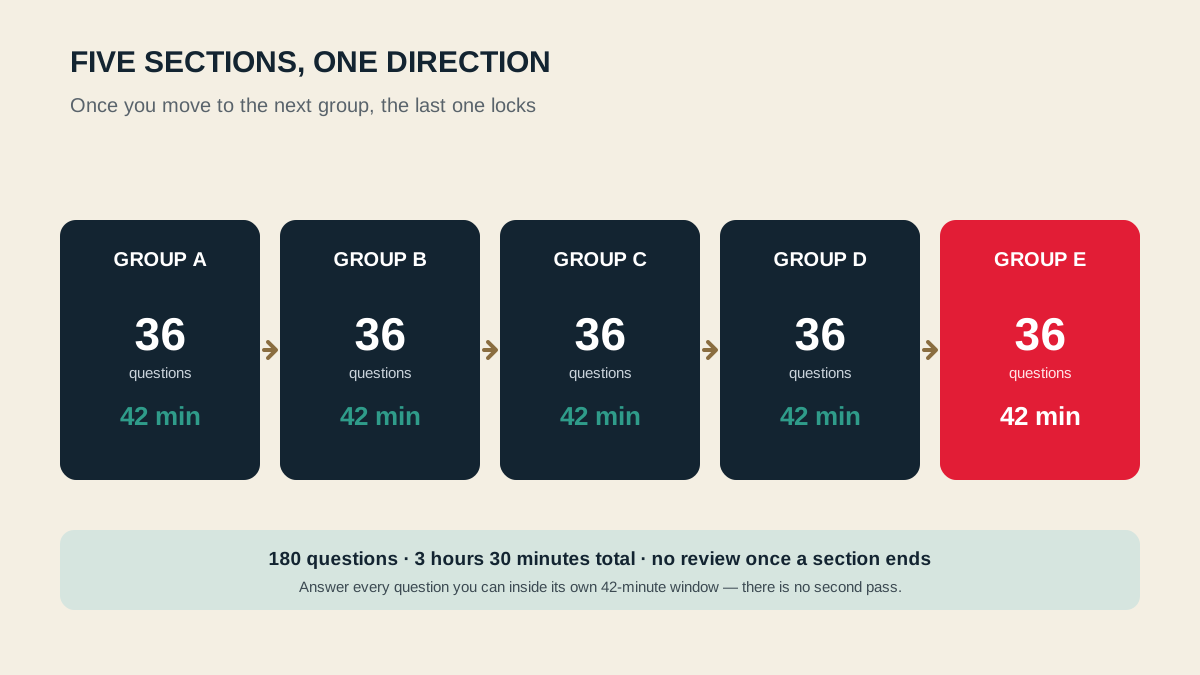
- NEET PG 2026 has 180 multiple-choice questions, down from 200, for a maximum of 720 marks.
- The paper is divided into five time-bound sections, Groups A to E, containing 36 questions each.
- Each section has 42 minutes. Candidates may review questions inside the active section, but cannot return after that section’s allotted time ends.
- The full computer-based test lasts 3 hours 30 minutes and is conducted in English.
- The marking scheme remains +4 for a correct answer, −1 for an incorrect answer and 0 for an unattempted question.
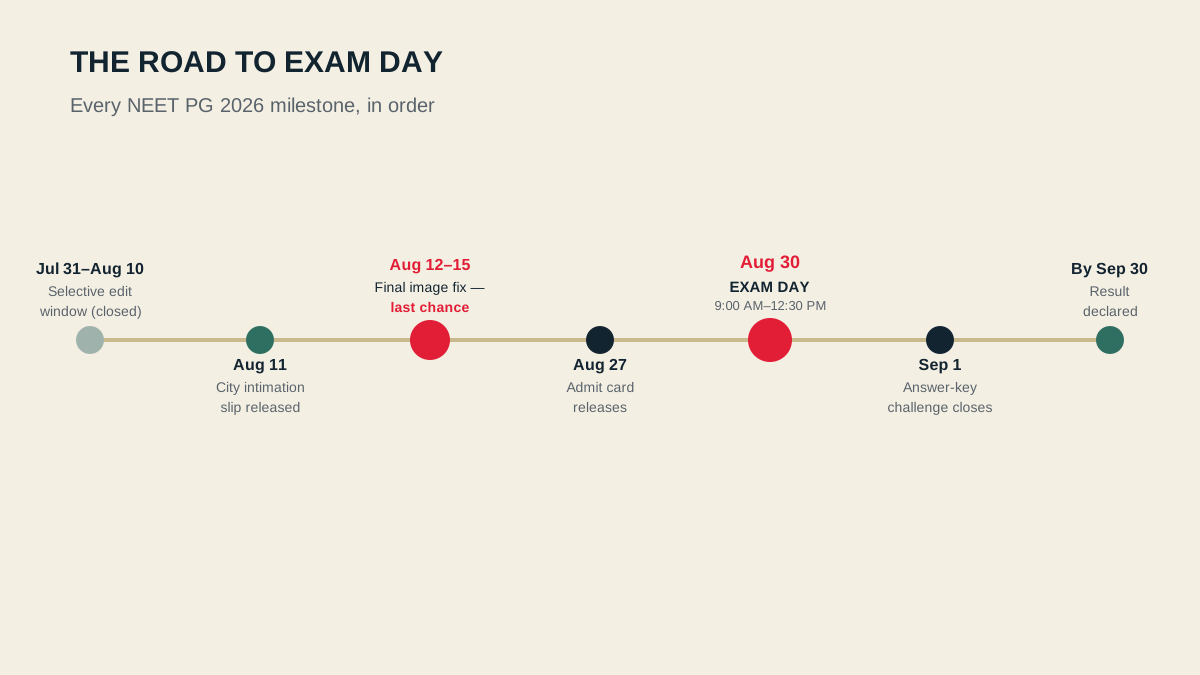
- NBEMS’s July 1 notice confirms the test-city intimation date as August 11, the examination date as August 30 and result declaration by September 30.
What changed—and what did not
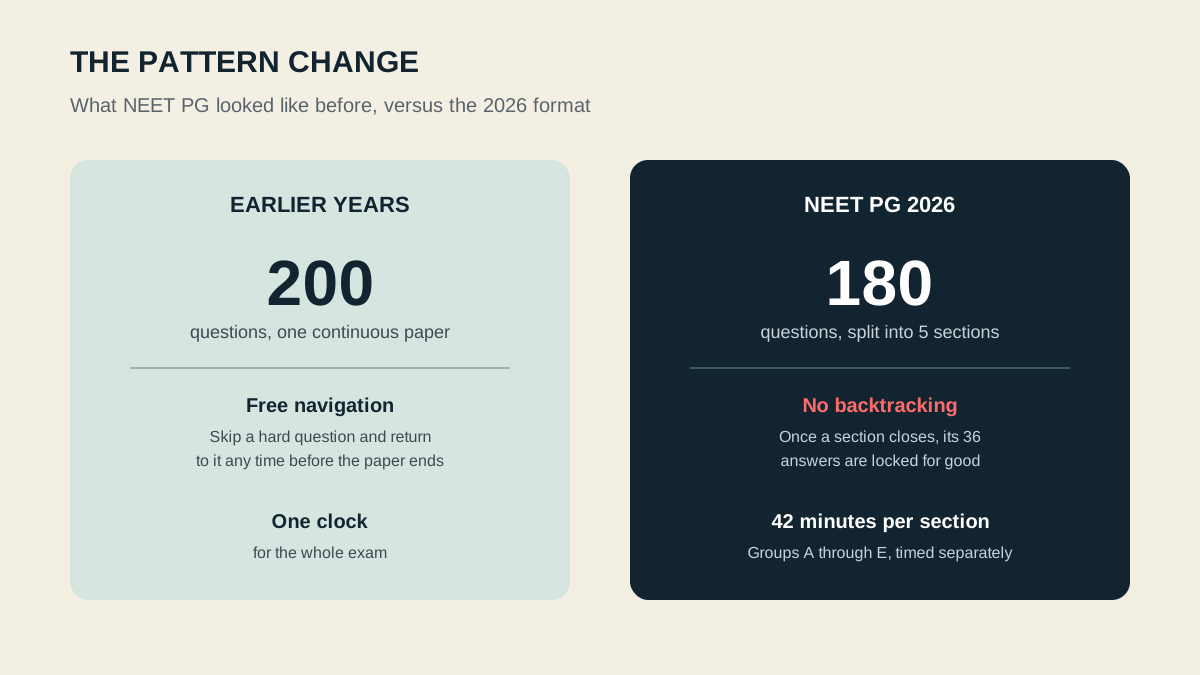
The material 2026 revision is numerical: 20 fewer questions, four fewer questions in each of the five sections and a maximum score reduced from 800 to 720. The overall 210-minute duration and 42-minute allocation per section remain.
The sectional rule itself is not new. In its May 4, 2024 notice, NBEMS introduced mandatory time-bound sections for its computer-based MCQ examinations, including NEET-PG. That notice says candidates cannot advance before the current section’s allotted time is complete and cannot review or modify responses after the section closes. It also makes an important qualification omitted from the earlier version of this article: candidates can mark and review questions within the section that is currently open.
How the format changes preparation
The reduction gives candidates an average of 70 seconds per question within each 36-question block, compared with 63 seconds for 40 questions in the same 42 minutes. That arithmetic does not guarantee an easier paper: question difficulty and candidate accuracy still determine performance.
Practice should reproduce the operational constraint. Use five consecutive 42-minute blocks of 36 mixed questions. Review flagged questions before the active block ends, because unused time cannot be transferred and a closed section cannot be reopened. Avoid treating “no backtracking” as a reason to guess immediately; the official rule still allows review while the current section remains active.
Official timeline to the examination
The July 1 NBEMS conduct notice verifies the following dates:
- July 1–21: online application window.
- August 11: intimation of test city.
- August 30: NEET PG 2026 examination on a computer-based platform.
- By September 30: declaration of result.
Candidates should use their NBEMS applicant login and the NEET-PG page for admit-card availability, image scrutiny or any candidate-specific correction instruction. Dates circulated by coaching or news sites should not be treated as authoritative unless they match a current NBEMS bulletin or notice.
Eligibility: rely on the bulletin, not a checklist alone
At a high level, candidates need an eligible MBBS qualification, the required registration and completion of the internship by the cut-off prescribed for the session. Eligibility can turn on the precise wording of the current information bulletin, including documentary and internship conditions. Candidates should therefore check the official bulletin rather than relying only on a summary article.
What candidates should do now
- Download and preserve the official test-city intimation available through the applicant login.
- Check the NBEMS NEET-PG page regularly for the admit card and test-day advisory.
- Practise 36-question, 42-minute blocks and complete any review before each block closes.
- Keep the registered email address and mobile number active for candidate-specific communication.
- Use the NBEMS Communication Web Portal for an individual query; do not rely on unofficial helpline numbers or social-media accounts.
Primary sources
- Conduct of NEET-PG 2026, dated July 1, 2026 — NBEMS
- Introduction of mandatory time-bound sections, dated May 4, 2024 — NBEMS
- Official NEET-PG examination page — NBEMS
Full forms
- NBEMS: National Board of Examinations in Medical Sciences
- NEET-PG: National Eligibility cum Entrance Test—Postgraduate
- NMC: National Medical Commission
HeadlineDecoded is committed to accuracy and transparency. Read our standards or submit a correction.