Nescafé Black Roast is worth considering if you want a darker, more assertive instant coffee than your usual cup. The main buying question is whether you enjoy pronounced roast bitterness. Public customer discussions include fans and people who find it over-roasted, so your taste preferences matter more than the intensity language in the listing.
How we reviewed it: This is a research-based assessment of the Indian 90g jar linked under Amazon ASIN B09FGCL2G9. We checked manufacturer information, retailer listings, actual packaging photographs and public customer discussions. We have not conducted a hands-on taste test. Prices and packaging sources were checked on 10 October 2026.
The story in 60 seconds
- Black Roast is positioned as a darker, stronger-tasting instant coffee.
- The photographed 90g rear label lists coffee beans as its sole ingredient; the front declares 100% pure coffee.
- Customer anecdotes are divided on its roast intensity.
- BigBasket showed ₹425 for 90g when checked on 10 October 2026.
- An illustrative 2g portion costs about ₹9.44 at that price.
- Caffeine can improve alertness, but sleep, anxiety and reflux symptoms can limit your tolerance; this jar’s caffeine dose remains unverified.
- Consider it if you already enjoy a dark cup; this is a research-based review.
AI SummaryBased on linked sources; no hands-on taste test
Our Nescafé Black Roast review covers the 90g jar’s label, taste, preparation and value, with reader FAQ answers and sourced guidance on coffee’s benefits, risks and caffeine intake.
Switch to ShortsWhat is Nescafé Black Roast?
Nescafé’s Indian product page describes Black Roast as instant coffee made with 100% pure coffee, using selected Robusta beans sourced from South India. Its distinguishing feature is a longer roast intended to create a darker, stronger-tasting profile. The manufacturer describes the taste as intense, rich and dark.
It is soluble instant coffee: you mix it with hot water rather than brewing grounds. “Black Roast” names the variant and does not mean you must drink it without milk. That flexibility matters if you want to try the darker profile while keeping your usual preparation.
Actual product image, label and ingredient composition
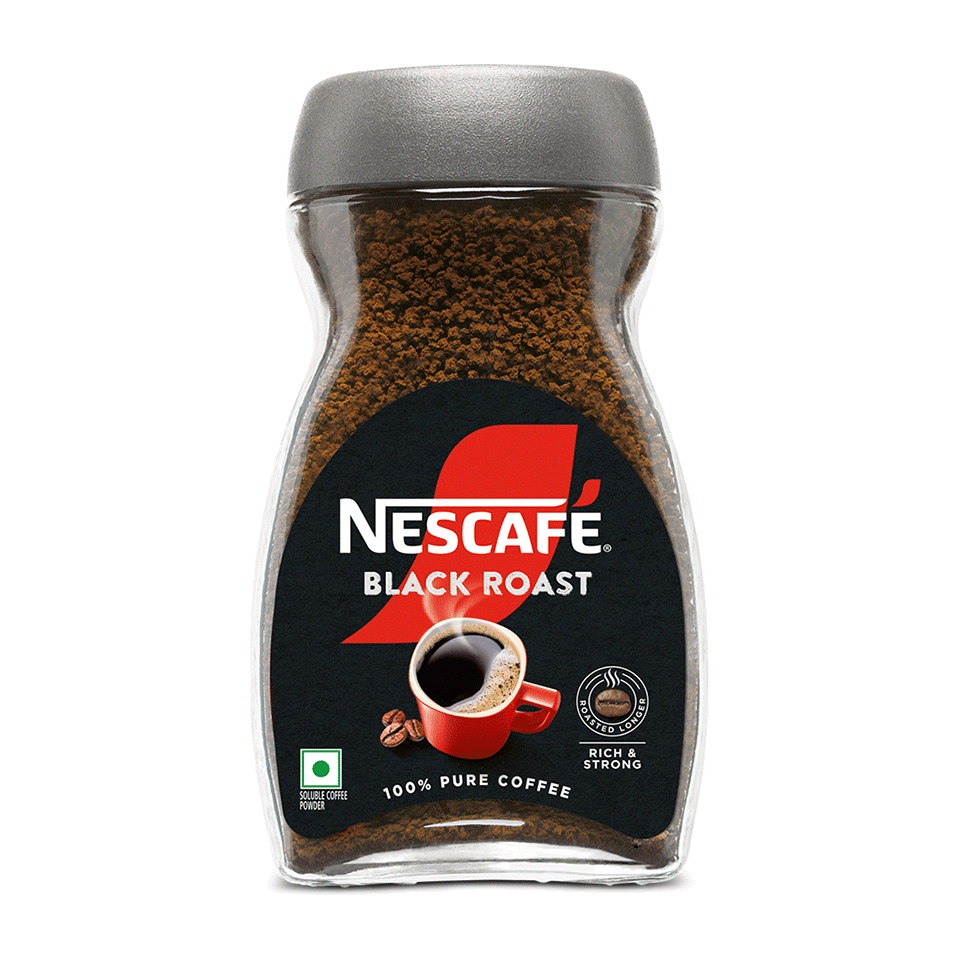
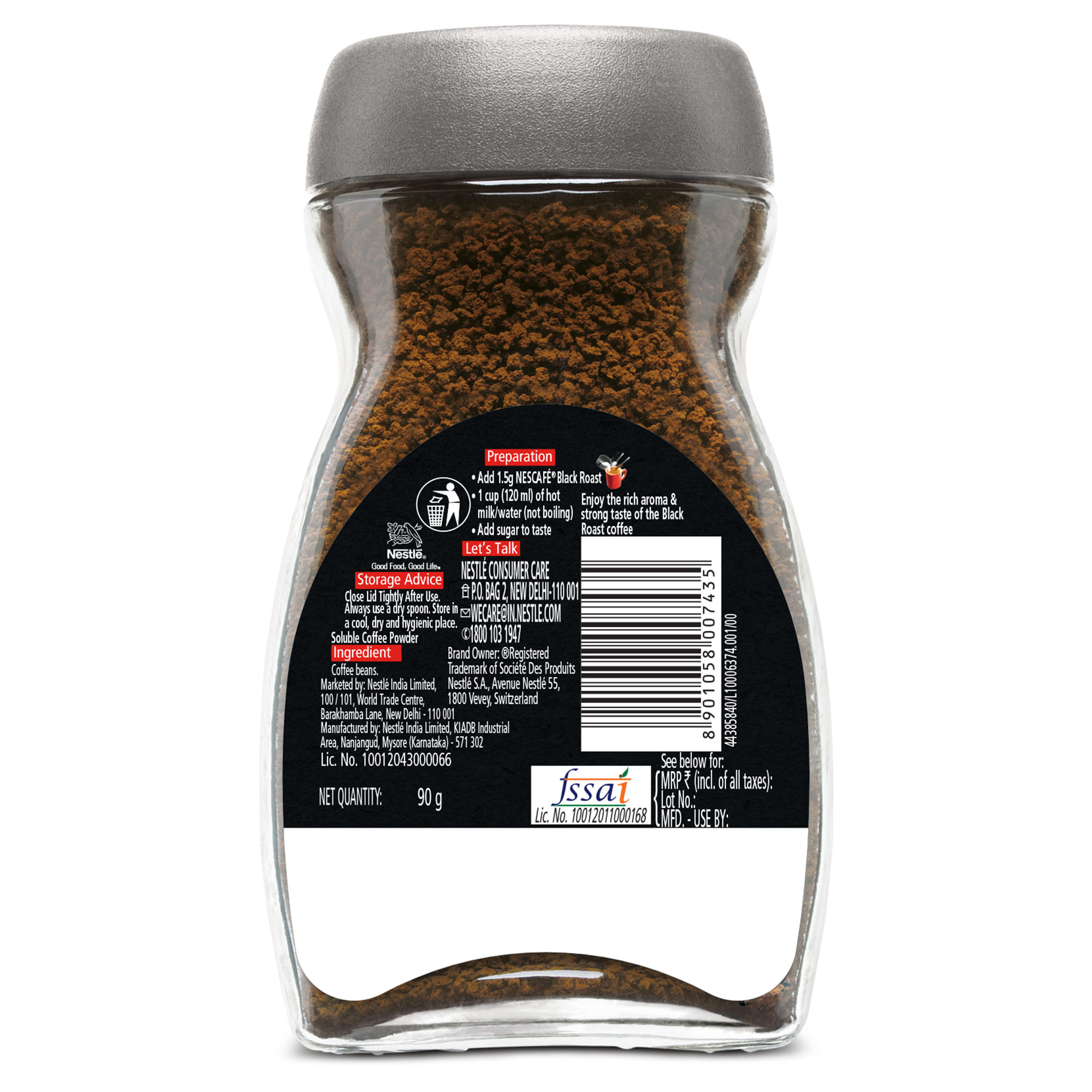
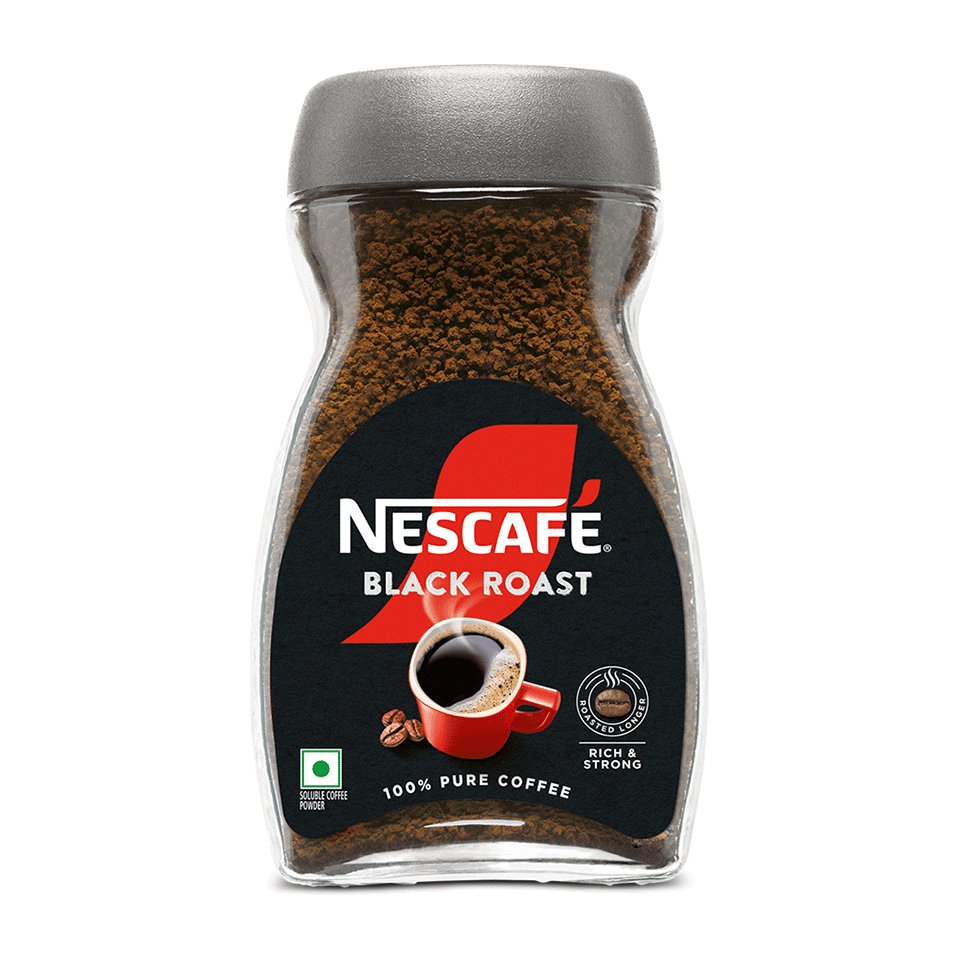
The lead photograph comes from Nescafé’s official 90g product image. Its front shows the Black Roast variant, a vegetarian symbol and the 100% pure coffee claim. The rear photograph below comes from Wellness Forever’s product listing and visibly states a net quantity of 90g, despite the older 100gm wording in that page’s URL.
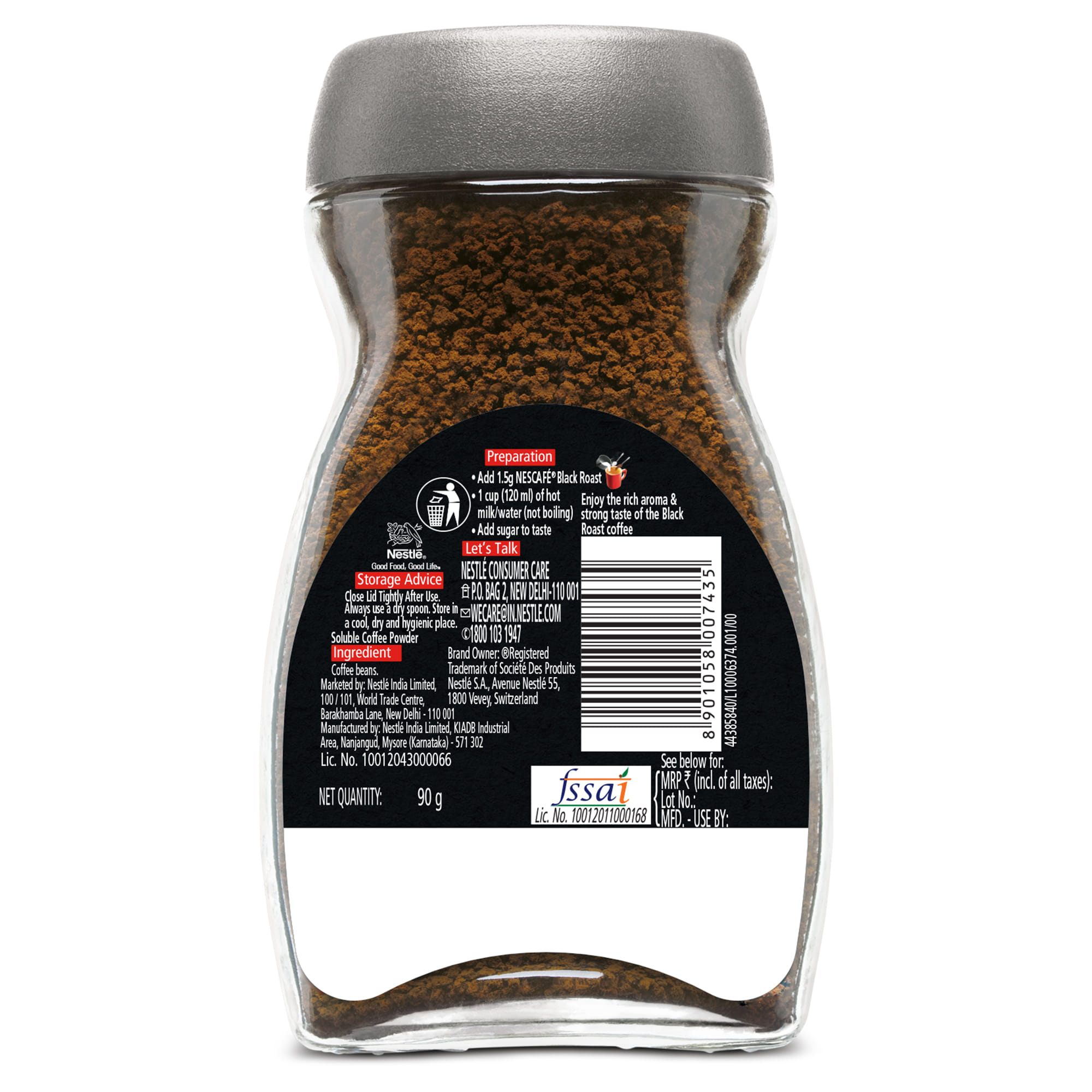
Ingredient composition: The ingredient line reads “Coffee beans.” Together with the front’s 100% pure coffee claim, this identifies a coffee-only soluble powder. Chicory, sugar, milk powder and flavourings are not listed as ingredients in this photographed label. Milk or sugar added during preparation are separate from the jar’s contents.
This describes the ingredient formulation. No nutritional table or caffeine amount is visible in the rear-label image we obtained, so we cannot provide verified calories, macronutrients or milligrams of caffeine from it. The manufacturer’s Robusta-bean description does not establish a measured caffeine content.
Other details visible on the 90g label
- Product form and quantity
- Soluble coffee powder; 90g net quantity.
- Manufacturer
- Nestlé India Limited, KIADB Industrial Area, Nanjangud, Mysore, Karnataka 571302.
- Barcode
- 8901058007435.
- Storage
- Reseal after use, use a dry spoon and keep the jar somewhere cool, dry and hygienic.
The image directs buyers to the container for batch, MRP, manufacture and use-by information, but actual stamped values are not visible in this photograph. Check your delivered jar for those details. Packaging photographs can differ from a seller’s current batch.
Taste feedback: the roast is the attraction and the trade-off
The public feedback supports the darker-taste positioning, but it does not show that everyone will prefer it. In a Black Roast versus Classic discussion, one user says Black Roast feels stronger and darker, while regular Classic can seem light to them.
A separate coffee discussion includes both praise and criticism. One firsthand user reports an over-roasted taste that obscured other flavours. Other participants prefer Black Roast, and one considers its roast balanced relative to coffees they had tried.
These are individual experiences, not a representative customer survey. They point to a useful distinction: more roast intensity can be enjoyable without being an improvement for every drinker. If you already dislike bitter coffee, the darker positioning gives you a reason to approach this variant cautiously.
“Stronger” here refers to flavour. The sources we checked do not establish a product-specific caffeine advantage over regular Classic. We also cannot verify aroma, texture or flavour notes through a hands-on comparison.
Who should buy the 90g jar?
This is a reasonable option for an existing instant-coffee drinker who enjoys a dark cup and finds regular Classic too mild. Its appeal is simple preparation combined with a more pronounced roast profile.
If you want a gentler cup or subtle flavours, Black Roast’s positioning is less persuasive. Think about what is missing from your current coffee before switching: extra roast intensity addresses a preference for a darker taste, but it does not automatically address every complaint about instant coffee.
Price and value in India
On 10 October 2026, the BigBasket listing for the 90g jar displayed ₹425 against an MRP of ₹470. This is an observed BigBasket price, not a verified Amazon checkout price. Seller, delivery location, stock and offers can change what you pay.
At ₹425, the coffee costs approximately ₹472.22 per 100g. For illustration, a 2g portion would give about 45 cups from the jar, at ₹9.44 per cup in coffee powder. Milk and sugar cost extra. This budgeting example differs from the photographed label’s 1.5g preparation quantity.
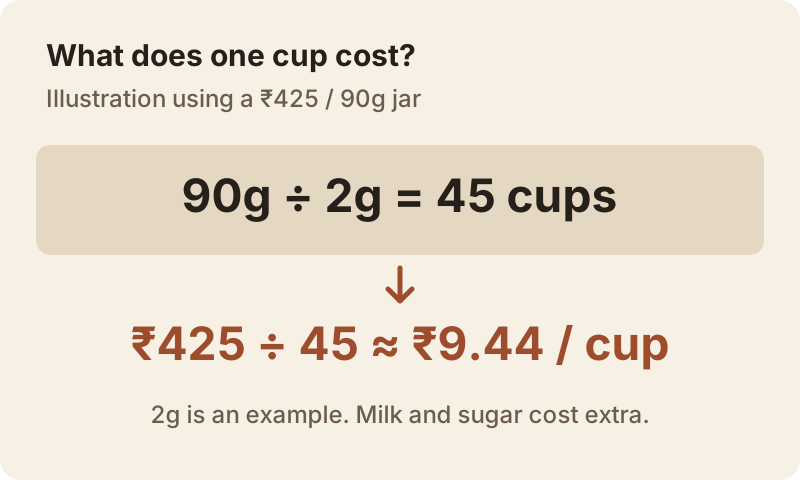
Compare packs by price per gram and check the quantity selected at checkout. Around ₹400–₹450 seems reasonable for a trial if the darker profile appeals to you; that is our value judgment, rather than a claim that this is the cheapest instant coffee available.
How to prepare it
Photographed jar instructions: Mix 1.5g of Black Roast with 120ml of hot milk or water, below boiling, and sweeten if desired. At that powder quantity, 90g gives approximately 60 portions, costing ₹7.08 each at the observed ₹425 price, before milk or sugar.
Manufacturer website guidance: Nescafé’s Indian page instead recommends one teaspoon in 200ml of hot water, with milk and sugar to taste, without fully boiling the water. These are different preparation suggestions. Follow the label on the jar you receive and adjust for your preferred cup size and taste.
A teaspoon does not establish a precise gram weight. Weigh your portion if you want to repeat the same cup or calculate its cost accurately.
Benefits of drinking coffee: what the evidence supports
The following evidence concerns coffee or caffeine generally. It does not establish special health benefits for this Black Roast jar.
- Temporary alertness: Caffeine stimulates the central nervous system and can reduce sleepiness. This can help you feel more awake, although the effect does not replace sleep. Source: European Food Safety Authority (EFSA).
- Exercise performance: Caffeine can help some people sustain endurance exercise and reduce perceived fatigue. Responses vary, and taking more does not necessarily improve performance. The evidence does not establish a pre-workout dose for this jar. Source: US National Institutes of Health (NIH).
- Long-term health associations: Studies associate habitual coffee drinking with lower rates of type 2 diabetes and some cardiovascular outcomes. Much of this evidence is observational: it does not prove that coffee causes the reduction or that this product prevents disease. Source: Harvard’s review of coffee and health.
Drinking coffee without added sugar avoids the sugar you would otherwise add to the cup. Adding milk or sugar changes the drink’s nutritional composition; the jar’s coffee-only ingredient list does not describe your finished beverage.
Possible harms and who should limit coffee
Excess caffeine can cause insomnia, anxiety, jitters, palpitations, raised blood pressure, nausea or stomach upset. Sensitivity varies with the person, health conditions and medicines. Reduce your intake if symptoms appear, and discuss persistent symptoms or relevant medical conditions with your clinician. Source: US Food and Drug Administration (FDA).
Coffee and caffeine can aggravate acid reflux in some people. This does not establish that every person must avoid coffee or that drinking it on an empty stomach always causes harm; identify whether it triggers your symptoms. Source: NIH guidance on reflux.
Regular caffeine use can lead to withdrawal symptoms, including headache and fatigue, if stopped suddenly. Cutting back gradually can make the transition easier. Source: Harvard’s coffee review; FDA advice on reducing caffeine.
How much coffee can you drink each day?
For most healthy, nonpregnant adults, 400mg of caffeine across the day is a general upper benchmark, not a target or a guarantee of symptom-free use. Count caffeine from tea, energy drinks, chocolate, supplements and medicines as well as coffee. Some people need substantially less. Source: FDA caffeine guidance.
EFSA uses a lower daily benchmark of 200mg during pregnancy. Ask your clinician about your intake during pregnancy or breastfeeding, or if medicines or a medical condition could affect your response. Adult benchmarks should not be used as guidance for children. Source: EFSA; FDA guidance for individual circumstances.
We cannot translate these figures into a reliable number of Black Roast cups. The caffeine content of a weighed serving of this Indian 90g variant remains unverified. A 1.5g coffee portion is the weight of the powder, not 1.5g of caffeine.
Nescafé Black Roast: frequently asked questions
Is black coffee the same as Black Roast?
Black coffee describes coffee served without milk. Black Roast is a particular Nescafé instant-coffee variant. You can prepare this variant with water or add milk, as its label and manufacturer guidance allow.
How does it compare with Classic, Gold or filter coffee?
Black Roast’s distinguishing feature is its longer roast and darker taste positioning. We have not conducted a side-by-side test against Classic or Gold, so we cannot rank their flavour. It dissolves in water, whereas ground coffee needs brewing and separation of the grounds.
Does it contain chicory, sugar or milk powder?
The photographed 90g label lists coffee beans as its sole ingredient; none of those additions appears in that ingredient line. Check your purchased pack’s label rather than applying this answer to every Nescafé product.
Does a stronger taste mean more caffeine?
No verified caffeine comparison is available for this jar. Roast intensity describes flavour, so it cannot tell you the milligrams of caffeine in your cup. For a product-specific figure, contact Nescafé India with the variant, barcode, batch and weighed serving size.
Can I make it with milk or serve it cold?
The photographed pack allows hot milk or water. For an iced drink, Nescafé’s Indian FAQ describes making instant coffee with cold water and ice. Adjust the amount of powder and liquid to your taste.
How can I make it less bitter?
Try a smaller measured amount of powder or more water; milk is another option. These adjustments change the cup’s strength. Added sugar changes sweetness and nutritional composition, so account for it separately.
Can black coffee help with weight loss or burn belly fat?
We have no verified evidence that this Black Roast product treats obesity, selectively burns belly fat or detoxifies the body. Choosing it without added sugar can reduce the sugar added to your drink; that alone does not establish weight loss.
When should I stop drinking coffee before bed?
There is no single cutoff that suits everyone. EFSA notes that even 100mg of caffeine near bedtime can affect sleep in some adults. Avoid it close to bedtime and move your last caffeinated drink earlier if sleep is disturbed. This jar’s unverified caffeine content prevents a precise serving recommendation. Source: EFSA.
Can I drink it on an empty stomach?
There is no universal requirement to drink coffee before breakfast. If it causes reflux, change the timing or reduce or avoid it. Your response matters more than a blanket claim that everyone should drink it before eating. Source: NIH reflux guidance.
Can pregnant people or children drink it?
During pregnancy, use the lower total-caffeine benchmark described above and discuss your intake with your clinician. We cannot give a dependable Black Roast cup allowance without a verified caffeine figure. The adult 400mg benchmark does not apply to children; ask a paediatric clinician about a child’s caffeine intake. Source: EFSA; FDA guidance.
Is it suitable if I have diabetes or high blood pressure?
An association between habitual coffee drinking and lower diabetes risk does not make coffee a diabetes treatment. Caffeine can raise blood glucose in the short term and may affect blood pressure. If either condition is difficult to control, discuss your caffeine intake with your clinician; also account for added sugar. Source: Harvard’s coffee review; FDA caffeine guidance.
How many cups does the jar provide, and how should I store it?
At the label’s 1.5g quantity, 90g gives approximately 60 portions; at 2g, it gives 45. Keep the lid closed, use a dry spoon and follow the jar’s storage and use-by instructions. Moisture can cause clumping, but appearance alone cannot establish freshness or safety.
Our buying verdict
Nescafé Black Roast is worth trying if you actively want a darker, bolder instant coffee. The divided taste reports make it a less convincing choice for someone who dislikes roast bitterness. Try the 90g jar before committing to more, and check the current price and seller on the Amazon product listing before ordering.
Abbreviations and full forms
- ASIN
- Amazon Standard Identification Number.
- MRP
- Maximum retail price.
- EFSA
- European Food Safety Authority.
- FDA
- US Food and Drug Administration.
- NIH
- US National Institutes of Health.
HeadlineDecoded is committed to accuracy and transparency. Read our standards or submit a correction.